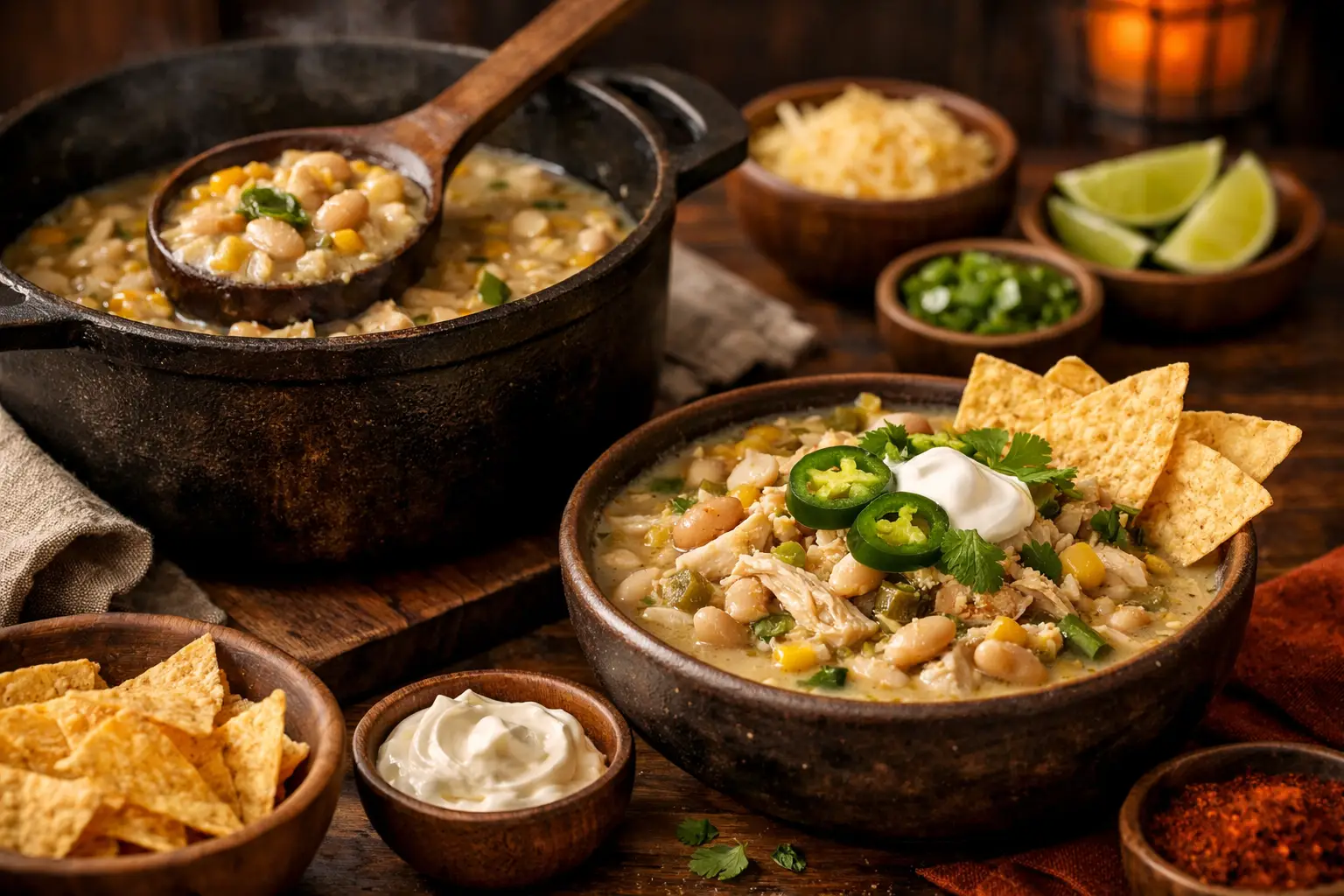
A pot of white chicken chili does something red chili rarely asks of a weeknight cook: it feels generous without demanding an all-day simmer. Tender chicken, pale beans, green chiles, and a creamy broth land squarely in comfort-food territory, but the flavor profile stays bright enough to keep taking another spoonful. That balance is the engine behind the white chicken chili trend - and it explains why this bowl keeps showing up in slow cookers, game-day spreads, recipe reels, and real-life dinner rotations.
White chicken chili is not replacing Texas Red, Cincinnati chili, or a serious green chile pork stew. Chili has room for every regional identity and every pot has its moment. What this style has done is claim a powerful lane of its own: approachable, adaptable, and built for the way many Americans cook now.
Why the white chicken chili trend keeps growing
The rise of white chicken chili is partly about ingredients people already trust. Chicken breasts, thighs, rotisserie chicken, canned white beans, broth, salsa verde, cream cheese, sour cream, and Monterey Jack are familiar grocery-store players. The method is forgiving, too. A cook can start from scratch with charred poblanos and homemade stock, or build a satisfying pot around pantry beans and leftover chicken.
That flexibility matters. Red chili often rewards patience, dried chile knowledge, and a clear point of view about texture, meat, and thickening. White chicken chili has fewer gatekeepers. It can be brothy or thick, dairy-rich or dairy-free, mild enough for a family table or sharpened with roasted jalapeños and hot green chiles.
It also photographs like a champion. A cream-colored bowl scattered with cilantro, avocado, lime, radish, tortilla strips, and pepper jack has contrast and movement. Internet food culture favors dishes that show their payoff immediately, and white chicken chili makes its toppings part of the main event. The bowl invites customization, which gives every cook a version worth sharing.
Most of all, it answers the perennial dinner question: what can feed people comfortably with minimal drama? It is hearty but not heavy in the same way as a beef-and-tomato chili. It feels seasonal in cold weather, yet its lime-and-chile lift keeps it from reading as winter-only food. That makes it a repeat recipe rather than a one-weekend project.
The flavor architecture behind a great bowl
Calling white chicken chili “creamy chicken soup with beans” misses the point. The best versions have a clear chili identity. Green chiles provide the defining pepper character, cumin brings warmth, garlic and onion create the savory base, and beans add body. Chicken gives the pot substance, but the chile flavor has to remain visible.
The biggest decision is the source of heat. Canned diced green chiles offer convenience and gentle tang. Roasted Hatch chiles bring a more assertive, earthy New Mexico personality. Poblanos add a dark green, slightly vegetal note, while jalapeños provide a cleaner, brighter punch. Salsa verde can work beautifully, especially for a fast pot, but it changes the profile depending on whether it leans tomatillo-tart, garlicky, or smoky.
Then comes richness. Heavy cream creates a plush, restaurant-style broth. Cream cheese makes the chili thicker and tangier, though too much can flatten the chiles into a single soft dairy note. Blended white beans offer a smart alternative: puree a portion of the beans with broth, then stir them back in for natural creaminess. This route lets the pepper, cumin, and lime stay front and center.
Acid is the final move that separates a good pot from a sleepy one. Lime juice, a spoonful of salsa verde, or a splash of pickled jalapeño brine can wake up the entire batch. Add it near the end, taste, and adjust. White chicken chili needs that spark because richness is part of its appeal, not its whole personality.
Chicken choice changes the character
Chicken breast is lean, tidy, and easy to shred. It works especially well in a quick, broth-forward recipe where other ingredients provide moisture. Chicken thighs bring deeper flavor and stay forgiving if the pot simmers a little longer. Rotisserie chicken is the weeknight ace: add it after the beans and broth have developed so it stays tender instead of turning stringy.
There is no single correct choice. For a crowd-pleasing, low-effort pot, rotisserie chicken wins. For a slow cooker recipe, thighs are hard to beat. For cooks who want a lighter, cleaner bowl, poached or pressure-cooked breasts make sense. The trend endures because it accommodates all three without losing itself.
Where white chicken chili belongs in the chili family
White chicken chili is often treated as a modern mash-up, and that is partly true. It draws from the green chile traditions of the Southwest, the bean-rich comfort of American home cooking, and the creamy casserole logic of community cookbooks. Its popularity does not erase those roots, nor should it be mistaken for a direct substitute for Colorado green chili or New Mexico chile verde.
That distinction is useful, not fussy. If you want a pork-forward green chile with roasted chile depth and a thinner, stew-like texture, seek that specific style. If you want a creamy chicken-and-bean bowl with broad appeal and flexible heat, white chicken chili is the right filter. Names help cooks set expectations before the first chop.
At ChiliStation, that is the fun of browsing by more than one craving. Protein, heat level, cooking method, regional influence, and time available can all point to very different bowls. A mild white chicken chili for a school-night dinner and a fiery Hatch chile version for a football crowd may share a name, but they deliver distinct experiences.
The trade-offs worth making on purpose
The easiest versions can go wrong in predictable ways. Too much cream cheese makes the pot taste more like dip than chili. Too many beans and not enough broth create a stodgy texture. Underseasoning is common because chicken and white beans are quiet ingredients, while green chiles vary wildly in intensity.
A few choices keep the bowl honest. Bloom cumin and garlic in oil before adding liquid. Use enough salt to bring out the beans and chicken. Reserve some whole beans for texture if blending part of the pot. Add dairy gently over low heat so it stays smooth. And do not skip a fresh topping, whether that is cilantro, scallions, avocado, crushed tortilla chips, or a hard squeeze of lime.
Heat is another intentional trade-off. Mild chili is not lesser chili, especially when feeding mixed company. Instead of making the entire pot volcanic, set out sliced jalapeños, hot sauce, chile flakes, or a spicy salsa verde. Everyone gets the bowl they want, and the base remains welcoming.
How to spot a white chicken chili recipe worth saving
A recipe deserves repeat status when it tells you what kind of bowl it is building. Look for a clear answer on thickness, chile source, chicken method, and dairy strategy. “Creamy” can mean blended beans, cream cheese, heavy cream, or none of the above, and those choices affect both flavor and leftovers.
For make-ahead cooking, bean-thickened versions often reheat more gracefully than heavily dairy-based pots. For a party, a slow cooker recipe with thighs and sturdy beans holds well. For a fast dinner, rotisserie chicken plus canned green chiles offers a genuinely useful shortcut. The best recipe is not the most elaborate one. It is the one that matches your time, pantry, and heat tolerance while still giving green chiles a real voice.
White chicken chili has staying power because it is not asking cooks to abandon tradition or chase a fleeting food-feed trick. It is a flexible bowl with enough chile character to feel like chili, enough comfort to become a habit, and enough room for a personal signature. Put out the lime wedges, choose your pepper path, and let the toppings tell the rest of the story.