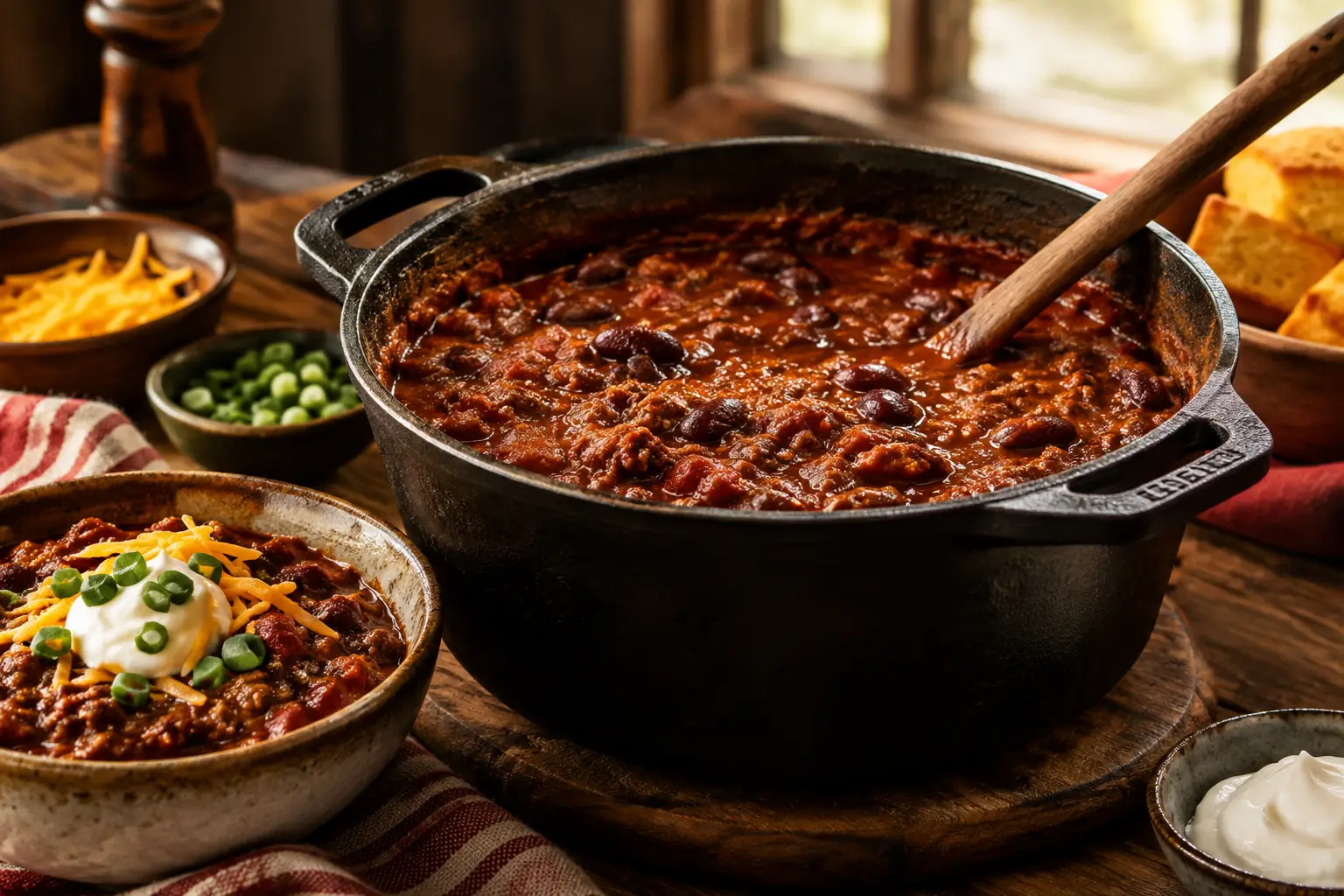
A big pot of chili can feel practically indestructible. It is thick, spicy, simmered for hours, and somehow even better the next day. But chili overnight safety has nothing to do with how bold the seasoning is or how fine the pot looks on the stove. It comes down to a less glamorous pairing: time and temperature.
If chili sat on the counter overnight, the straightforward answer is to throw it out. That hurts, especially when it is a Texas Red you built layer by layer or a green chili packed with roasted peppers. Still, food safety is not a flavor test, and a great bowl is never worth a rough night for the people eating it.
Chili Overnight Safety Starts With the Two-Hour Rule
Cooked chili should not stay at room temperature for more than two hours. If the room, patio, tailgate, or summer kitchen is hotter than 90°F, that window drops to one hour.
Why such a tight deadline? Bacteria grow quickly in the temperature danger zone, generally 40°F to 140°F. Chili is especially good at lingering there because a large, dense pot holds heat in its center long after the burner is off. The surface may seem cool enough to touch while the middle is still warm - exactly the range where unwanted microbes can multiply.
“Overnight” almost always means well beyond the safe window. If a pot was left out from dinner until breakfast, discard it. Do not taste a spoonful to check. Do not boil it and assume the problem is solved. Reheating can kill many bacteria, but some toxins produced while food sat too long may remain.
The rule applies whether your chili contains beef, turkey, chicken, sausage, beans, vegetables, or a plant-based crumble. Meat gets most of the blame in leftover conversations, but cooked beans, onions, tomatoes, broth, and toppings all make a moist, nutrient-rich dish. Spices bring serious personality, not a food-safety force field.
What if the house was cold?
A chilly kitchen is not the same thing as a refrigerator. Unless you can verify that the chili stayed at 40°F or below the entire time, treat counter-leftovers as unsafe. A pot placed in an unheated garage, on a porch, or in a snowbank is also a gamble. Outdoor temperatures fluctuate, sunlight hits, animals exist, and the center of a covered pot cools much more slowly than the air around it.
When in doubt, let the clock make the call. If you cannot confidently say it was refrigerated within two hours, let that batch go.
How to Cool Chili Without Wrecking Tomorrow’s Bowl
The safest chili leftovers begin before the first container goes into the fridge. A giant Dutch oven shoved in hot can warm the refrigerator and take too long to cool through. On the other hand, you do not need to leave chili out for hours waiting for it to reach room temperature. That old habit creates the exact problem you are trying to avoid.
Start portioning within the two-hour window. Divide the chili into shallow containers, ideally no deeper than about two inches. More exposed surface area means faster cooling, and smaller portions also make weekday lunches much easier to grab. Leave space between containers in the refrigerator so cold air can circulate.
For a full game-day batch, an ice bath can speed things up. Set the pot or a heat-safe container in a sink filled with ice water, then stir the chili every few minutes to move hotter food from the center toward the edges. Once it has cooled substantially, transfer it to shallow containers and refrigerate.
A few practical habits make a difference:
- Label the container with the date, especially if your fridge routinely holds several chili styles at once.
- Keep the refrigerator at 40°F or below, not just “pretty cold.”
- Refrigerate toppings separately when possible. Sour cream, shredded cheese, avocado, and fresh cilantro each have their own shelf life.
- Freeze portions you will not eat within a few days rather than letting a legendary batch become fridge archaeology.
Do not worry that refrigerating chili will ruin the flavor. Chili’s next-day reputation is real because the seasonings settle and mingle while it chills. Safe storage is how you earn that deeper, more unified bowl.
How Long Is Refrigerated Chili Good For?
Properly refrigerated chili is generally good for three to four days. Count from the day it was cooked, not from the day you finally remembered it was in the back of the fridge.
For example, chili made on Sunday evening and refrigerated promptly is a good lunch candidate through Wednesday or Thursday. If you are looking at it Friday, freezing it earlier would have been the better move. A clean container and tight lid help preserve quality, but they do not reset the calendar.
Freezer storage buys much more breathing room. Chili holds its best quality for roughly two to three months in the freezer, though it remains safe longer if continuously frozen. Portion it in meal-size containers or freezer bags laid flat. Flat bags stack neatly and thaw faster, which is a small victory when the craving hits on a busy Tuesday.
The exact timeline can vary a little based on how quickly the chili was cooled, how steady your refrigerator temperature is, and whether it has been repeatedly warmed and returned to the fridge. That last point matters. It is smarter to reheat only the portion you plan to eat than to warm the entire pot every night.
The smell test is not enough
Sour odor, mold, bubbling, a slimy texture, or a strange color are all clear reasons to discard chili. But the absence of those signs does not prove it is safe. Harmful bacteria do not always announce themselves with a funky smell or visible change.
Think of appearance as a warning system, not a permission slip. Time and temperature are the more reliable evidence.
Reheating Leftover Chili the Safe Way
Reheat refrigerated chili until it reaches 165°F in the center. A food thermometer is the no-drama way to know, particularly with thick chili where the edges heat long before the middle. Stir during reheating so the heat moves evenly through beans, meat, and sauce.
On the stovetop, bring the chili to a steaming simmer while stirring regularly. In the microwave, use a microwave-safe bowl, cover loosely to limit splatters, and pause to stir at least once. Let it stand briefly after heating, then check that the center is fully hot.
If you are serving chili from a slow cooker at a party, use it to hold already-hot chili at 140°F or above. A slow cooker is not the right tool for bringing a cold, refrigerated batch up to a safe serving temperature quickly. Reheat on the stove or in the microwave first, then transfer it to the slow cooker for the long, lazy buffet stretch.
Avoid the tempting cycle of reheating, serving, cooling, and refrigerating the same batch over and over. Each trip through the danger zone adds risk and chips away at texture. Beans soften, meat dries, and that once-glossy chili can turn muddy. Portioning keeps both the safety and the bowl quality in better shape.
Common Chili Leftover Calls, Made Simple
A pot left on the stove until morning should be discarded. Chili that spent three hours on a buffet table should also go, unless it was actively kept above 140°F. A container refrigerated promptly after dinner and reheated once for lunch tomorrow is a solid plan.
Chili brought to a cookout needs the same attention. Keep hot chili hot in a properly heated slow cooker or insulated server, and keep cold chili chilled in a cooler with plenty of ice. The clock starts once it sits in the temperature danger zone, not when the party ends.
For thawed frozen chili, use the refrigerator when you have time. You can also thaw it in the microwave if you will reheat and eat it right away. Do not thaw chili on the counter. That thick, frozen center can stay icy while the outer layer spends too long warming up.
Every bowl tells a story, from a brick-red beef chili built for winter to a bright pork verde that disappears with tortilla chips. Give the leftovers the same care you gave the simmer: cool them quickly, store them cold, and when an overnight pot raises a question, save the recipe - not the risky batch.