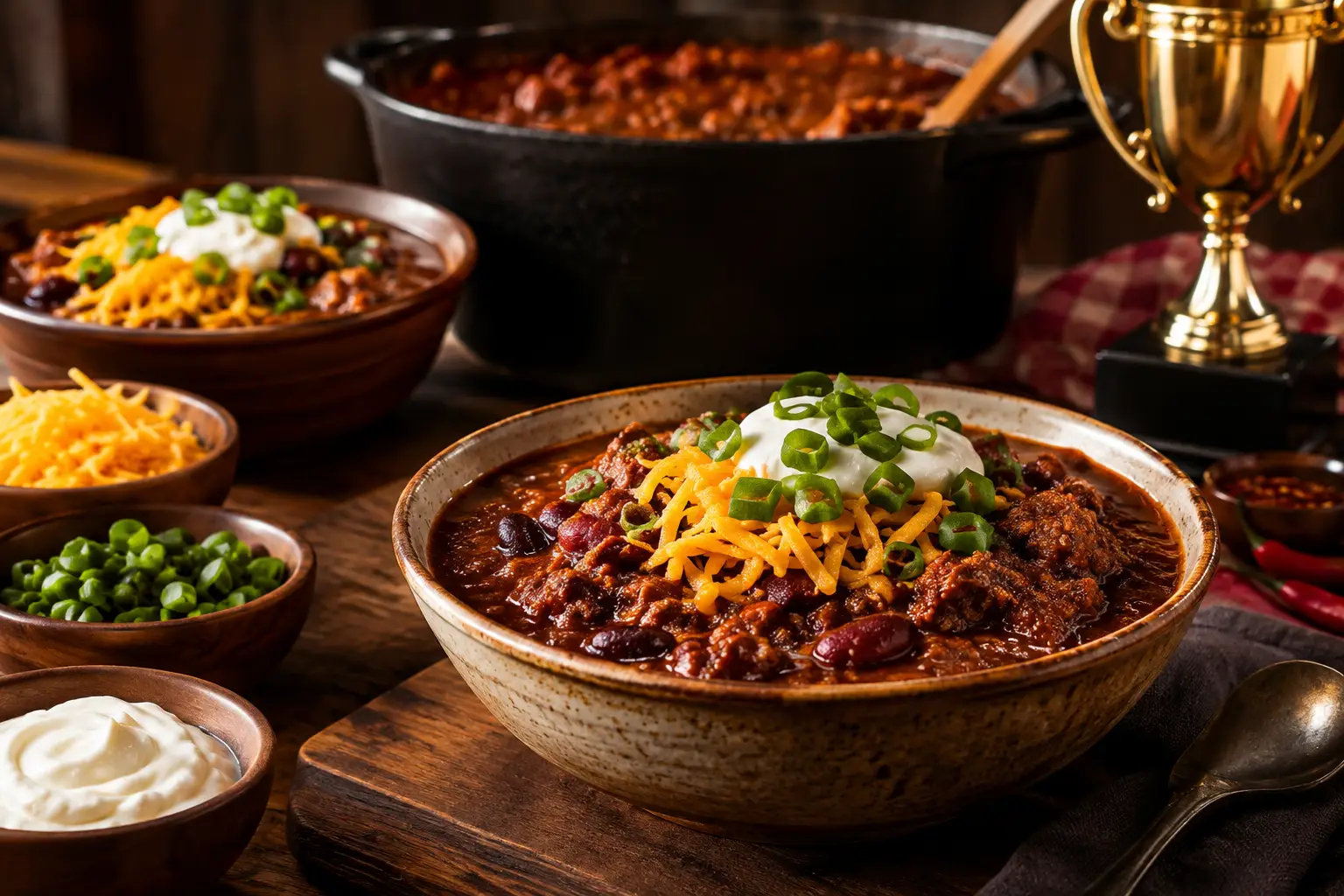
A winning chili is rarely the loudest bowl on the table. The chili recipe contest winners people remember tend to have a clear point of view: a deep red Texas-style pot that lets beef and dried chiles do the talking, a bright green chile that tastes like roasted peppers first, or a sweet-savory crowd-pleaser that earns repeat spoonfuls. Every bowl tells a story, but the best contest bowls make that story easy to taste.
For home cooks, studying winners is less about chasing a secret ingredient and more about recognizing the choices that create balance. Great chili is built in stages. It has a recognizable regional identity or a deliberate modern twist, and it finishes with enough contrast to make the next bite feel necessary.
What Chili Recipe Contest Winners Do Differently
Contest judges may use different scorecards, but most winning recipes solve the same delicious problems: flavor needs to be concentrated without becoming muddy, heat needs to register without flattening the palate, and texture needs to feel intentional. A pot can be spicy, meaty, and thick yet still miss the mark if all those qualities arrive at once with no definition.
The strongest recipes begin with a flavor base that has dimension. That might mean browned chuck plus beef stock, toasted guajillo and ancho chiles, sautéed onion, garlic, and a measured amount of cumin. In white chicken chili, it may mean charred poblano, green chiles, stock, oregano, and a creamy bean body. The ingredients vary, but the method is consistent: build flavor in layers instead of asking one bottled sauce or one spoonful of chili powder to carry the whole pot.
They also understand restraint. A contest bowl does not need every available spice. Cinnamon, cocoa, coffee, fish sauce, beer, masa harina, brown sugar, and smoked paprika can all be fantastic additions. They can also turn a distinctive chili into a crowded one. Add an unconventional ingredient because it has a job: coffee can deepen roastiness, cocoa can round bitterness, and masa can give a thin chili a subtle corn richness. If you cannot name the job, leave it out.
Finally, winners cook for the spoon. Ground meat should be fine enough to feel cohesive but not pasty. Chunks of beef should become tender without shredding into oblivion. Beans, when the style welcomes them, should be creamy and intact. The sauce should cling rather than puddle. That texture is not cosmetic. It controls how spice, salt, fat, and acidity land on the palate.
Start With a Lane, Not a Random Ingredient Pile
Before shopping, decide what kind of chili you are making. This is the fastest way to avoid the classic “everything chili” problem. A Texas Red needs a chile-forward beef gravy and has no need to apologize for skipping beans. Colorado green chili wants pork, roasted green chiles, and a brighter, looser stew-like character. Cincinnati chili is its own spiced, finely textured tradition, designed for bowls, dogs, and towering plates of spaghetti. A game-day turkey chili can be bean-forward, smoky, and practical without pretending to be any of the above.
A clear lane makes improvisation smarter. If you are making a red beef chili, dried chiles are usually a better place to spend effort than adding a dozen dried herbs. If you are making vegetarian chili, several types of beans plus roasted squash, mushrooms, or lentils can bring the body that beef normally provides. If your crowd includes heat-sensitive eaters, build the base with flavorful mild chiles and put the serious fire in a finishing sauce or garnish.
Regional rules are useful, but they are not handcuffs at home. The question is whether a departure improves the bowl. Black beans in a Texas-inspired chili may be a deal-breaker in a traditional cook-off category, but for a weeknight dinner, they may be exactly what your household wants. Know the tradition, then cook with purpose.
Let dried chiles lead red chili
A reliable red chili often starts with a blend rather than a single pepper. Ancho brings raisiny depth, guajillo adds clean red-fruit brightness, and pasilla contributes earthy complexity. Toast them briefly, soak until pliable, then blend into a smooth puree. Keep the heat adjustable with hotter chiles added in small increments. A sauce made this way tastes more vivid and less dusty than a recipe that relies only on pre-ground powder.
Be careful with toast time. Chiles burn fast, and bitterness is difficult to hide once it enters the pot. Thirty seconds can be enough. If they smell acrid instead of warm and fragrant, start over. It is a small reset that can save several pounds of meat.
Treat green chili like a roast-pepper showcase
Green chili lives or dies by the chile itself. Fresh roasted Hatch, Anaheim, poblano, or New Mexico-style green chiles should taste vegetal, smoky, and gently sharp. Use canned chiles when convenience wins, but reinforce them with a fresh roasted pepper if possible. Pork shoulder offers rich, shreddable texture, while chicken makes a lighter pot that benefits from beans or a little dairy for body.
Do not bury green chili under heavy tomato flavor. A little tomatillo can add tang, but the bowl should still announce green chile before anything else.
Build Contrast Into the Pot
The best chili recipes have movement. They begin rich, then hit a bright note. They offer warmth, then a cool or crunchy counterpoint. That is why finishing is a contest-level move, not an afterthought.
Taste your chili near the end and diagnose it before adding more salt or heat. If it tastes flat, it may need acidity: cider vinegar, lime juice, a small splash of pickle brine, or chopped tomatoes depending on the style. If it tastes sharp or thin, it may need time, a touch more fat, or a thickener such as masa harina. If it tastes aggressively hot, more chile is not the answer. Add volume with stock, beans, meat, or tomatoes, then rebalance salt and acid.
Garnishes should support the style and create contrast. Cool sour cream and cheddar suit a hearty bean chili. Raw onion, cilantro, and lime sharpen a chile-forward bowl. Cornbread, crackers, or tortilla chips add crunch, but choose one route rather than loading every texture onto the table. A garnish bar is fun for a party, yet the bowl you present for judging should feel composed, not like a salad bar accident.
Cook It Early, Finish It Fresh
Many chili recipe contest winners benefit from a rest, which is great news for hosts. Make the base the day before, cool it safely, and refrigerate it overnight. The flavors settle, the fat is easier to manage, and you can make calmer decisions when reheating. This is especially helpful for beef chili with dried chiles, where the sauce often tastes more integrated on day two.
But do not make every decision early. Bright elements fade with prolonged cooking. Add fresh cilantro, lime, scallions, delicate herbs, and some hot sauce near serving. If you are using beans, decide whether they should cook in the chili from the start or be folded in later. Cooking them longer creates a creamier, more unified pot; folding them in late preserves shape and distinct texture. Neither choice is universally right.
For a cook-off, practice the final 20 minutes as seriously as the simmer. Reheating can thicken a chili dramatically, and a pot that was perfect at home may need a splash of stock at the venue. Bring backup salt, acid, and a controlled heat option. Then taste from the actual serving spoon, not just from the pot, because temperature and portion size change perception.
A Better Way to Choose Your Next Winner
When you browse chili recipes, filter by the experience you want rather than by popularity alone. Need a cold-weather project? Look for long-simmered beef, dried chiles, and a make-ahead window. Feeding a mixed crowd? Choose a medium-heat turkey or beef-and-bean chili with toppings that let people customize. Want regional character? Start with Texas Red, Cincinnati, Colorado green chili, or a white chicken version and let its signature ingredients lead.
ChiliStation is built for exactly that kind of hunt: comparing styles, proteins, heat levels, and cooking methods until the right pot appears. The recipe with the biggest flavor promise is not always the one that fits your Tuesday, your guests, or your heat tolerance.
Your next contest-worthy chili does not need a gimmick. Give it a lane, make each ingredient earn its place, and taste for contrast before the ladle comes out. The bowl that gets passed back for “just a little more” is the one worth writing down.