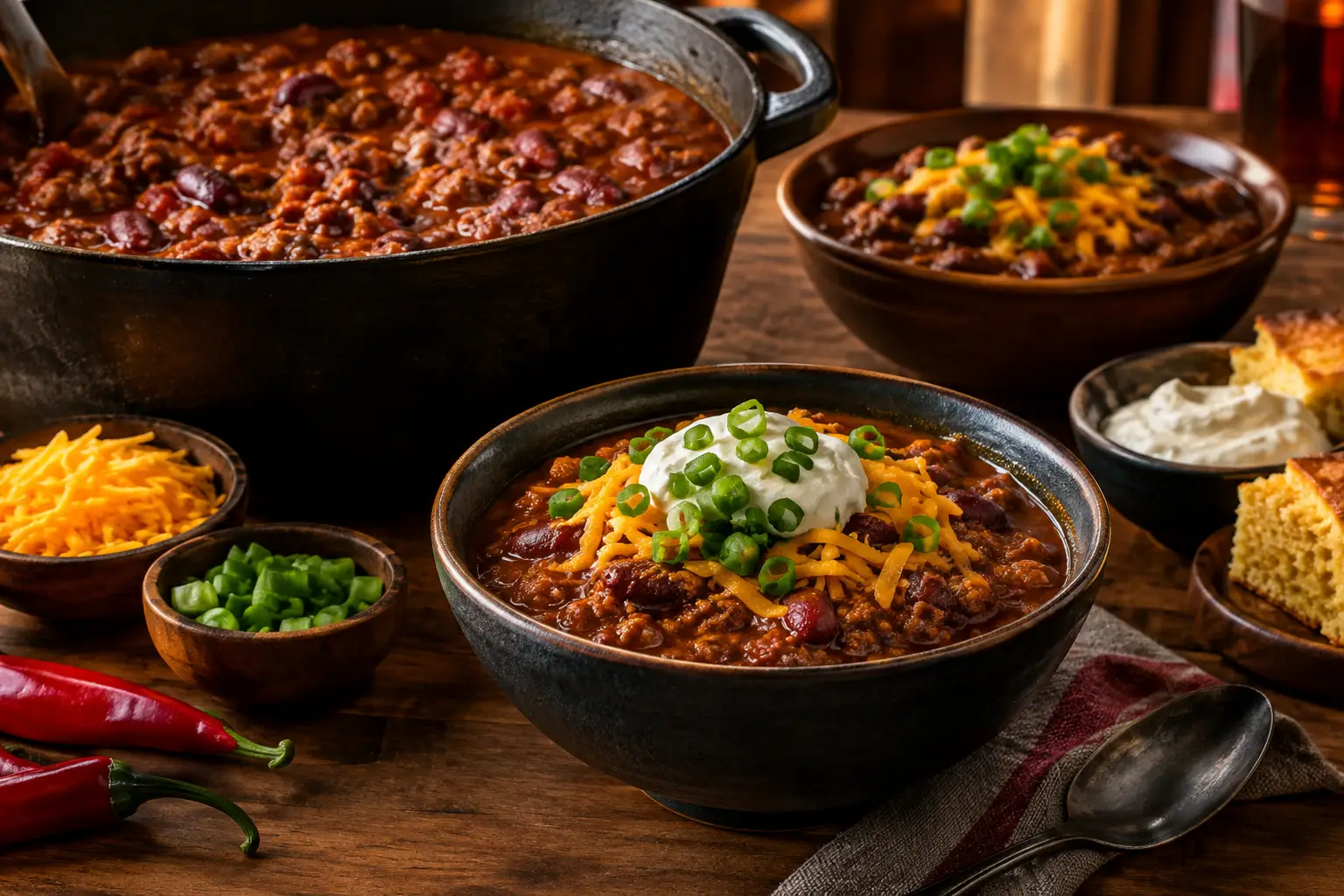
A pot of chili can be a 25-minute Tuesday rescue, an all-day Sunday project, or the dish that starts an argument about beans before anyone takes a bite. That range is exactly why chili recipes deserve more than one default formula. The right bowl depends on what you are craving: smoky and beefy, bright with tomatillos, gently sweet-spiced, or hot enough to make the room reach for sour cream.
Every bowl tells a story, and the best place to start is not with a random ingredient list. Start with the kind of chili you want to eat.
Choose Chili Recipes by Bowl Personality
If your idea of chili is dark red, meaty, and unapologetically direct, Texas Red is the move. It centers beef, dried chiles, aromatics, and a long simmer. Beans are not traditionally part of the equation, which makes the texture intensely focused and the chile flavor impossible to hide behind. Choose it when you want a serious weekend pot and have time to let tough cuts turn tender.
For something greener, sharper, and a little lighter on its feet, Colorado-style green chili brings roasted green chiles, pork, and often a loose, spoonable consistency. It lands somewhere between a stew and a sauce, with tangy tomatillos or tomatoes depending on the recipe. This is the chili for smothering burritos, piling over eggs, or eating with warm tortillas when a red bowl feels too heavy.
Cincinnati chili plays by a different rulebook. Fine-textured beef sauce gets its signature profile from warming spices that can include cinnamon, allspice, clove, and cocoa. Served over spaghetti or layered with cheese, onion, and beans, it is not trying to be Texas chili. That is the point. Make it when you want regional comfort food with a little diner-counter swagger.
Then there is the broad, wildly useful category of hearty bean chili. Ground beef, turkey, chicken, plant-based crumbles, or no meat at all can work here. This is where canned beans, pantry spices, and a weeknight-friendly timeline shine. A great bean chili does not need to pretend it simmered all day. It needs a balanced base, enough texture, and a finishing move that wakes it up.
Build Flavor Before You Add Heat
Heat is only one part of a memorable chili. A bowl can be blazing hot and still taste flat. The deeper goal is contrast: rich meat against acidic tomato, earthy beans against fresh herbs, toasted chile against a cool creamy topping.
Start by browning your meat properly. Crowding the pot steams it, so work in batches when needed and let the pieces develop real color. That browned layer at the bottom is flavor waiting to be released with broth, beer, tomatoes, or a splash of water. For vegetarian chili, give mushrooms, eggplant, or plant-based meat the same attention. They deserve a sear, not a quick warm-through.
Bloom dried spices in fat for a brief moment before adding liquid. Chili powder, cumin, oregano, paprika, and coriander become rounder and more fragrant this way. Be careful with garlic and ground chiles, though. They can turn bitter quickly if the pan is too hot.
Dried whole chiles are the fast track to a more distinctive red chili. Ancho brings raisiny depth, guajillo offers a clean red-fruit brightness, and chipotle contributes smoke with a firm kick. Toast them lightly, soak them until pliable, then blend into a smooth paste. It takes a little more effort than opening a jar, but the payoff is a bowl with a clear point of view.
Acid belongs near the end. Lime juice, cider vinegar, red wine vinegar, or even a spoonful of pickle brine can sharpen a chili that has simmered into heaviness. Add a small amount, taste, and stop before the pot turns sour. The same goes for sweetness. A hint of brown sugar, honey, or cocoa can soften sharp tomatoes or aggressive chile heat, but chili should not taste like dessert.
Pick a Heat Level You Will Actually Enjoy
The best heat level is the one that lets you taste the chili. Jalapeños and poblanos offer approachable warmth, while serranos turn up the dial without changing the flavor profile too dramatically. Habaneros bring fruity intensity but can dominate a smaller pot. If you are cooking for a mixed crowd, keep the main chili at medium heat and put hot sauce, sliced fresh chiles, and crushed red pepper on the table.
Remember that heat often grows as chili rests. A pot that seems mild on the stove can become much more assertive overnight, especially when it contains fresh chiles. That is not a flaw. It is a reason to taste again before serving leftovers.
Match the Method to Your Schedule
A slow-simmered chili earns its reputation because time smooths rough edges. Beef chuck becomes tender, beans absorb seasoning, and separate flavors begin to taste like one complete bowl. If you have three hours or more, choose recipes built around tougher meat cuts, dried chiles, and a thicker finish.
But fast chili has its own lane. Ground meat, canned beans, crushed tomatoes, and a smart spice blend can deliver a satisfying dinner in under an hour. The trade-off is less developed depth, so use high-impact ingredients: sautéed tomato paste, smoked paprika, a spoonful of chipotle in adobo, or a splash of vinegar at the finish.
Slow cookers are excellent for hands-off bean and meat chilis, especially when you want dinner waiting after a long day. Brown meat and onions first if possible. That one extra pan step keeps the final flavor from tasting muted. Pressure cookers are ideal for dried beans and quick tenderizing, though delicate ingredients such as fresh herbs, dairy, and crunchy toppings should wait until after pressure cooking.
No matter the method, make chili ahead when you can. Overnight rest is not culinary mythology. The flavors settle, fat redistributes, and the seasoning becomes easier to judge. Reheat gently with a splash of broth or water if it has tightened up.
Toppings Are Part of the Recipe
A bare bowl can be excellent, but toppings turn chili into a choose-your-own-adventure dinner. Use them to add temperatures and textures the pot itself cannot provide. Cool sour cream or Greek yogurt softens heat. Diced white onion adds bite. Shredded cheddar or Monterey Jack brings richness, while cilantro, scallions, or a squeeze of lime provide lift.
For crunch, reach for tortilla chips, corn chips, toasted pepitas, or crackers. Cornbread is the classic sidekick for a reason, especially with bean-heavy chili, while rice stretches a saucier green chili into a full meal. With Cincinnati chili, the toppings are practically the tradition: spaghetti, cheese, onions, and beans make the experience.
Do not overload every bowl with everything. A smoky Texas Red may need only chopped onion and a few saltines. A sweet potato black bean chili can handle avocado, lime, cilantro, and crunchy pepitas. Let the base lead.
A Better Way to Find Your Next Favorite Bowl
When choosing among chili recipes, filter by the decision that matters most tonight: time, protein, heat, or regional style. Start with turkey chili when you need a lighter weeknight option. Pick pork green chili when you want tang and roasted chile character. Commit to Texas Red when the whole point is a long simmer and bold beef. Choose vegetarian chili when beans, vegetables, and spice are carrying the show.
That is the fun of a category this big. ChiliStation exists for cooks who do not want “a chili recipe,” but the right chili for the moment. Rate the ones you make, save the styles that speak to you, and notice what your own ideal bowl keeps repeating. Maybe it is extra cumin, two kinds of beans, a green chile finish, or a pile of sharp cheddar.
Tonight, choose one direction, make the pot yours, and leave enough for tomorrow. Chili has a way of getting even better when it has something to prove.