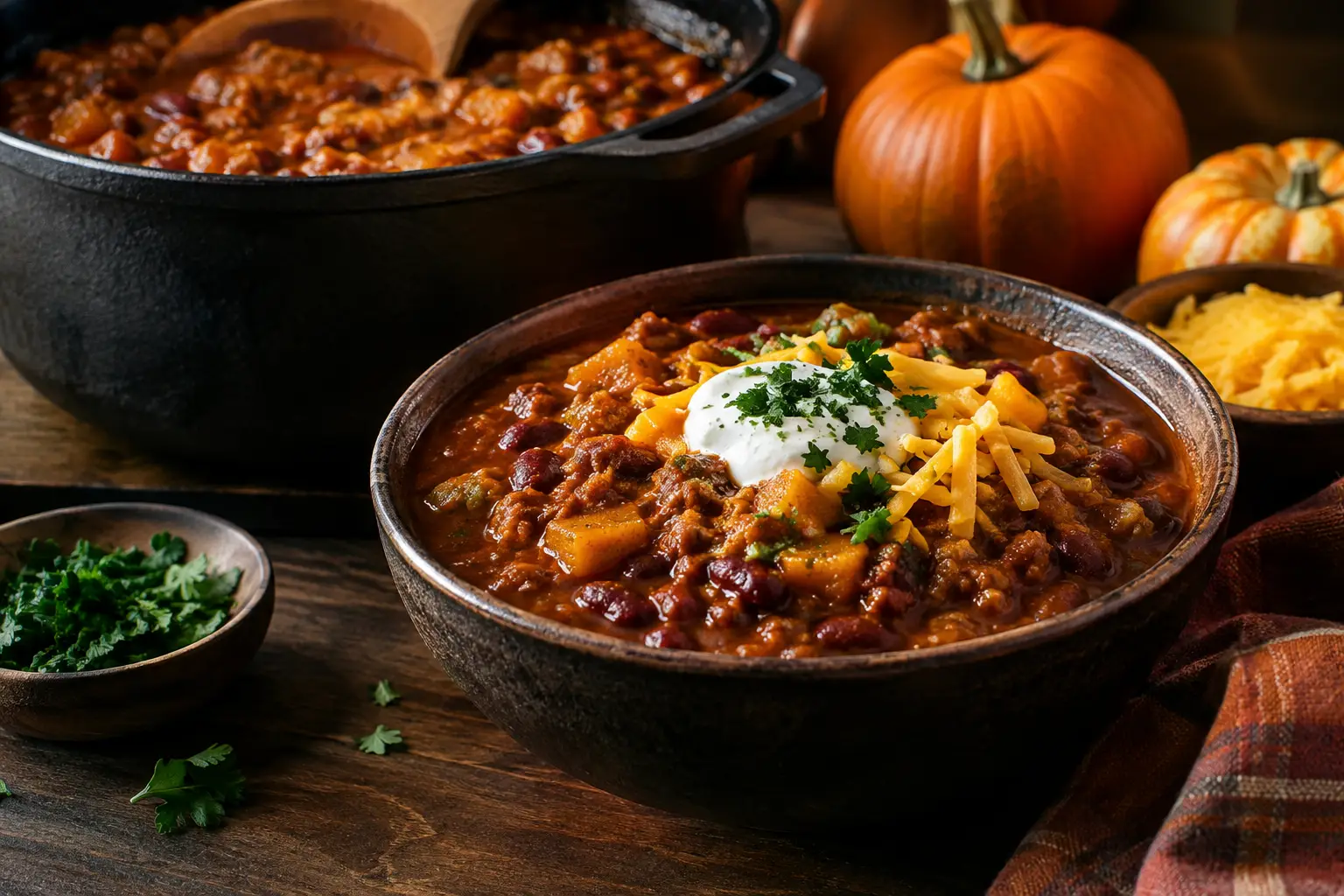
Pumpkin chili is not dessert in a Dutch oven. Done right, it is a deeply savory, gently sweet, spice-forward bowl with the kind of body that makes a second helping feel inevitable. Pumpkin works because it amplifies what chili already does well: it carries chile flavor, softens sharp tomato acidity, and turns a regular weeknight pot into something with serious cold-weather character.
For cooks who love a classic beef-and-bean situation but want a fall switch-up, this is the move. The trick is treating pumpkin as an ingredient with a job to do, not a seasonal gimmick. Every bowl tells a story, and this one should still read as chili first.
What Pumpkin Adds to a Chili Pot
Pumpkin brings three things to chili: earthy sweetness, silkier texture, and a warm orange color that looks right at home beside red chile and tomatoes. Pumpkin puree melts into the base, thickening the broth without the long reduction time that a meat-heavy chili often needs.
That sweetness is useful, but it needs management. Too much pumpkin, too little acid, or a timid hand with spices can leave the pot tasting flat and vaguely pie-like. A great pumpkin chili has contrast: smoky chiles against mellow squash, savory meat or beans against a touch of natural sweetness, and enough acid at the finish to keep the whole bowl awake.
Canned pumpkin puree is usually the best choice. It is consistent, convenient, and ready to disappear into the sauce. Use plain pumpkin puree, not pumpkin pie filling. The latter contains sugar and baking spices, which belong nowhere near your chili unless you are intentionally creating chaos.
Fresh roasted pumpkin can work, especially if you have a sugar pumpkin on hand, but expect a looser, more variable result. Roasting concentrates flavor, yet fresh pumpkin often contains more water than canned puree. If you go that route, roast until deeply tender, puree it smooth, and add it gradually.
The Best Flavor Direction for Pumpkin Chili
Pumpkin is flexible, but not every chili style needs it. It shines brightest in a hearty, tomato-based bowl with beans, ground meat, or a sturdy plant-based protein. Think modern American chili with southwestern energy, not a strict Texas Red. A no-bean, beef-only chile can handle pumpkin, but it is easier to overdo because there are fewer ingredients to absorb its sweetness.
The strongest flavor partners are smoky dried chiles, cumin, garlic, onion, oregano, and black pepper. Chipotle in adobo is especially good here: its dark smoke pushes the pumpkin into savory territory fast. Ancho chile offers raisiny depth, while New Mexico chile brings a cleaner red-pepper warmth. You do not need all three. Choose one main chile personality and build around it.
Tomatoes are helpful but should not dominate. A modest amount of crushed tomatoes or tomato paste gives the chili structure and acidity. Too much tomato can crowd out the pumpkin and turn the flavor muddy. If your pot tastes overly sweet after simmering, reach for lime juice, cider vinegar, or a splash of coffee or dark beer before adding more salt.
Choose a Protein That Can Carry the Bowl
Ground turkey is a natural fit for pumpkin chili. Its mild flavor lets the chile, pumpkin, and spice blend do the talking, while its lean profile keeps the bowl from becoming heavy. Ground chicken works similarly, though it benefits from a little extra oil and assertive seasoning.
Ground beef delivers a richer, more traditional chili experience. Choose an 80/20 or 85/15 blend, brown it hard, and drain only if there is an excessive amount of rendered fat. Beef and pumpkin can be excellent together, but the chili needs smoke and acid to avoid tasting too soft around the edges.
Sausage is the flavor cheat code for a quicker pot. Spicy Italian sausage, chorizo, or a chile-seasoned chicken sausage can add instant fennel, garlic, paprika, and heat. The trade-off is control: start with less added salt and fewer spices until you know what the sausage is bringing.
For a meatless version, black beans and pinto beans are the dependable pairing. Add lentils or crumbled mushrooms when you want more heft. Mushrooms, especially browned cremini or portobello, give the chili a dark, savory backbone that keeps the pumpkin from feeling too delicate.
How Much Pumpkin Is Enough?
For a pot serving six to eight people, start with about 1 cup of pumpkin puree. That is enough to thicken the chili and announce itself without taking over. A full 15-ounce can will create a more pronounced pumpkin presence, which can be great if the rest of the recipe is boldly seasoned.
Add the puree after browning your aromatics and protein, then let it cook for a minute before pouring in broth and tomatoes. This brief contact with the hot pot helps the pumpkin taste more integrated and less raw. From there, simmer gently. Thirty to forty-five minutes is typically enough for the flavors to settle in, although a longer, low simmer will deepen a beef-based batch.
If the chili gets thicker than you like, loosen it with chicken broth, vegetable broth, or water. If it stays too loose, leave the lid cracked and give it time. Pumpkin thickens as it cools, so resist the urge to keep adding puree near the end.
Build Heat in Layers, Not All at Once
A pumpkin chili should have warmth, but the heat level depends on the bowl you are trying to build. For family-friendly comfort food, use chili powder, cumin, smoked paprika, and a small amount of chipotle. For a hotter pot, add fresh jalapeño or serrano early with the onion, then finish with cayenne, hot sauce, or crushed red pepper after tasting.
This layered approach matters because different peppers do different jobs. Chipotle adds smoke. Cayenne delivers a direct burn. Fresh chiles bring brightness and a greener flavor. Hot sauce contributes tang as well as heat. Piling them in from the start can make the chili aggressively hot without making it more interesting.
The same rule applies to salt. Season lightly at the beginning, especially when using canned beans, boxed broth, tomato products, or sausage. Then adjust near the end, after the chili has reduced. A final pinch of salt can make the pumpkin taste fuller and the spices more precise.
Toppings That Make Pumpkin Chili Pop
A thick, savory pumpkin chili wants a topping with contrast. Sour cream or Greek yogurt adds cool tang. Shredded sharp cheddar supplies salt and richness. Pepitas are the obvious seasonal choice, but they earn their spot with real crunch and a toasty nuttiness that echoes the pumpkin.
For a bowl with more bite, add diced red onion, cilantro, pickled jalapeños, or a squeeze of lime. Cornbread is a classic side, though it can make an already sweet-leaning chili feel sweeter. If your batch has plenty of smoke and heat, cornbread works beautifully. If it is mellow and pumpkin-forward, salty tortilla chips or a crusty piece of bread may be the better match.
Common Pumpkin Chili Missteps
The biggest mistake is using pumpkin as a replacement for seasoning. Pumpkin adds body, not complexity. It still needs browned onion, garlic, chile powder, cumin, and an acidic finish.
The second is reaching for sweet spices. Cinnamon and nutmeg are not automatically forbidden, but they are high-risk additions. A tiny pinch can work in a mole-inspired chili, particularly one with cocoa and ancho chile. In most pots, though, those spices steer the flavor toward holiday candle territory. Skip them unless you have a very clear reason.
Finally, do not judge the chili the second it comes off the heat. Let it rest for 10 to 15 minutes, then taste again. The pumpkin settles, the fat redistributes, and the chile flavor becomes clearer. Like most great chili, it is often even better the next day.
Make It Your Own Bowl
Pumpkin chili is built for customization. Keep it mild with turkey and black beans, go smoky with beef and chipotle, or make a vegetarian version loaded with pinto beans, mushrooms, and roasted corn. The core formula stays steady: pumpkin for body, chiles for personality, acid for balance, and toppings that bring texture.
That flexibility is the fun of it. Put a pot on when the weather turns, taste as you go, and let your preferred chili identity lead the way. A well-seasoned pumpkin chili does not ask for permission to join the rotation - it earns its place there.