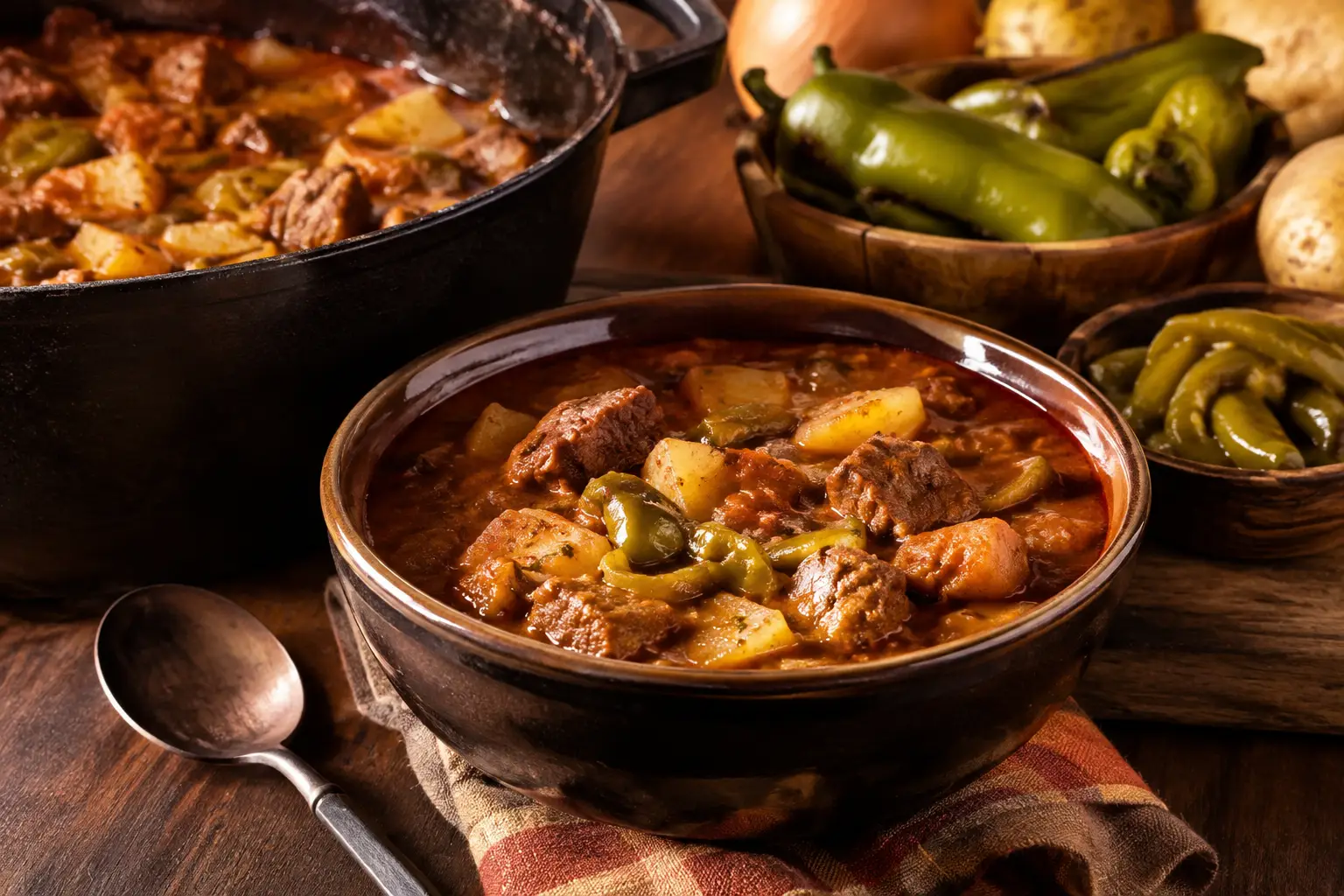
A pot of green chile stew should announce itself before the first bite: roasted pepper perfume, porky richness, and that unmistakable New Mexico-style warmth that lands somewhere between cozy and electric. This hatch chili stew recipe keeps the bowl hearty without burying the chile. The potatoes soak up the broth, the pork turns spoon-tender, and the roasted Hatch chiles remain the headliner.
Hatch season gets plenty of hype for good reason. These green chiles come from the Hatch Valley in New Mexico, and their flavor is bigger than simple heat: grassy, savory, faintly sweet, and smoky once roasted. Not every Hatch chile is hot, either. A mild batch can be family-friendly; a hot batch can put real fire in a deceptively humble stew. Taste before you commit to the whole pot.
Hatch Chili Stew Recipe at a Glance
This is a practical, pork-forward green chile stew for six generous servings. It takes about 25 minutes to prep and roughly 1 hour and 45 minutes to cook, though the stove does most of the work. Pork shoulder is the right cut here. It needs time, but that time buys you tender meat and a fuller broth than quick-cooking pork chops or tenderloin can offer.
For a weeknight shortcut, use good-quality frozen roasted Hatch chiles. For the full roasted-chile moment, start with fresh peppers and blister them yourself. Either route works. What matters is using chiles with enough flavor to carry the pot.
Ingredients
- 2 pounds boneless pork shoulder, cut into 1-inch cubes
- 2 tablespoons neutral oil or rendered bacon fat
- 1 large yellow onion, diced
- 4 garlic cloves, finely chopped
- 2 teaspoons kosher salt, plus more to taste
- 1 teaspoon ground cumin
- 1 teaspoon dried Mexican oregano
- 1/2 teaspoon black pepper
- 1 1/2 pounds Yukon Gold potatoes, cut into 3/4-inch chunks
- 2 cups roasted, peeled, chopped Hatch green chiles
- 4 cups chicken stock or pork stock
- 1 cup water, plus more as needed
- 1 tablespoon fresh lime juice
- Chopped cilantro and warm flour tortillas, for serving
The chile quantity is flexible, and that is part of the fun. Two cups gives the stew a clear green-chile identity without making it aggressive. Go to three cups if your peppers are mild or you want a bowl with more of that roasty, vegetal punch. If they are extra hot, start with less, then stir in more near the end.
Build Deep Flavor Before the Simmer
Pat the pork dry and season it with the salt and pepper. Heat the oil in a Dutch oven or heavy soup pot over medium-high heat. Brown the pork in two or three batches, leaving space between the cubes. This is not the moment to rush. Crowding the pot steams the meat, while real browning leaves the savory browned bits that make the broth taste cooked rather than merely assembled.
Move the browned pork to a plate. Lower the heat to medium and add the onion to the same pot. Cook it for about five minutes, scraping up the browned bits as it softens. Add the garlic, cumin, and oregano, then stir for 30 seconds. The spices should smell toasty and vivid, not scorched.
Return the pork and any collected juices to the pot. Add the potatoes, Hatch chiles, stock, and water. The liquid should nearly cover everything, but it does not need to drown the ingredients. Bring it just to a boil, then reduce to a gentle simmer. Cover partially and cook for 75 to 90 minutes, stirring occasionally, until the pork yields easily to a fork and the potatoes are tender.
A hard boil can make the pork tighten and break the potatoes into mush before the meat is ready. Keep the surface at a lazy bubble. Every bowl tells a story, and this one is built on patience more than complicated technique.
Finish the Stew Your Way
When the pork is tender, taste the broth. Add lime juice and adjust the salt. If the stew looks thicker than you like, add a splash of hot water or stock. If it is thinner than you want, simmer uncovered for 10 to 15 minutes. You can also crush a few potato pieces against the side of the pot with a spoon for a naturally silkier broth.
Cilantro adds a fresh top note, but it is optional. Warm flour tortillas are less negotiable. Use them to scoop up the pork and potatoes, or tear one into the bowl to catch the chile-rich broth. A fried egg on top turns leftovers into an excellent breakfast. Shredded Monterey Jack, diced white onion, or a spoonful of crema can work too, though none of them should mute the green chile flavor.
Roasting Fresh Hatch Chiles
Fresh Hatch chiles need blistered skins before they join the stew. Roast them directly over a gas flame, under a broiler, or on a hot grill, turning until the skins are blackened and papery all over. Transfer the peppers to a covered bowl for 10 minutes so they steam. Peel off the loosened skins, remove the stems, and chop.
Do not rinse roasted chiles under running water unless you absolutely have to. Water washes away some of the flavorful oils clinging to the flesh. A few stubborn bits of blackened skin are fine. They bring a little smoke and prove that this pot has been somewhere interesting.
Choosing Your Heat Level
The word Hatch describes where the chile was grown, not a guaranteed heat level. Some are mild enough for a mellow Sunday supper, while others are serious contenders. If you are cooking for mixed heat tolerances, build the main stew with mild or medium Hatch chiles and put chopped hot chile or hot sauce on the table.
You can also blend peppers. A mix of Hatch and poblano makes a rounder, earthier stew with gentler heat. Adding one or two roasted jalapeños sharpens the fire without changing the basic character. Canned green chiles are an emergency substitute, but they are usually milder and less fragrant. If that is what you have, add a pinch of smoked paprika and extra cumin, then know the result will be good but not quite Hatch-country great.
The Pork, Potato, and Tomato Question
Pork shoulder and potatoes are the classic comfort-food lane for this dish, but a hatch chili stew recipe has room for personal rules. Cubed chicken thighs cook faster and make a lighter pot. Beef chuck gives the stew a darker, richer profile, though it asks for a longer simmer. For a meatless version, use pinto beans, vegetable stock, and chunks of zucchini added late so they stay intact.
Tomatoes are the bigger point of debate. Some cooks swear by a small amount of diced tomato for acidity and color. Others want the stew firmly green, clear, and chile-led. Both approaches have a place, but this version skips tomato because lime at the finish brings brightness without pulling the flavor toward red chile territory. If you prefer tomato, add one cup of drained diced tomatoes with the stock and reduce the lime slightly.
Make It Ahead, Then Make It Better
Like many serious stew recipes, this one improves after a night in the refrigerator. The pork continues to season the broth, the potatoes settle into their role, and the chile flavor becomes more rounded. Cool the stew promptly, refrigerate it in a sealed container for up to four days, and reheat gently on the stove with a splash of stock or water.
For freezing, leave out any delicate toppings and freeze portions for up to three months. Potatoes can soften after thawing, but Yukon Golds hold up better than russets. If texture matters most, make the pork-and-chile base ahead, then add freshly cooked potatoes when you reheat it.
This is the kind of pot that earns a permanent place in the cold-weather rotation, but it is just as welcome after a summer chile roast when the freezer is full. Serve it to the person who says they only like mild food, the person chasing heat, and the cook who knows a good green chile bowl never needs to shout to be unforgettable.