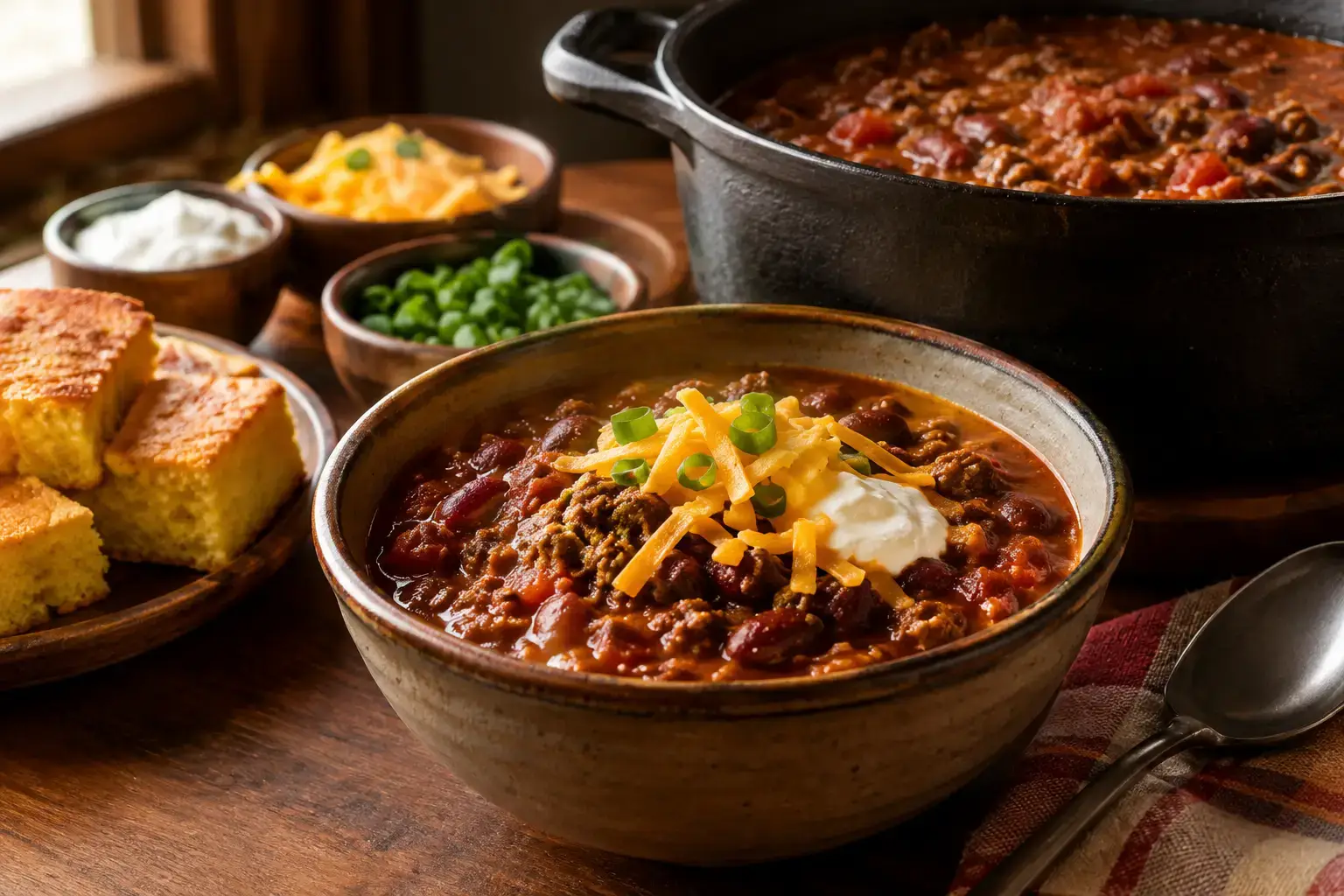
A great chili night should not end with one kid picking out every bean, another reaching for a glass of milk, and the cook wondering where all the flavor went. This guide to family friendly chili is built for the happier version: one deeply savory pot, easy heat control, and enough topping choices that everyone gets a bowl they actually want to finish.
Family-friendly does not mean bland, sugary, or stripped of chili character. It means building warmth in layers, keeping the base approachable, and giving spice lovers a clear lane to turn things up at the table. Every bowl tells a story, and on a busy weeknight, that story can include both a five-year-old with shredded cheese and a grown-up with pickled jalapenos.
What Family-Friendly Chili Really Means
The goal is not to create a chili that tastes like tomato sauce with ground beef. The goal is balance. A good family pot should have a rounded, slow-cooked feel from aromatics, spices, tomatoes, and a little richness, without the aggressive burn that can take over dinner.
For most households, mild chili lands best when it has plenty of cumin, chili powder, garlic, onion, and a small amount of smoked paprika. These ingredients deliver the familiar chili aroma people expect. They bring earthy, toasted depth without demanding that anyone tolerate a mouthful of cayenne.
There is also a texture question. Younger kids often prefer a less chunky bowl, while adults may want beans, vegetables, and a hearty spoonful of meat. You do not need to make separate dinners. Dice onions and peppers small, choose crushed tomatoes over large tomato chunks, and simmer long enough for the ingredients to settle into one cohesive pot.
A Guide to Family Friendly Chili Starts With the Base
Start with a sturdy flavor foundation before thinking about heat. Brown your ground beef, turkey, chicken, or plant-based crumble thoroughly, then cook onion and bell pepper in the rendered fat or a little oil. This is where a weeknight chili stops tasting rushed.
Add garlic near the end of the vegetable cooking time so it stays fragrant rather than bitter. Then bloom the dry spices for about 30 seconds before adding tomatoes, broth, and beans. That brief contact with heat wakes up the cumin and chili powder, giving the finished chili a warmer, more rounded flavor.
Use mild peppers for body, not burn
Bell peppers are the easy MVP here. Red, orange, or yellow bells bring sweetness, color, and a gentler personality than green peppers. If your family already enjoys a little spark, add one seeded poblano. Poblanos are usually mild, but their heat can vary, so taste first if you are cooking for cautious eaters.
Skip fresh jalapenos in the main pot unless you know your crew enjoys them. Their heat can become more noticeable as chili simmers, and a single spicy pepper can make a large batch a tough sell. Save sliced jalapenos, hot sauce, crushed red pepper, and chipotle for the topping station.
Pick a protein that fits the night
Ground beef gives you classic, rich chili flavor and usually wins with traditionalists. Ground turkey is lighter and takes on seasoning well, but it benefits from an extra spoonful of tomato paste or a splash of broth so it does not taste lean and flat. Shredded chicken makes a softer, cozy bowl that works especially well with white beans and green chiles.
Bean-forward chili is another strong family play, particularly when you want a budget-friendly dinner or a meatless Monday option. Use two kinds of beans for better texture, such as kidney beans and pinto beans. If beans are a hard no for someone at the table, serve a portion of the meat-and-tomato base before stirring them in, or simply offer rice as a familiar backup.
Keep the Heat Flexible, Not Absent
The smartest family chili move is separating flavor heat from finishing heat. In the pot, use a mild chili powder blend and avoid piling on hot peppers. At the table, let everybody customize.
Set out shredded cheddar, sour cream or Greek yogurt, diced avocado, tortilla chips, scallions, lime wedges, hot sauce, and jalapeno slices. This is not just a cute spread. Dairy softens spice, avocado adds cooling richness, lime brings brightness, and chips give selective eaters a crunchy way into the meal.
If adults want a smokier, hotter bowl, stir chipotle in adobo, cayenne, or a spoonful of hot chili crisp into individual servings. That protects the main batch and makes the pot more useful for leftovers. One chili, multiple heat levels, zero second dinner.
Add Sweetness Carefully
A small amount of sweetness can smooth tomato acidity and make a mild chili feel more inviting. The key word is small. A grated carrot, a spoonful of corn, or a pinch of brown sugar can work, but too much pushes the flavor toward sloppy joe territory.
Tomato paste is often a better answer than sugar. Cook it with the vegetables until it darkens slightly, and it brings concentrated sweetness along with savory depth. If the chili still tastes sharp after simmering, try a pinch of sugar or a drizzle of honey, then taste again. You want balance, not dessert chili.
The Simmer Is Where the Magic Happens
Even a quick chili needs at least 25 to 30 minutes at a gentle bubble. That time lets the spices hydrate, the beans absorb flavor, and the tomato edge mellow out. If you have an hour, even better. Keep the lid slightly ajar so the chili can reduce without becoming too thick.
Texture is personal. For a thicker chili, mash a small scoop of beans against the side of the pot and stir them back in. For a looser, soupier bowl, add broth in small splashes. Families often disagree on this point, so aim for a spoonable middle ground and let toppings do the rest.
Match the Chili to Your Family’s Style
Classic red chili is the easiest starting point, but it is not the only family-friendly direction. A turkey chili with white beans, corn, and mild green chiles feels lighter and tends to be a hit with people who do not love heavy beef. A Cincinnati-inspired bowl can be fun for adventurous families when served over spaghetti with cheese, though its warm spice profile is a different lane from a traditional Texas-style pot.
For the gentlest route, choose a beef-and-bean chili with crushed tomatoes, bell peppers, and a mild chili blend. For bolder eaters, make the same base and offer smoky hot add-ons. ChiliStation’s recipe categories make this kind of comparison easier: you can narrow the field by protein, regional style, and heat level instead of scrolling through a pile of recipes that all promise to be “the best.”
Make It Work on a Real Weeknight
Chili becomes family dinner gold when you plan for the second meal. Make a full pot, even if dinner is only for four. Leftovers can become chili mac, loaded baked potatoes, nachos, quesadillas, or a freezer meal for the next chaotic night.
If you are cooking ahead, hold back delicate toppings and cool the chili promptly before refrigerating. The flavor usually improves overnight, but it may thicken as it rests. Add a splash of broth or water while reheating, then taste for salt and brightness. A squeeze of lime can bring a day-old pot right back to life.
What if someone hates beans?
Do not treat that as a reason to abandon chili. Use fewer beans, choose smaller beans, mash them into the sauce, or serve them on the side. Chili is flexible enough to accommodate strong opinions without turning dinner into a negotiation.
What if the chili gets too spicy?
First, dilute it with more tomatoes, beans, meat, or broth. Then add richness with sour cream, cheese, or avocado at serving time. Sugar can soften the perception of heat, but it will not erase it, so use it sparingly.
A family-friendly chili does not need to please everyone in exactly the same way. It just needs a flavorful center, a welcoming level of heat, and room for each person to claim their bowl. Put the toppings on the table, let the pot do its cozy work, and watch an ordinary dinner turn into a repeat request.