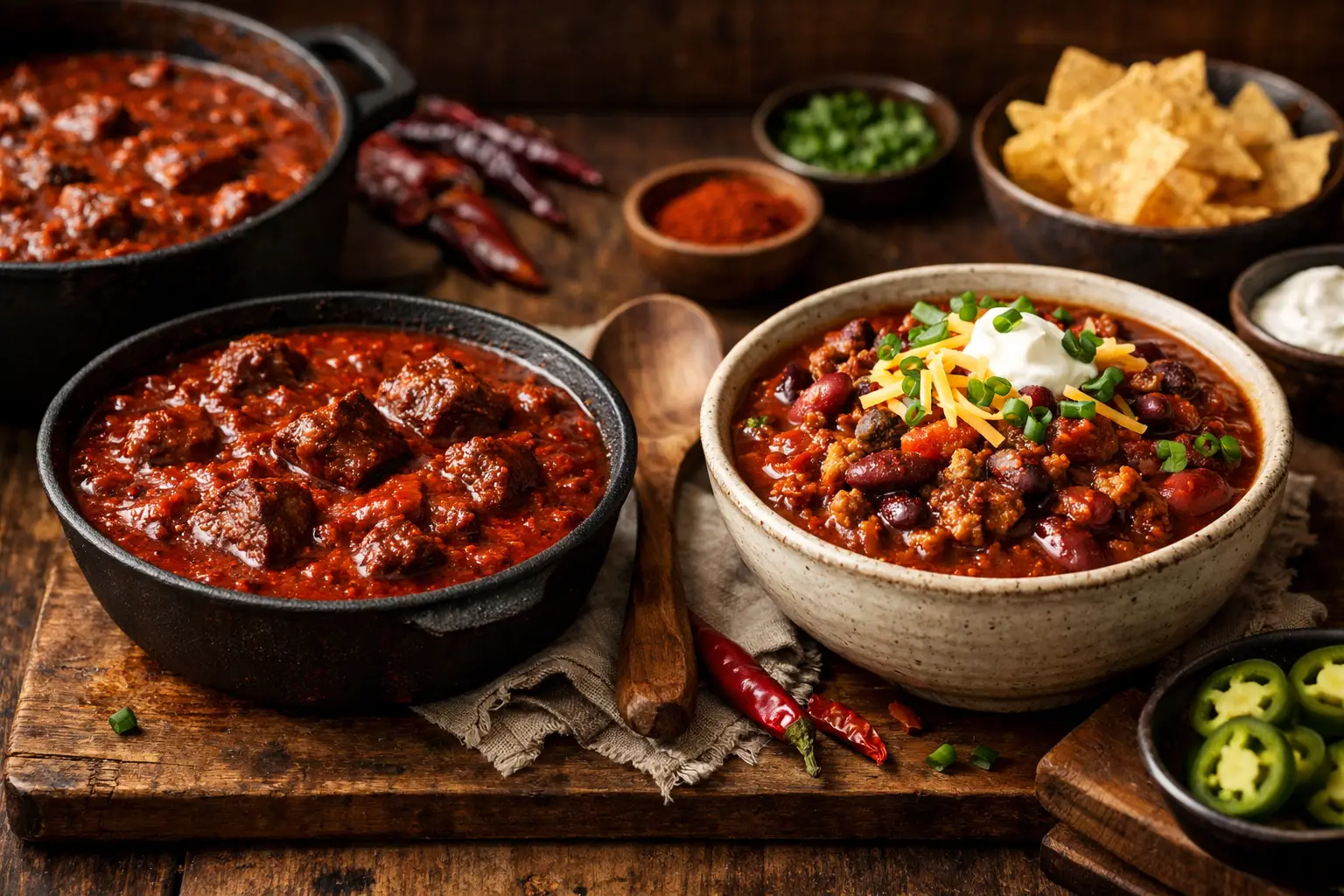
A pot of Texas red can spark an argument before the first spoonful hits the table. Mention beans and someone will insist they do not belong. Mention no beans and someone else will ask where the hearty, weeknight-friendly chili went. That tension is exactly what makes Texas red versus bean chili such a useful comparison: these are not merely two recipes with different add-ins. They are two distinct ideas of what a chili bowl should deliver.
Texas red is a proud, meat-first style with a deep chile backbone and little interest in compromise. Bean chili is broader, more flexible, and built for the way many home cooks actually feed a crowd. Neither bowl wins every occasion. The right choice depends on your pantry, your people, and whether you want a red-sauced Texas statement or a thick, spoon-standing pot with beans in the mix.
Texas Red Versus Bean Chili: The Core Difference
Texas red, often called chili con carne, centers on beef and dried red chiles. Traditional versions skip beans, tomatoes, and often even obvious vegetable chunks. The goal is concentrated flavor: tender beef suspended in a brick-red gravy that tastes earthy, smoky, lightly bitter, and as fiery as you choose to make it.
Bean chili puts legumes on equal footing with meat, or sometimes makes them the main event. Kidney beans, pinto beans, black beans, and chili beans all show up in American-style pots, usually alongside ground beef, turkey, chicken, or a plant-based protein. Tomatoes, onions, bell peppers, corn, and a familiar seasoning blend are common supporting players.
The distinction matters because beans change more than nutrition. They change the texture, cooking rhythm, cost, and personality of the finished chili. A Texas red is built around chile flavor and the luscious body created by blended peppers, collagen-rich beef, and a long simmer. A bean chili gets extra heft from creamy beans, often with a brighter tomato-forward profile.
What Makes Texas Red Taste Like Texas Red?
The word “red” refers to the dried red chile base, not simply a scoop of generic chili powder. Cooks may build that base with ancho, guajillo, New Mexico, pasilla, or chile de árbol peppers. Each brings a different note. Ancho leans raisiny and warm; guajillo is tangy and berry-like; New Mexico chiles bring clean, sun-dried earthiness; árbol delivers sharp heat.
Those chiles are usually stemmed, seeded if desired, softened in hot water, then blended into a smooth sauce. That step is the flavor engine. It is also why an excellent Texas red tastes more layered than a pot made only with a supermarket seasoning packet. Cumin, garlic, Mexican oregano, black pepper, and a little masa harina may appear, but they should frame the chiles rather than bury them.
Beef is typically cubed or coarsely ground. Chuck roast is a favorite because it becomes tender and rich over a long simmer. Some cooks use beef stock, some add a small hit of coffee or beer, and some swear by a touch of rendered beef fat. Every bowl tells a story, but the through line is clear: beef and red chiles are the headline.
Why Texas Red Has No Beans
For Texas red loyalists, leaving out beans is about focus, not a dislike of beans. Beans dilute the meat-and-chile identity of the dish and create a softer, starchier texture. In a competition-style Texas red, the bowl should showcase the chile gravy and the beef. A bean is not an insult. It is simply a different lane.
That said, Texas is enormous, and Texans cook many kinds of chili at home. Plenty of family tables serve beans on the side or stir them into a casual weeknight batch. Food traditions are living things, not courtroom exhibits. Still, if you are chasing the classic Texas red profile, keep the beans out of the pot.
What Bean Chili Brings to the Table
Bean chili earns its popularity because it is generous. Beans stretch a pound of meat into dinner for a larger group, add fiber and protein, and create a satisfying contrast between tender legumes and savory sauce. It is the kind of chili that works beautifully for game day, meal prep, school-night dinners, and tailgates where everyone expects seconds.
The flavor range is wide. A classic beef-and-kidney-bean chili may be tomato-rich, mildly spicy, and seasoned with chili powder, cumin, paprika, and garlic. A pinto bean chili can lean Southwestern with roasted green chiles. Black beans fit naturally with corn, chipotle, and chicken. Vegetarian versions can build depth with mushrooms, smoked paprika, roasted squash, or cocoa.
Canned beans make bean chili especially accessible. Rinse them if you want a cleaner flavor and more control over salt, then add them late enough that they hold their shape. If you use dried beans, cook them until tender before they enter an acidic tomato-heavy pot. Acid can slow softening, and nobody wants a great chili undermined by crunchy beans.
The Texture Question
Texture is where preference becomes personal. Texas red is silky, dense, and meat-forward, with a sauce that clings to each bite. Bean chili is chunkier and more varied. A spoon may catch a bean, a crumble of beef, a piece of pepper, and a little tomato all at once.
Neither texture is inherently better. If you want chile complexity with a steakhouse-level sense of richness, Texas red has the edge. If you want a bowl that feels like a complete, hearty meal without a pile of toppings, bean chili makes a strong case.
Which Chili Should You Cook?
Choose Texas red when the chile flavor is the point. It is ideal for a weekend simmer, a chili cook-off, or a dinner where you want to serve cornbread, tortillas, chopped onions, and cheese alongside a bold main attraction. It rewards a little extra attention, especially if you start with whole dried chiles and chunks of beef.
Choose bean chili when you need a reliable crowd-pleaser with pantry flexibility. It is easier to scale, friendlier to budget-conscious cooking, and adaptable to different diets. You can use ground meat, canned beans, and a short ingredient list without sacrificing comfort-food impact.
Heat tolerance should factor in, too. Texas red can carry serious chile heat, but it does not have to. Use more ancho and guajillo for deep flavor with moderate warmth; add árbol, cayenne, or a hot fresh pepper only when you want the bowl to bite back. Bean chili often benefits from a gentler heat level because its wider mix of ingredients can mute spice. Taste near the end and adjust rather than guessing early.
Common Mistakes That Flatten Both Styles
The biggest Texas red mistake is treating dried chiles like an afterthought. Toast them briefly, never until blackened, because burnt chiles turn bitter fast. Blend the sauce thoroughly, and give the beef enough time to become tender. Rushing either step leaves you with thin flavor or chewy meat.
For bean chili, the most common misstep is adding every ingredient at once and hoping the pot sorts itself out. Brown the meat well. Cook onions and spices until fragrant. Let tomato paste darken slightly if you use it. Then simmer the base before adding delicate ingredients. Beans need warmth and seasoning, but they do not need two hours of punishment.
Both styles benefit from a final adjustment. Salt wakes up chile flavor. A small splash of vinegar or squeeze of lime can sharpen a heavy pot. Masa harina, crushed tortilla chips, or a short uncovered simmer can tighten a loose sauce. Great chili is rarely finished the moment the timer beeps.
The Best Bowl Is the One You Mean to Make
Texas red is a focused red-chile showcase. Bean chili is a flexible, filling American classic. Trying to force one into the identity of the other is where cooks get frustrated. Start by deciding what you are hungry for, then cook that bowl with conviction.
If the idea of comparing chile bases, proteins, and heat levels sounds like your kind of kitchen project, ChiliStation is built for that exact hunt. Pick a lane, stock the toppings, and let the pot simmer long enough for its personality to show.