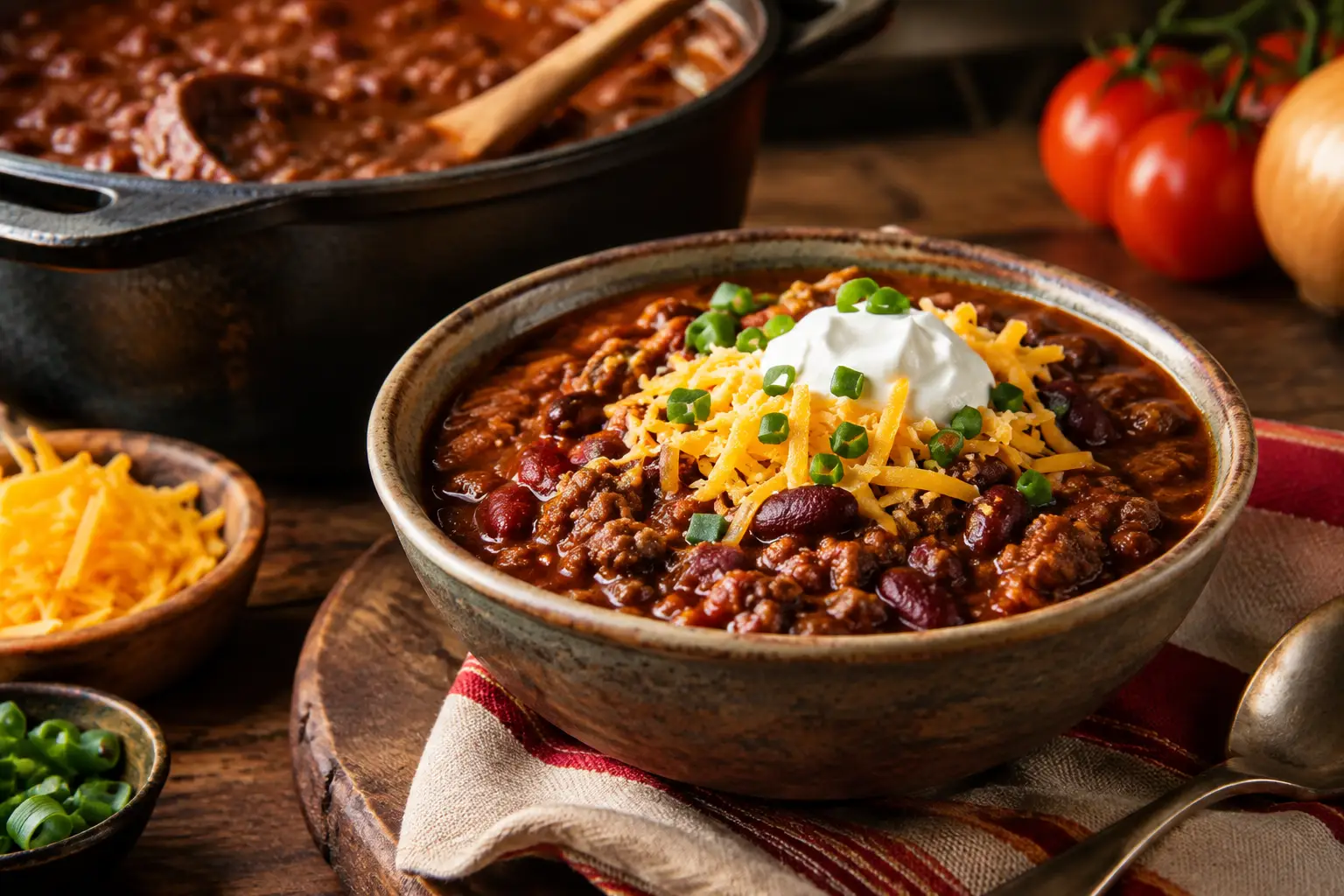
A chili pot can handle more simmer time than most weeknight meals. That is part of its magic. But can you overcook chili? Absolutely. The line between deep, slow-built flavor and a tired, muddy bowl is real, especially when the heat is too high, the lid stays on too long, or the pot is forgotten while you chase a dozen other things.
Chili is forgiving, not invincible. Beans can burst, ground beef can turn grainy, lean chicken can dry out, and bright chile flavor can get buried under one-note heaviness. The good news: once you know what to watch for, you can give your pot the time it deserves without cooking the personality out of it.
Can You Overcook Chili on a Low Simmer?
Low and slow is still the right instinct for most chili styles. A Texas Red benefits from a long, gentle cook that lets tough beef relax and dried chiles round out. A chunky beef-and-bean chili needs enough time for the spices, tomatoes, and broth to stop tasting like separate ingredients. Even Cincinnati-style chili needs a proper simmer to develop its distinctive spice-forward character.
The trouble starts when "simmer" becomes an active boil, or when a finished chili keeps cooking for hours with no adjustment. Heat continues to break ingredients down. Liquid evaporates. Fat can separate. The flavor profile becomes less layered and more blunt.
How long is too long depends on what is in the pot. A chili made with cubed chuck may be better after three or four hours. One made with ground turkey, canned beans, and delicate fresh peppers may peak closer to 45 minutes or an hour. There is no universal timer because every bowl tells a story - and every ingredient has a different breaking point.
The Signs Your Chili Has Cooked Too Long
Overcooked chili rarely announces itself with one dramatic failure. More often, it gradually loses contrast. Look, smell, taste, and texture all tell the truth.
The clearest sign is mushy texture. Beans that once held their shape begin splitting until they disappear into the sauce. That can be welcome in a naturally thick, creamy chili, but it is not ideal if you wanted distinct beans and a hearty, spoonable bite. Vegetables such as bell peppers, zucchini, corn, or potatoes can go from tender to soft and indistinct.
Meat gives another clue. Cubes of beef should become tender enough to yield easily, not dry and stringy. Ground meat can become oddly crumbly after a long, hard cook, particularly if it is very lean. Chicken breast is the quickest casualty: it may shred nicely at first, then tighten and turn cottony if held at heat too long.
Then there is the flavor. A great chili has movement: savory meat, earthy chile, sweetness from onion or tomato, enough salt, and a finish that keeps you coming back for another spoonful. An overcooked pot can taste flat, overly concentrated, bitter, or vaguely scorched. If the only note left is "heavy," it likely needs attention.
Finally, check the bottom of the pot. Thick chili scorches easily once liquid reduces, especially in a thin pan or a slow cooker running hotter than expected. A dark, stuck layer and a faint burnt smell are not a seasoning opportunity. Do not scrape that layer into the chili.
Why Chili Changes as It Simmers
Time does several excellent things to chili. Collagen in tougher cuts of meat melts into gelatin, giving the sauce body. Dried chile skins soften and release flavor. Onions dissolve into the base. Spices lose their raw edge and begin tasting integrated rather than dusty.
But those same forces keep going. Acid from tomatoes can become more pronounced as water evaporates. Some volatile aromas from fresh chiles, herbs, and spices fade with extended heat. Beans absorb liquid until they swell and split. The pot gets thicker, which raises the chance of scorching.
This is why a chili that tastes perfect at 2 p.m. may need a different plan before dinner at 6. Turn the heat down to the lowest possible setting, hold it with a little extra liquid, or cool and reheat it later. Letting it sit off heat for a while can be more useful than another two hours of bubbling.
Covered or uncovered matters
A covered pot traps moisture, so the chili stays looser and ingredients soften more quickly. It is useful early in the cook, particularly for tougher meat or dried chiles that need time to hydrate. Leaving the lid slightly ajar gives you a middle ground.
An uncovered pot reduces and concentrates. That is how you build a thick, cling-to-the-spoon chili, but it demands more stirring and closer monitoring. If the pot is already thick enough, do not keep it uncovered just because the recipe clock has not run out.
Slow cookers need a check-in, too
Slow cookers are built for chili, but their temperatures vary. Many modern models run hotter than older ones, and a full cooker behaves differently from one that is half full. Chili can overcook on the "warm" setting if it sits there long enough, especially with beans and lean meat.
For the best texture, add canned beans during the final hour or two when possible. If using chicken breast, consider adding it later than you would beef chuck. And if your chili is done before guests arrive, switch to warm only after stirring in a splash of broth or water and checking that the bottom is not catching.
How to Save an Overcooked Pot of Chili
The fix depends on what went wrong. If the chili is simply too thick, stir in a small amount of unsalted stock, water, tomato sauce, or beer. Add it gradually, then let the pot settle for five to 10 minutes before deciding whether it needs more. Adding a full cup at once is how a concentrated chili becomes soup.
If it tastes too intense or salty from reduction, dilution is part of the answer, but balance matters too. A little acidity from lime juice or vinegar can brighten a dull bowl. A pinch of sugar, a spoonful of masa harina, or a small amount of unsweetened cocoa can round rough edges in the right style of chili. Use restraint. Your goal is not to make it taste like a different recipe.
For beans that have gone soft, you cannot reverse the texture, but you can restore contrast. Fold in a fresh can of rinsed beans near the end, or top each bowl with crisp onion, radish, tortilla chips, scallions, shredded cabbage, or jalapeño. Chili is a bowl built for toppings, and a crunchy finish can rescue a lot.
If meat is dry, add moisture and richness rather than cooking it longer. A little broth, rendered bacon fat, or a spoonful of sour cream at serving can help. Shredded chicken may be better folded into the sauce than left in large, dry chunks.
If the bottom has scorched, act fast. Transfer the unburned chili to a clean pot without scraping or stirring the bottom. Taste it. If the burnt flavor is faint, a little fresh tomato, broth, and acid may bring it back into balance. If it tastes aggressively smoky in the wrong way, it is better to call that batch a lesson and start fresh.
Cook Chili Until It Is Great, Not Until the Clock Says So
Recipes offer useful ranges, but your pot gets the final vote. Start tasting regularly once the chili enters its expected finish window. For a fast ground-beef chili, that may mean tasting after 30 minutes. For a beef chuck or pork shoulder version, begin checking around the two-hour mark and continue every 30 minutes.
Taste for more than salt. Ask whether the meat is tender, whether the beans still have the texture you want, whether the chile flavor feels lively, and whether the sauce is thick enough to suit the style. Texas Red should not eat like a thin soup. Colorado green chili can be looser and saucier. A white chicken chili may benefit from creaminess but still needs recognizable chicken and beans.
When the pot lands in the sweet spot, stop cooking. Let it rest for 10 to 20 minutes before serving if you have time. That short pause lets the sauce settle and the flavors gather themselves without turning your ingredients to mush.
The best chili is not the one that simmers the longest. It is the one that tastes unmistakably like the bowl you meant to make - rich, vivid, textured, and worth going back for before anyone else claims the leftovers.