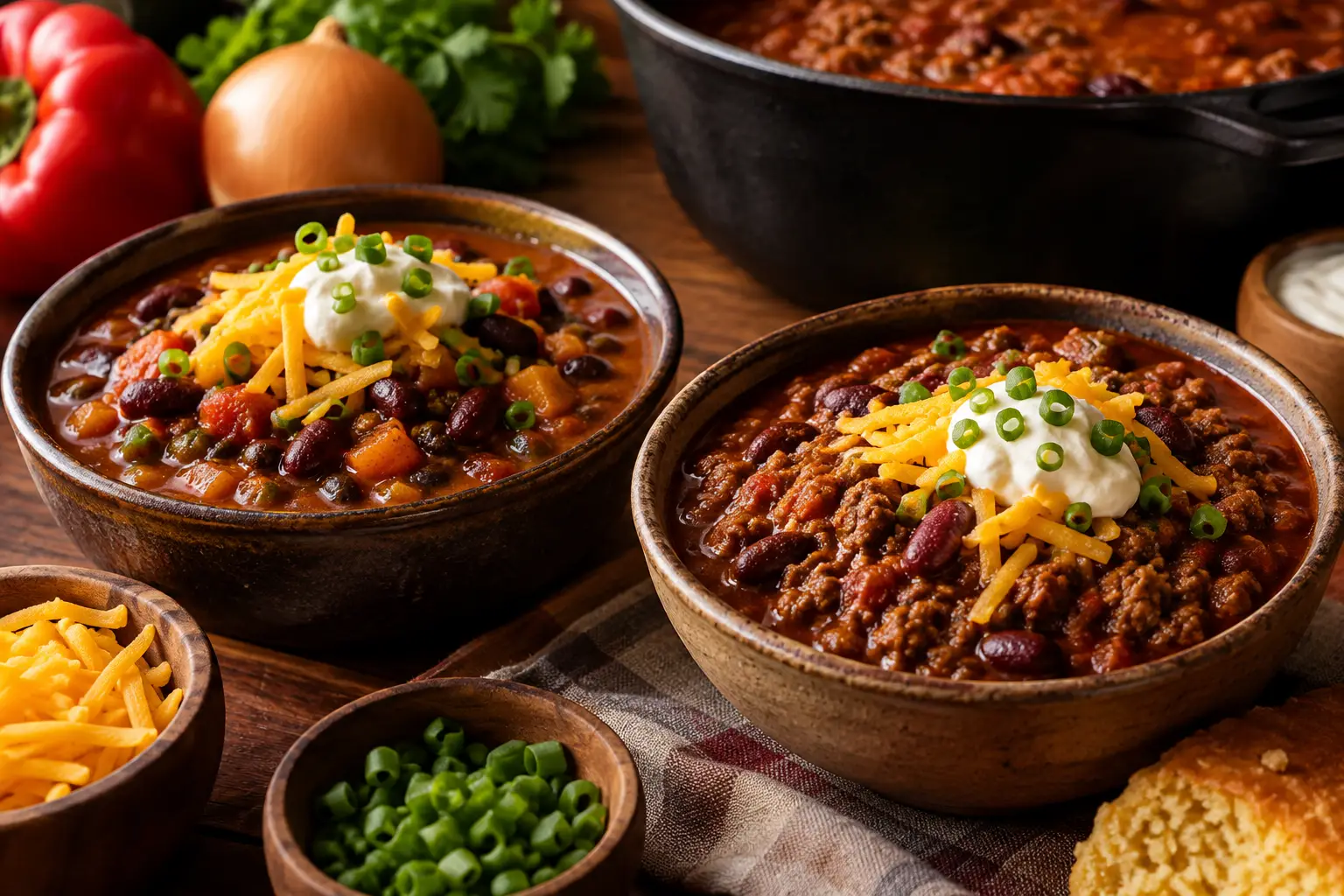
A pot of chili does not need beef to feel bold, but it does need a point of view. That is the real fun of vegetarian chili vs meat chili: these are not simply two versions of the same dinner. One leans on savory browning, rich fat, and long-simmered depth. The other builds its power through beans, vegetables, chiles, spices, and smart texture. Both can bring serious comfort-food energy to the table.
The better bowl depends on what you want from it. Are you feeding a game-day crowd that expects a hearty, beefy red? Cooking a budget-friendly Sunday batch? Looking for a lighter weeknight meal that still carries enough heat to wake up the room? Every bowl tells a story, and the ingredients decide where it goes.
Vegetarian Chili vs Meat Chili at a Glance
Meat chili often starts with ground beef, chuck, pork, chicken, turkey, or a regional specialty such as venison. The meat creates a deep, savory foundation as it browns, releasing fat that carries spices and gives the finished chili a plush, substantial texture. In a Texas-style bowl of red, chunks of beef and dried chiles can do nearly all the talking.
Vegetarian chili has to build that same sense of depth differently. Beans provide body, while onions, garlic, roasted peppers, tomatoes, mushrooms, corn, squash, lentils, and soy-based crumbles can add structure. A great vegetarian chili is not meat chili with the meat removed. It is its own category, designed around layers of chile flavor, umami, and contrast.
Neither automatically wins. A rushed vegetarian chili can taste flat, just as an underseasoned meat chili can taste greasy and one-note. The best choice is the one built for the moment.
Flavor: Where the Difference Really Shows
Meat chili gets an early advantage from browning. Beef, especially, creates roasted, savory notes that are difficult to replicate exactly. Pork brings sweetness and richness, turkey stays lighter but can still take on a smoky spice blend, and chicken works beautifully with green chiles, tomatillos, and white beans.
That said, vegetarian chili can deliver huge flavor when the cook treats vegetables and legumes as active ingredients, not filler. Mushrooms bring earthy savor. Roasted poblano peppers add grassy heat. Black beans and kidney beans offer creamy, sturdy bites. Lentils melt slightly into the broth and make the pot feel thick without needing a pound of meat.
The secret weapon is concentration. Toast whole spices, bloom chile powder in oil, caramelize tomato paste, and use dried chiles when possible. A splash of coffee, cocoa, soy sauce, miso, or a smoky chipotle puree can deepen a vegetarian pot without making it taste like a science project. Pick one or two umami builders, then let the chile character remain front and center.
The case for a mixed approach
If your household is split, you do not have to declare a winner. A bean-forward turkey chili, or a beef chili bulked up with pinto beans, zucchini, and peppers, can land in the sweet spot. Think of protein as one dial among many: heat, acidity, sweetness, smoke, and thickness all shape the finished bowl.
Texture: Hearty Means Different Things
For plenty of chili fans, texture is the deciding factor. Meat chili offers chew and richness, particularly when made with cubed chuck or brisket instead of ground meat. Long simmering softens connective tissue and produces that spoon-coating, stick-to-your-ribs quality people expect when the weather turns cold.
Vegetarian chili can be equally hearty, but it needs deliberate contrast. An all-bean pot may be satisfying, yet it can become soft and uniform if every ingredient cooks for the same amount of time. Keep some vegetables chunky. Add corn or diced sweet potato for pops of sweetness. Stir in lentils early for thickness, but add canned beans later so they retain their shape. Finish with crunchy toppings such as tortilla strips, pepitas, raw onion, or crushed corn chips.
Meat chili also benefits from contrast. A rich beef bowl comes alive with sharp cheddar, pickled jalapenos, diced onions, lime, or a cool spoonful of sour cream. Chili is a topping-friendly sport, and texture is why.
Nutrition: It Depends on the Pot
Vegetarian chili is often higher in fiber and lower in saturated fat, especially when it is built around beans, lentils, vegetables, and a modest amount of oil. A bowl can provide plant protein, complex carbohydrates, and plenty of micronutrients without feeling like diet food.
Meat chili tends to deliver more protein per serving, along with nutrients such as iron, zinc, and vitamin B12. Lean ground turkey or chicken can make a lighter pot, while beef and pork bring more richness but can also raise saturated fat depending on the cut and portion.
The labels do not tell the whole story. A vegetarian chili loaded with cheese, sour cream, and chips may be richer than a lean turkey chili with beans and vegetables. A beef chili made from a fatty cut can be balanced by using more beans, tomatoes, and peppers. Build the bowl you want, then choose toppings with intention.
Cost and Convenience for Real-Life Cooking
Vegetarian chili is usually the budget champion. Beans, lentils, canned tomatoes, onions, and spices stretch far, making it ideal for meal prep, family dinners, and feeding a crowd without watching the grocery total climb. It also freezes exceptionally well.
Meat chili can cost more, especially if you use steak-like cuts or premium ground beef. But it offers convenience in another way: ground meat browns quickly and gives the pot instant depth. On a busy weeknight, a fast turkey or beef chili can be ready before a slow-simmered vegetarian chili has fully developed its flavor.
Canned beans make vegetarian chili fast, but dried beans can give you more control over texture and salt. For meat chili, browning in batches is worth the extra few minutes. Crowding the pan steams the meat, and steamed meat is not the bold opening act your chili deserves.
Which Chili Fits the Occasion?
For a classic football spread, meat chili has obvious crowd appeal, especially with a toppings bar. It feels celebratory, familiar, and ready to drape over hot dogs, fries, or a pile of cornbread.
For a potluck with mixed dietary needs, vegetarian chili is the smarter base. Serve cheese, sour cream, meat crumbles, and hot sauces on the side, and everyone can build their own bowl. It is generous cooking without a separate-dinner headache.
For meal prep, either works, but vegetarian chili often improves dramatically after a night in the fridge as beans absorb the spices and the broth thickens. Meat chili also tastes better the next day, especially when its fat has had time to settle and its chile flavor has rounded out.
How to Choose Your Best Bowl
Start with the flavor profile, not the protein label. Want dark, smoky, beefy red chili with dried ancho and guajillo? Meat may be the natural fit. Craving a bright, green, poblano-heavy pot with white beans and tomatillos? Vegetarian or chicken chili might be where the magic happens.
Then consider your crowd, budget, and time. ChiliStation’s best advice is simple: use the filters in your own kitchen. Choose by heat level, texture, regional mood, and what is already in the pantry. A great chili recipe earns repeat status because it fits your life as well as it fits your bowl.
Tonight, let the weather, the guest list, and your appetite call it. Brown the beef when you want deep, old-school comfort. Reach for beans and chiles when you want a colorful, plant-powered pot with plenty to say. Either way, save room for toppings.