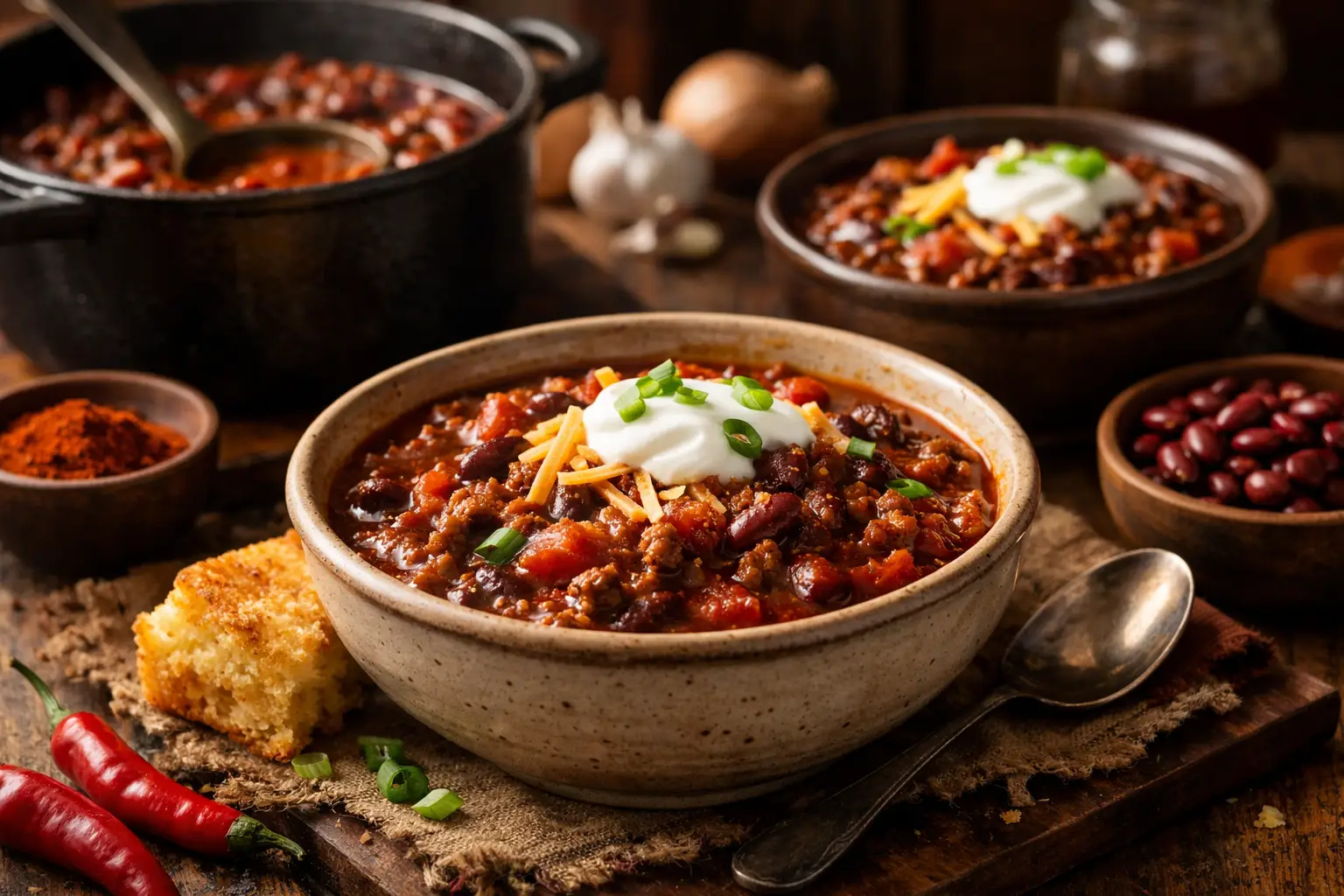
The first-night bowl can be great: loud cumin, bright chile heat, tender beans, a serious cloud of steam. But the bowl you pull from the fridge the next day often has more depth, balance, and straight-up swagger. That is why chili tastes better tomorrow. Time gives a pot of chili the chance to stop acting like a collection of ingredients and start tasting like one finished dish.
It is not magic, although leftover chili can feel suspiciously close. It is food chemistry, temperature, texture, and a little restraint. Resting lets spices settle into the sauce, lets fats carry flavor more evenly, and gives ingredients time to trade their best notes. Every bowl tells a story, and the next-day version usually has a better edit.
Why chili tastes better tomorrow: the flavor science
Fresh chili is full of separate signals. You may taste the raw edge of onion, the bitter finish of chile powder, a sharp hit of garlic, or the sweet acidity of tomatoes before everything else catches up. Simmering starts the blending process, but cooling and resting extend it.
Many of chili’s aromatic compounds dissolve in fat and move through liquid slowly. As the pot sits, rendered beef fat, bacon fat, oil, or even the natural fat in turkey and sausage carries those flavors around. Cumin, oregano, smoked paprika, black pepper, dried chiles, and coriander lose their individual elbows. They become a team.
The sauce also thickens in the refrigerator. Beans continue absorbing seasoned liquid. Ground meat takes in some sauce and releases gelatin as it cools. Tomato solids, chile puree, and dissolved starches settle into a more cohesive body. A thicker sauce clings to each spoonful, which means the flavor lands with more intensity.
Acidity gets a little less shouty, too. Tomatoes, vinegar, beer, and hot sauce do not disappear overnight, but their edges soften as the savory base catches up. The result is a chili that tastes rounder rather than flatter. That distinction matters. Great next-day chili should still have lift, heat, and contrast. It should just no longer taste like the cumin and tomatoes are competing for the microphone.
The spice bloom keeps working
Toasting dried chiles or blooming ground spices in fat is one of the fastest ways to build a serious pot. But even a well-bloomed spice mix needs time to integrate. Chile powder contains a crowd of flavors, from earthy and fruity to bitter and smoky. Give it a night, and those notes settle deeper into the meat, beans, and broth.
That is especially noticeable in a Texas Red or a bean-free beef chili built on dried chile paste. Ancho, guajillo, pasilla, and chipotle develop a darker, more unified profile after resting. The next day, you are less likely to identify each chile separately and more likely to taste the full red-chile backbone.
Texture is half the reason
Flavor gets the headlines, but texture is a major reason tomorrow’s chili wins. Cooling changes the structure of a stew. Gelatin from browned meat, bones, stock, or collagen-rich cuts firms up slightly in the fridge, then melts back into the sauce when reheated. That creates the rich, glossy texture people describe as velvety or hearty.
Beans are another big factor. In a classic beef-and-bean chili, pintos, kidneys, black beans, or cranberry beans absorb seasoning while they rest. By day two, they taste less like beans sitting in chili and more like actual parts of the chili. The trade-off is that they can become too soft if the pot was already cooked hard or stored for several days.
Ground meat benefits from a rest, but it needs a gentle reheat. A long, aggressive boil can make beef, turkey, or chicken feel grainy and dry. Cubed chuck is more forgiving, especially when there is plenty of gelatin in the sauce. For a chunky white chicken chili, the window is tighter: the broth gets more flavorful overnight, but shredded chicken can overcook fast.
Not every chili improves in the same way
The “better tomorrow” rule is powerful, not absolute. Chili is a big tent. A slow-cooked beef chile may peak after one or two nights, while a fresh green chile can lose some of its bright roasted-pepper character if held too long.
Colorado green chili, pork green chile, and Hatch-forward bowls often benefit from an overnight rest because pork and roasted chiles have time to mingle. Still, their best quality is that green, vegetal spark. Reheat them carefully and consider adding a small spoonful of fresh roasted green chile, cilantro, or lime at the end if the flavor has gone too muted.
Cincinnati chili is another special case. Its cinnamon, allspice, clove, cocoa, and savory meat sauce profile becomes remarkably unified after chilling. It can taste more polished the next day, especially when spooned over spaghetti with the classic mountain of cheese. Just thin it slightly as needed, since it is meant to be saucy rather than spoon-standing thick.
Vegetarian chili often improves dramatically overnight because vegetables, beans, lentils, mushrooms, and squash absorb the seasoning so well. But tender vegetables such as zucchini or corn may lose definition. If texture matters as much as depth, hold back a portion of quick-cooking vegetables and add them during reheating.
How to make tomorrow’s chili even better
The best leftover chili starts with smart choices on day one. Brown meat deeply instead of simply turning it gray. Cook tomato paste until it darkens. Bloom spices in fat, if the recipe allows. Use enough liquid for a slow simmer, not a frantic boil. These moves build the flavor foundation that resting can improve.
Then cool the chili safely and promptly. Divide a large batch into shallow containers so it loses heat faster, and refrigerate it within two hours. A giant hot stockpot shoved directly into the fridge cools slowly and can warm the rest of the refrigerator. It also leaves you with a lukewarm center for too long, which is not the kind of food science anyone wants.
The next day, reheat only the portion you plan to eat. Warm it in a saucepan over medium-low heat, stirring now and then, until it is hot all the way through. If it has tightened up, add a splash of stock, water, beer, or crushed tomatoes depending on the style. Start small. You can always loosen chili, but rescuing a thin pot takes longer.
Taste before you adjust. Resting can make salt seem more pronounced, especially after the sauce reduces again. It can also mute top notes. Usually the fix is not more chile powder. A pinch of salt, a few drops of vinegar, a squeeze of lime, or a spoonful of hot sauce can wake the bowl up without bulldozing its slow-built depth.
The finishing move most leftovers need
Think of next-day chili as a fully developed base that still wants contrast. Rich, dark, long-simmered bowls love a fresh finish: diced white onion, cilantro, scallions, sharp cheddar, pickled jalapenos, crushed crackers, or a cool spoonful of sour cream. A Texas-style red may only need onion and a warm tortilla. A smoky black bean chili might want avocado and lime. The bowl tells you what it is missing.
This is where recipe collecting gets fun. Make a big batch, enjoy the first-night version, then rate the day-two bowl on its own terms. Was it richer? Too thick? Did the heat bloom or fade? Did the beans become perfect, or did the green chiles lose their pop? Those details help you find the styles worth repeating, whether you are chasing beefy red chile, cozy white chicken chili, or a meatless pot with serious backbone.
Tomorrow’s chili is proof that patience has flavor. Let the pot rest, reheat it gently, and give it one fresh finishing touch. The second bowl may be the one people remember.