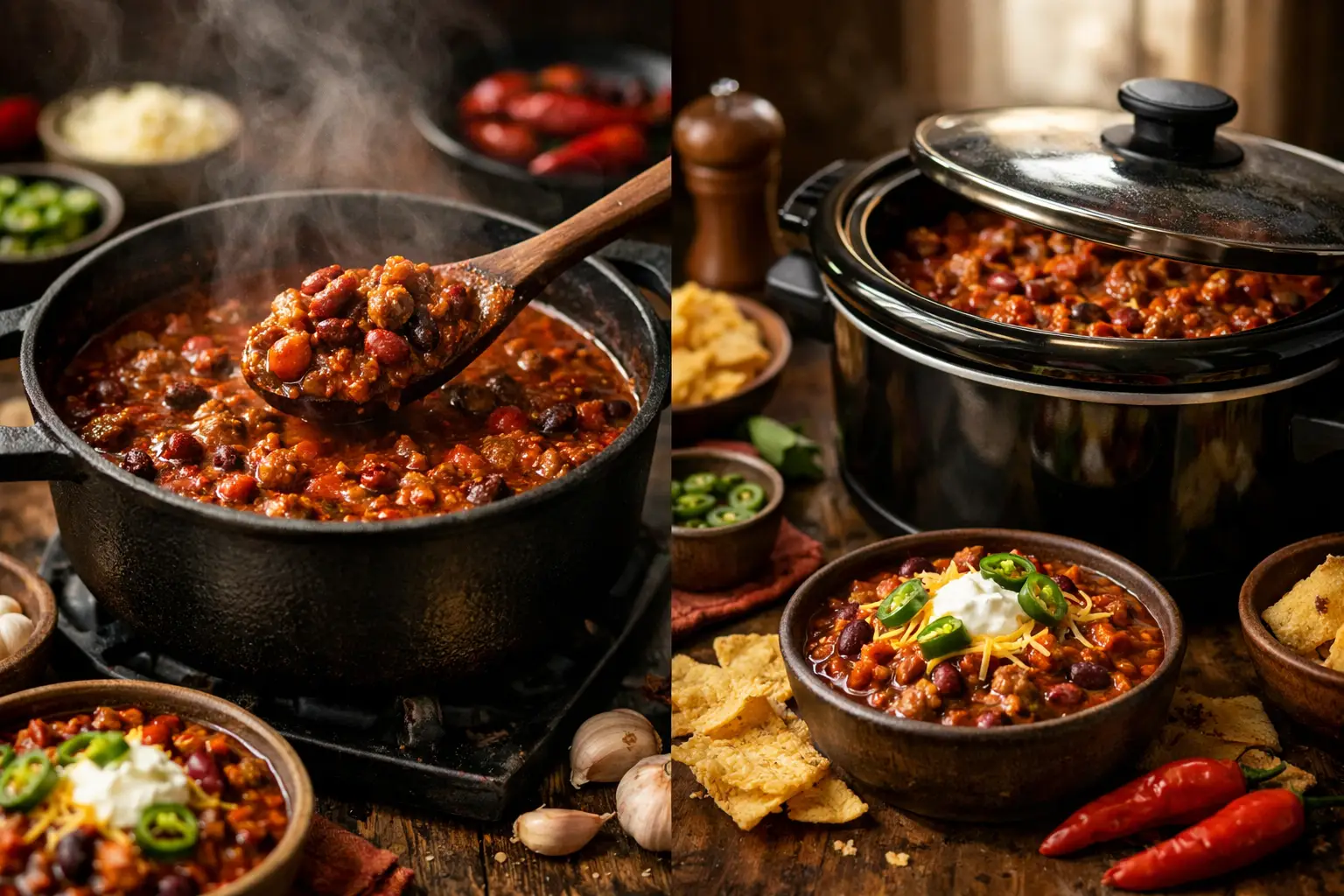
You can tell a lot about a chili night by the pot. If dinner needs to hit fast and still taste like it means business, the Dutch oven comes out. If the goal is low-effort comfort with a house that smells like cumin and chiles all day, the slow cooker gets the call. That is why stovetop chili vs crockpot is not really a battle of right and wrong. It is a choice about texture, timing, and what kind of bowl you want at the end.
For home cooks, this matters more than recipe writers sometimes admit. The same ingredient list can land very differently depending on the method. A beef-and-bean weeknight chili simmered on the stove tends to taste brighter, sharper, and more layered in the moment. The same core build cooked low and slow in a crockpot usually comes out rounder, softer, and more blended together. Neither is automatically better. They just tell different stories.
Stovetop chili vs crockpot: the real difference
The biggest difference is control. Stovetop chili gives you active control over browning, liquid reduction, heat level, and final texture. You can build flavor in stages, taste often, and adjust as you go. If your onions need a few extra minutes, you give them a few extra minutes. If the pot looks thin, you simmer harder. If the spices need waking up, you bloom them in the fat and keep moving.
A crockpot is the opposite in the best and worst ways. It trades precision for ease. Once everything is in, the cooking environment stays gentle and steady. That can be magic for busy days, tougher cuts of meat, or recipes where you want ingredients to melt into each other. It can also flatten some of the sharper edges that make chili exciting, especially if you skip foundational steps like browning the meat or sautéing the aromatics first.
So the question is not which method makes chili. Both do. The better question is what kind of chili each method makes best.
When stovetop chili is the move
Stovetop chili shines when flavor development depends on contrast. Think deep browning on the meat, softened but not vanished onions, and enough evaporation to concentrate tomatoes, stock, and chile flavor into something thick and spoon-coating. If you like a chili with clear layers, where the smoke, acid, sweetness, and heat all still have their own lane, the stovetop usually wins.
This is also the stronger method for shorter-cook chilis. Ground beef chili, turkey chili, and many weeknight bean chilis do not need six to eight hours to become themselves. In fact, they can lose definition if they sit too long. Beans can soften too far. Lean meats can turn a little crumbly. Bell peppers can become background noise instead of an active flavor.
Stovetop cooking is especially good for styles that benefit from reduction. Texas-style bowls without beans often need that concentrated, brick-red body that comes from simmering uncovered and stirring occasionally. Cincinnati-inspired chili also tends to do well on the stove because you can dial the texture and spice balance more precisely. If your goal is a pot with edge and structure, stovetop is your friend.
There is also a practical point here: correction is easier. Too thin? Simmer it down. Too acidic? Add a little sweetness or fat and reassess in ten minutes. Too mild? Bloom more chili powder in a small pan and stir it in. The stove lets you coach the pot in real time.
When crockpot chili earns its spot
Crockpot chili is the champion of convenience, but that undersells it. It also excels at cohesion. Long, gentle cooking helps ingredients merge into a unified bowl where no single element sticks out too far. That can be exactly what you want in a hearty, family-style chili meant for game day, meal prep, or a cold Sunday where you want to set it and forget it.
It is also excellent for cuts of meat that improve with time. Chuck roast, pork shoulder, and chicken thighs can become especially tender in a slow cooker, and that softness works beautifully in thicker, richer chili styles. If you like shredded textures or spoon-tender bites rather than firmer chunks, the crockpot has a clear advantage.
Bean-heavy chilis also often do well here, especially when the goal is comfort over contrast. The beans absorb flavor steadily, the broth thickens gradually, and the overall pot becomes mellow and deep. That can be ideal for milder chilis or crowd-friendly versions where you want warmth and richness without aggressive spice peaks.
The catch is that slow cookers do not reduce liquid the way a stovetop pot does. Moisture stays trapped. That means recipes need less stock, less tomato liquid, or a finishing step to thicken things up. It also means spices can taste softer. A crockpot chili often benefits from a final hit of salt, acid, hot sauce, or extra chile powder right before serving.
Flavor, texture, and the trade-offs
If you line up two bowls side by side, one from the stove and one from the crockpot, the stovetop version will usually taste more vivid. Browning is stronger. The tomato note pops more. The chile flavor can feel more direct, especially if spices were toasted and the pot was reduced properly.
The crockpot version will usually taste more integrated. Instead of separate highs and lows, you get a fuller middle. That can read as richer and more comforting, though sometimes less dynamic. For some cooks, that is a feature. For others, it feels like the pot needs a finishing spark.
Texture is where the gap gets even clearer. Stovetop chili tends to have cleaner definition between meat, beans, and vegetables. Crockpot chili pushes those components closer together. Again, neither is inherently superior. A chunky beef chili with visible peppers and a tighter sauce feels fantastic from the stove. A slow-cooked pulled pork chili with creamy beans and a velvety body feels built for the crockpot.
This is why method should follow style. Every bowl tells a story, and the cooking vessel changes the plot.
What to choose based on your schedule
If you decide what to cook at 5:15 p.m., go stovetop. You can make a very good chili in under an hour, and a great one in about ninety minutes if you are working with ground meat or canned beans. The feedback loop is fast, which is exactly what weeknight cooks need.
If you know by breakfast what dinner should be, the crockpot starts looking smart. It is perfect for workdays, busy weekends, and any situation where active cooking time is the real obstacle. You do need to think ahead, but once you do, the payoff is almost comically convenient.
There is one middle-ground move that deserves more love: hybrid chili. Brown the meat, onions, and spices on the stove, then transfer everything to the crockpot for the long simmer. This approach keeps the depth you get from searing and blooming while still giving you the hands-off schedule of slow cooking. For a lot of recipes, it is the best of both worlds.
The best method for different chili styles
Ground beef and bean chili usually performs best on the stovetop unless your priority is all-day convenience. Turkey chili also tends to stay more lively on the stove, where you can protect it from overcooking and sharpen the seasoning as it develops.
Chunky beef chili is more situational. If you want defined cubes and a reduced, intense sauce, use the stovetop and give it time. If you want fork-tender beef that almost collapses into the broth, the crockpot is a strong play.
White chicken chili can go either way. Stovetop versions often taste fresher and brighter, especially with green chiles, lime, and cilantro in the mix. Crockpot versions turn creamier and softer, which many people love. Vegetarian chili also depends on the vibe. For distinct vegetables and a cleaner finish, stovetop. For a thicker, more blended bowl, crockpot.
If you are the kind of cook who likes to compare methods recipe by recipe, that is where a focused platform like ChiliStation really earns its keep. Some chilis are built to simmer hard and fast. Others want the long, slow ride.
A few mistakes that change the result
Most disappointment with crockpot chili comes from skipping browning and adding too much liquid. Those two choices alone can leave you with pale flavor and a soupy pot. If you are using a slow cooker, treat browning as flavor insurance whenever possible.
Most disappointment with stovetop chili comes from rushing the simmer or under-seasoning late. Chili usually needs a final check near the end. Salt, acid, and heat often need one last adjustment after reduction changes the balance.
The other common issue is expecting the same toppings to do the same job. A crockpot chili often benefits from bright toppings like scallions, pickled jalapeños, or a squeeze of lime. A stovetop chili with plenty of edge may want cooling contrast from sour cream, cheddar, or avocado.
So which should you choose? Pick the stovetop when you want more control, bolder definition, and a chili that tastes freshly built. Pick the crockpot when you want ease, tenderness, and a bowl that settles into itself over hours. The best chili method is the one that matches your recipe, your day, and the kind of comfort you are chasing tonight.