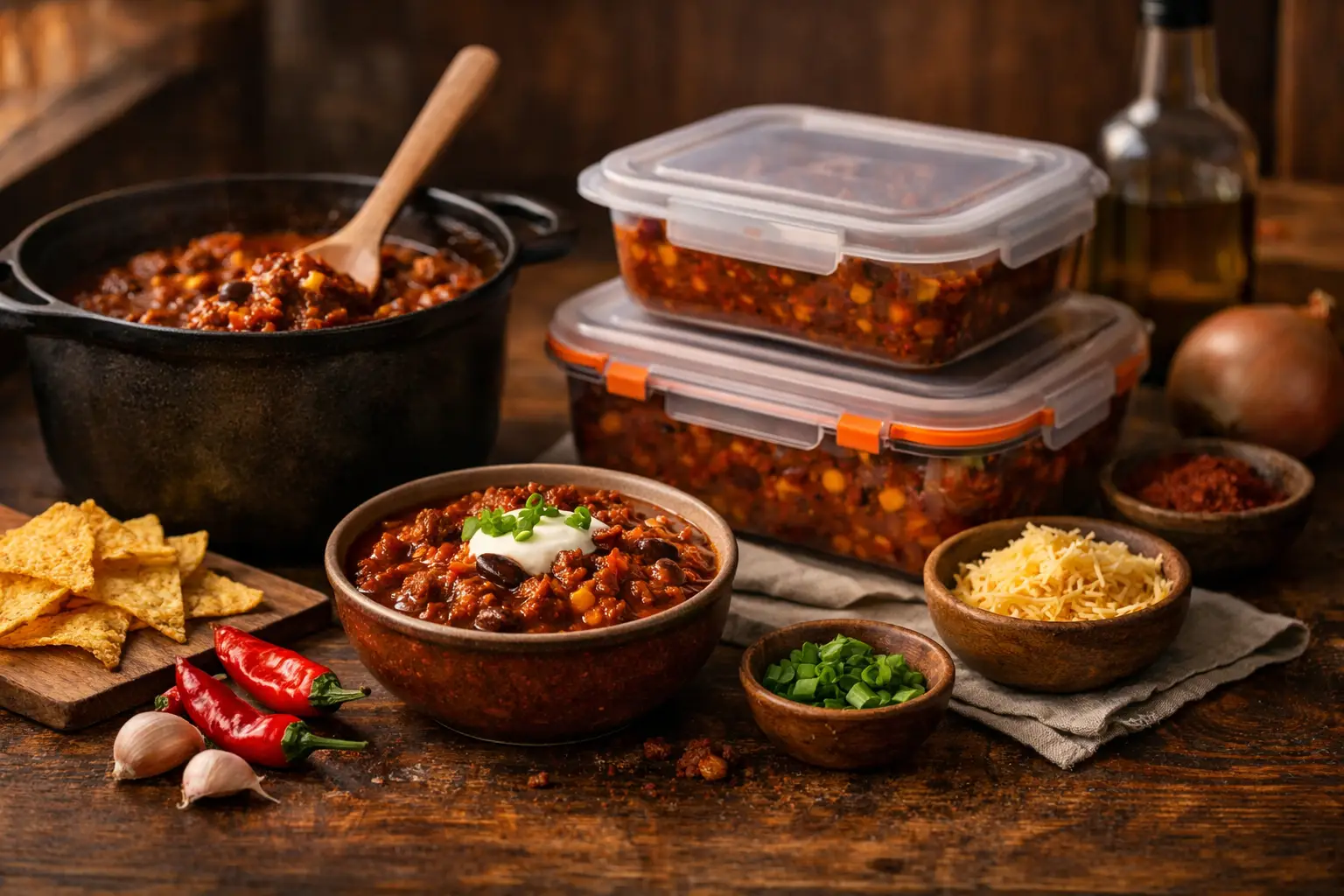
That pot of chili usually tastes even better tomorrow - but only if you cool it, package it, and reheat it with the same care you gave the first simmer. Knowing how to store chili leftovers keeps a weeknight meal safe, saves a serious batch from going dull, and gives you a ready-made lunch that still carries its full chili-house swagger.
Whether you made a brick-red Texas bowl, a bean-heavy turkey chili, smoky Colorado green chili, or creamy white chicken chili, the core rules are simple. The details change slightly based on ingredients, texture, and how quickly you plan to eat it.
How to Store Chili Leftovers Safely
Start the clock when the chili comes off the heat. Chili should not sit at room temperature for more than two hours. If the room is hotter than 90°F - think a packed game-day kitchen, patio buffet, or summer potluck - get it chilled within one hour.
The big mistake is letting an entire Dutch oven slowly cool on the counter. A deep, dense pot holds heat for a long time, which gives bacteria the kind of warm conditions nobody invited to dinner. It also means the center of the chili can stay hot long after the surface feels merely warm.
Instead, divide the chili into shallow containers. Aim for portions no deeper than a couple of inches, leaving a little room at the top if you may freeze them. Smaller portions cool faster, reheat more evenly, and make lunch planning almost laughably easy.
You do not need to wait for chili to reach room temperature before refrigerating it. Transfer it into those shallow containers, loosely cover them while they cool if you are concerned about condensation, then seal and refrigerate. If you are cooling a large batch fast, set the pot in an ice-water bath and stir often before portioning. Keep water out of the chili, obviously - this is a flavor rescue mission, not a dilution plan.
Choose Containers That Protect the Bowl
An airtight container is your best everyday choice. Glass containers are especially handy for chili because they resist stains and lingering cumin-garlic perfume better than many plastic options. Plastic works perfectly well, though, as long as it is food-safe, has a secure lid, and is not warped or cracked.
Portion size matters more than people think. Store individual servings when you want fast lunches or solo dinners. Use two- to four-serving containers when you are planning a chili night encore. Repeatedly heating a large container, scooping out one bowl, and returning the rest to the refrigerator asks too much of both food safety and texture.
For freezer storage, use freezer-safe containers or heavy-duty freezer bags. Bags are space-saving champions: fill them, press out excess air, seal, and freeze flat on a sheet pan. Once solid, they stack like savory red folders in your freezer. Just do not overfill containers or bags. Chili expands as it freezes, particularly brothy versions with beans, tomatoes, or stock.
Label every container with the chili style and date. “Chili” is not enough when the freezer contains a vegetarian three-bean batch, a hatch chile pork stew, and last month’s Cincinnati-style sauce. Every bowl tells a story, but the date tells you whether the story is still dinner.
Refrigerator Timing: The Four-Day Sweet Spot
Properly refrigerated chili is best eaten within three to four days. It may still look and smell fine after that window, but food safety is not a sniff-test sport. If you will not finish it by day four, freeze it early rather than gambling on a fifth-day lunch.
Keep chili toward the back of the refrigerator, where temperatures tend to stay steadier, rather than in the door. Your refrigerator should hold at 40°F or below. This is especially relevant for chilis made with ground meat, poultry, dairy, or seafood, but it is smart practice for every pot.
A few chili styles deserve a little extra thought. Bean and tomato chilis often thicken dramatically in the fridge as starches and solids settle. That is normal, and a splash of water, stock, tomato juice, or beer during reheating can bring back the right spoonable texture. Texas Red may tighten as rendered fat cools on top; stir that flavor-rich layer back in while reheating unless there is more fat than you want in the finished bowl.
Creamy white chicken chili can become thicker or slightly grainy after chilling, especially if it contains sour cream, cream cheese, or a lot of shredded cheese. Reheat it gently and add dairy at the end if possible. Green chilis with potatoes may soften after storage, while pasta-topped Cincinnati chili is best stored with the pasta separate. That separation is the difference between a proper plate and a noodle situation.
Freeze Chili Leftovers for Future Wins
Chili freezes exceptionally well because its flavors are already built through a long simmer. In fact, many batches taste more unified after a rest, as the chile powders, aromatics, meat, and beans have time to settle into the same rhythm.
For peak flavor and texture, use frozen chili within two to three months. It will remain safe longer if continuously frozen, but the quality can fade as freezer burn, ice crystals, and muted seasoning creep in. Lean chilis, tomato-based chilis, and most bean chilis are freezer all-stars. Chili with dairy, delicate seafood, or a heavy potato component can still be frozen, but expect a texture adjustment when it returns to the pot.
Freeze toppings separately, always. Shredded cheese, diced onion, cilantro, scallions, crushed crackers, cornbread, tortilla chips, and avocado all deserve a fresh debut. Sour cream does not freeze gracefully, and avocado absolutely does not want to be part of this plan.
If you are making chili specifically for the freezer, pull out portions before adding tender garnishes or any finishing dairy. You will get a brighter, cleaner-tasting bowl when you add those elements after reheating.
The Best Way to Reheat Chili
Thaw frozen chili overnight in the refrigerator when you have time. For a faster route, reheat it directly from frozen in a saucepan over low heat, adding a small splash of liquid as needed and breaking it apart as it loosens. A microwave works too: use a covered microwave-safe bowl, heat in short intervals, and stir between rounds so the center does not stay cold while the edges boil.
No matter the method, reheat chili until it reaches 165°F. Bring stovetop chili to a gentle, bubbling simmer, stirring regularly. Aggressive boiling can break up beans, toughen meat, and reduce a thick chili into something closer to seasoned paste, so steady heat beats maximum heat.
Taste after reheating, not before. Cold chili hides salt and spice. A reheated bowl may need a pinch of salt, a squeeze of lime, a dash of hot sauce, or a spoonful of stock to wake everything up. If the heat seems louder on day two, balance it with acidity or a creamy topping rather than dumping in more salt.
What Not to Do With Leftover Chili
Do not leave a large pot out overnight, even if the lid is on. Do not thaw chili on the counter. Do not refrigerate it in a flimsy takeout container if the lid barely fits. And do not keep reheating the same batch all week.
The best habit is simple: reheat only what you plan to eat. If you served chili at a party and it spent a long stretch on the table, be stricter with the timeline. Once a bowl has been sitting out through touchdowns, refills, and dessert, it may not be a candidate for tomorrow’s lunch.
When you open a stored container, trust obvious warning signs: mold, an off or sour odor, a fizzy appearance, or a container that has swollen unexpectedly. When in doubt, toss it. A replacement pot is cheaper than losing a weekend to bad leftovers.
Turn Stored Chili Into a Second Meal
Leftover chili does not have to return in the exact same bowl. Spoon it over a baked potato, layer it into nachos, tuck it into burritos, or ladle it over fries with cheese and onions. A thick beef chili can become a killer sloppy-joe-style sandwich filling, while white chicken chili makes an excellent base for tortilla soup with fresh lime and crushed chips.
Still, there is no shame in reheating a straight bowl and calling it a win. Store it cold quickly, label it clearly, reheat it gently, and let that next-day flavor do what chili does best: show up bigger than it did the first time.