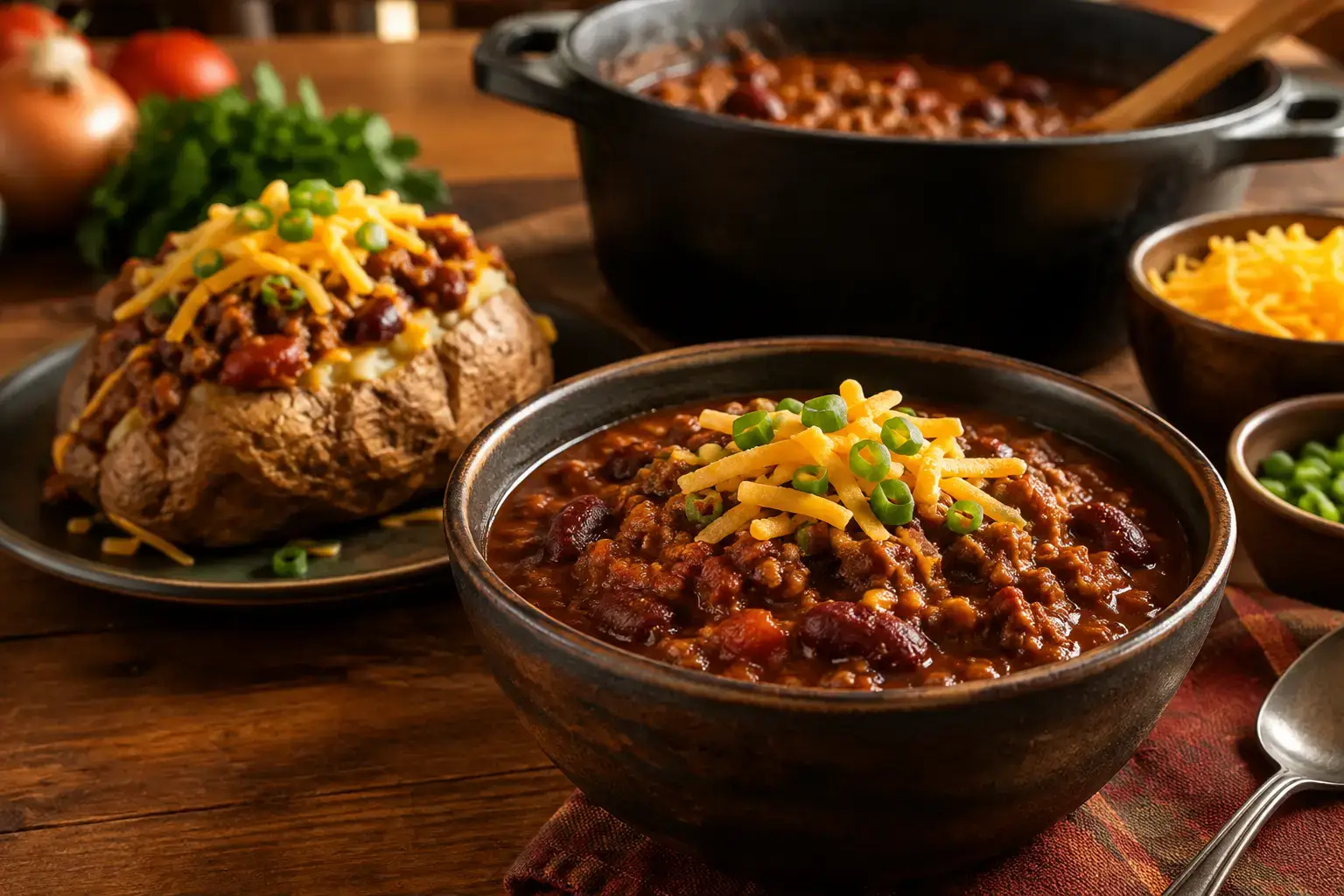
A great baked potato can carry a lot, but it should not have to survive a flood. The best chili for baked potatoes is thick enough to mound over split, fluffy potato flesh, richly seasoned enough to flavor every bite, and balanced enough that the toppings do not turn into a dairy-and-cheese pileup.
This is comfort food with architecture. You want crackly potato skin, a steamy center, a sturdy spoonful of chili, and a finish that lands somewhere between weeknight dinner and game-day glory. Every bowl tells a story, but on a baked potato, the chili needs to know its role.
What Makes Chili for Baked Potatoes Different?
Not every excellent chili is built for a potato. A brothy pot of chili may be perfect in a bowl with cornbread, but its liquid can sink straight into the potato and leave the skin soggy. Chili mac sauce, chili dogs, and baked potatoes all ask for different things.
For a potato, look for a chili with a spoonable, almost saucy thickness. The meat, beans, or vegetables should be suspended in the sauce rather than swimming in it. Think hearty, not dry. A chili that has simmered uncovered for the last 15 to 25 minutes usually gets closer to the right texture.
Flavor needs a little extra lift, too. Potatoes are mild and starchy, which is part of their charm, but they can soften the impact of a timid chili. A baked-potato-friendly batch should bring noticeable chile depth, salt, a little acid, and enough spice to stay interesting after cheese and sour cream enter the picture.
Choose Your Chili Style by Mood
The joy of this pairing is that there is no single correct chili. Your best option depends on whether you want smoky and beefy, creamy and mild, bean-forward, or full regional swagger.
Classic beef-and-bean chili
This is the all-around crowd-pleaser. Ground beef or chuck gives the topping weight, while kidney, pinto, or black beans add texture and make the meal stretch further. Tomato, cumin, chile powder, onion, and garlic form a familiar base that plays beautifully with cheddar and scallions.
For baked potatoes, keep the beans tender but intact and break the meat into small crumbles. Huge chunks of beef can be delicious, but they are harder to scoop cleanly with a forkful of potato. If the chili looks loose, simmer it longer before serving rather than adding a heavy-handed thickener.
Texas red or beanless chili
A Texas-style red chili turns a baked potato into a serious steakhouse-style dinner. The deep flavor of dried chiles, beef, and stock has enough intensity to stand up to a large russet. Because there are no beans, this style feels especially luxurious with sharp cheddar, diced white onion, and a cool spoonful of crema or sour cream.
The trade-off is cost and richness. Beef-forward chili can be more expensive than a bean-based pot, and it benefits from a bright topping such as pickled jalapeños, pickled red onions, or a squeeze of lime to cut through the fat.
Colorado green chili
Green chili is a power move for baked potatoes. Pork, roasted green chiles, tomatillos or tomatoes, garlic, and cumin bring tang, warmth, and a roasted pepper character that makes a plain potato feel anything but plain. It is especially good with Monterey Jack, cilantro, and a scattering of crunchy tortilla strips.
Some green chilis are naturally thinner than red chilis. If yours is more stew-like, use a slotted spoon for the first layer, then add a small spoonful of sauce over the top. You get the flavor without sacrificing the potato's crisp skin.
Vegetarian chili
A vegetable chili earns its spot here when it has real body. Lentils, black beans, sweet potatoes, mushrooms, roasted squash, or a mix of beans can deliver the heft a baked potato needs. The key is avoiding a thin, overly tomato-forward result.
Mushrooms bring savory depth, lentils make the sauce feel substantial, and chipotle adds smoke without requiring meat. A vegetarian chili with a little cocoa, coffee, or roasted chile paste can have the dark, layered flavor that makes people stop asking where the beef is.
Build the Potato to Match the Chili
Russets are the default for good reason. Their dry, fluffy interiors absorb butter and chili without becoming gummy, and their skins crisp up nicely in a hot oven. Choose potatoes that are similar in size so dinner is ready at the same time.
Bake them directly on the oven rack at 425°F after rubbing the skins with oil and kosher salt. Skip wrapping them in foil if crisp skin is part of the mission. Foil traps steam, which creates a softer jacket-style potato. That has its fans, but it cannot hold its own against a thick chili topping quite as well.
Once baked, cut a deep slit down the length of each potato and gently squeeze the ends to open it. Fluff the center with a fork, then season the potato itself with a pinch of salt and a small pat of butter. That small step matters. The potato should taste good before the chili arrives.
For an average russet, plan on about three-quarters to one cup of chili. Start with less than you think you need. It is easier to add another spoonful than to rescue an overloaded potato collapsing on the plate.
The Toppings That Earn Their Place
Toppings should bring contrast, not clutter. Chili already supplies warmth, savoriness, and softness, so the best additions add creaminess, crunch, brightness, or a sharper hit of heat.
Try a combination of two or three from this lineup:
- Sharp cheddar or pepper Jack for salty melt and chile-friendly richness
- Sour cream, crema, or plain Greek yogurt for a cool tangy finish
- Sliced scallions or diced onion for fresh crunch
- Pickled jalapeños, hot sauce, or serranos for heat with acidity
- Cilantro, chives, or parsley for a clean green note
- Crushed tortilla chips or corn chips when you want real crunch
Bacon is welcome, but use it with intention. It works best with bean-heavy or vegetarian chili, where the smoky salt adds another layer. With a rich beef chili, bacon can push the whole plate into heavy territory unless you counter it with something bright and pickled.
Fix Common Chili Potato Problems
If your chili disappears into the potato, it is probably too loose. Simmer it uncovered, mash a small scoop of beans against the side of the pot, or stir in a few tablespoons of masa harina. Masa adds gentle corn flavor and thickens without making the chili taste like gravy.
If the whole potato tastes bland, do not only add more cheese. Season the potato interior, then sharpen the chili with a little salt, lime juice, cider vinegar, or hot sauce. Acid is often the missing piece when a rich dish tastes flat.
If dinner feels too heavy, switch the balance instead of abandoning the idea. Use a smaller potato, choose turkey or vegetarian chili, add a crunchy slaw on the side, and lean into green chili or a brighter bean chili. The format is flexible. The goal is not maximum excess. It is a forkful that keeps you coming back.
Make It a Chili Bar Night
Baked potatoes are one of the smartest ways to serve chili to a mixed crowd. Set out plain potatoes, keep one pot of mild chili warm, and place heat-forward extras on the side. Everyone can build their own bowl-in-a-potato situation without forcing the spice-averse to negotiate with the chile heads.
For bigger gatherings, offer two chili lanes: a classic beef-and-bean batch and a vegetarian black bean or lentil version. Add shredded cheese, cool toppings, pickled peppers, and herbs. ChiliStation is built around this kind of choose-your-own-bowl energy, where regional style, protein, and heat level are part of the fun rather than an afterthought.
Leftovers are even better suited to the job. Day-two chili is usually thicker, deeper, and more settled in its seasoning. Bake fresh potatoes, reheat the chili slowly, and dinner suddenly feels deliberate instead of recycled.
The next time a pot of chili is on the stove, save a few servings for potatoes. Give the spuds crisp skins, give the chili time to thicken, and let one bright topping keep the whole thing lively. That is how an ordinary baked potato becomes the meal everyone talks about after the plates are cleared.