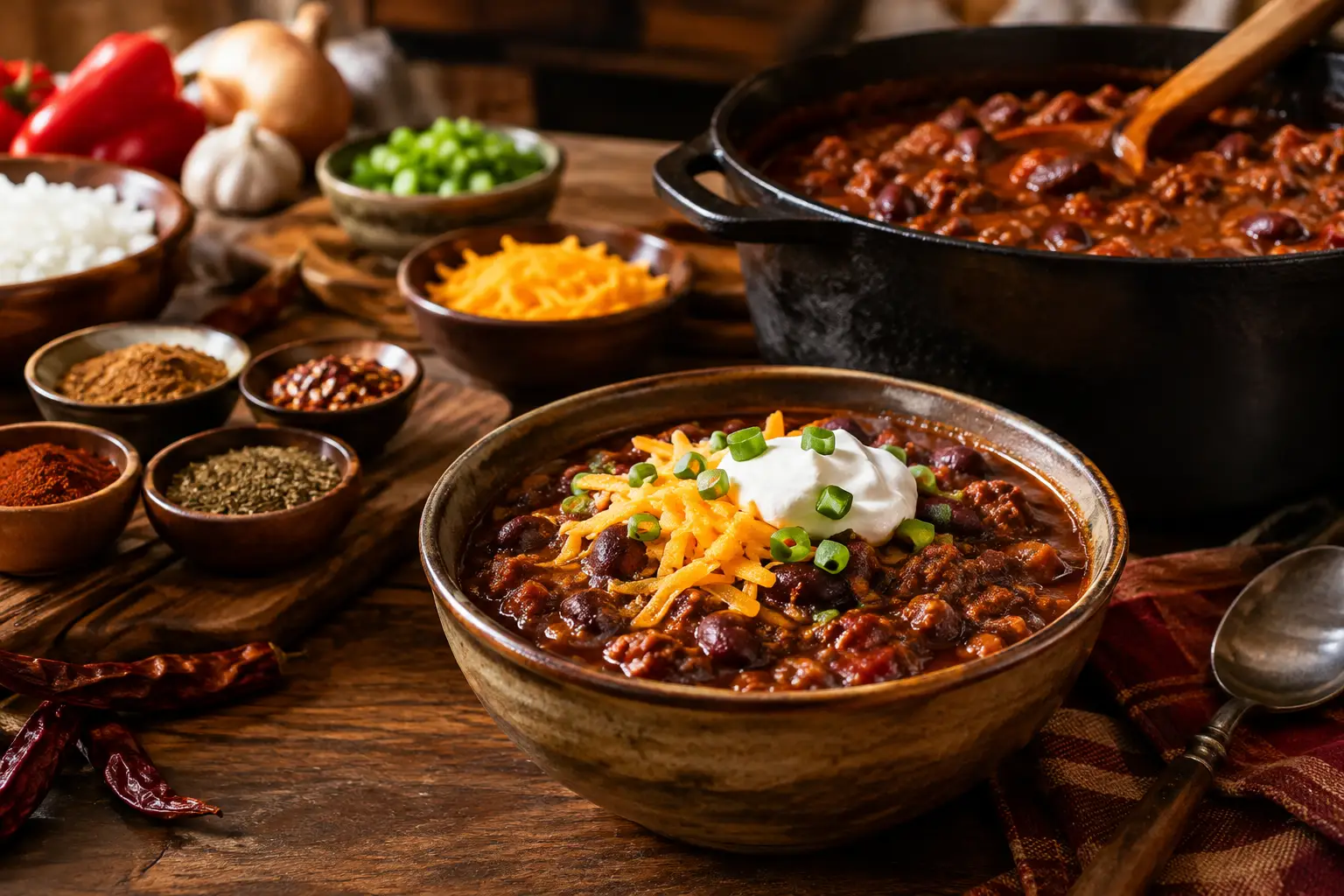
A chili seasoning kit can turn a weeknight pound of ground beef and a couple cans of beans into dinner before the first commercial break. That is its superpower. But not all chili seasoning kits are built for the same bowl, and treating every packet like interchangeable red dust is how you end up with chili that tastes flat, salty, or strangely like taco filling.
The best kit is not necessarily the hottest, the cheapest, or the one with the longest ingredient list. It is the one that gives you a flavor direction you actually want - smoky Texas-style depth, warm Midwestern sweetness, bright green-chile tang, or a quick, crowd-friendly red chili that leaves room for your own moves.
What Chili Seasoning Kits Actually Do
At their simplest, kits solve the spice-rack problem. They combine the baseline flavors most red chilis need: chile powder, cumin, garlic, onion, salt, and often oregano or paprika. Some go further, adding thickener, dried peppers, masa harina, cocoa, tomato powder, or a separate packet for finishing heat.
That convenience matters, especially when chili is dinner rather than a weekend project. A kit gives beginner cooks a dependable starting point and gives experienced cooks a shortcut worth keeping in the pantry. The trade-off is control. Once a blend is heavy on salt, sugar, cumin, or cayenne, every ingredient you add has to work around it.
Think of a seasoning kit as a map, not a finished recipe. It tells the pot where to head. You still decide whether the route includes brisket, turkey, three kinds of beans, roasted poblano, a splash of beer, or absolutely no tomatoes.
Choosing Chili Seasoning Kits by Bowl Style
The label may say “chili,” but that word covers a lot of territory. Before buying a kit, decide what you want your finished pot to taste like. A good package should offer some clue through its ingredient list, regional language, or instructions.
For classic beef-and-bean chili
Look for a balanced blend built around chile powder, cumin, garlic, and onion. This is the familiar game-day profile: savory, tomato-friendly, and flexible enough for ground beef, ground turkey, or plant-based crumbles. It is also the easiest style to stretch with canned beans and crushed tomatoes without throwing the flavor off balance.
Watch for sugar if you prefer a deeply savory bowl. A little can smooth out acidic tomatoes, but a sweet-forward blend can make it harder to build the dark, slow-cooked character many cooks want.
For Texas Red energy
A Texas-inspired kit should lean on actual dried chile flavor rather than a cumin-and-salt blast. Ancho, guajillo, New Mexico chile, chipotle, and paprika can bring raisiny depth, brick-red color, smoke, and a measured burn. Cumin belongs here, but it should not run the show.
If the kit includes flour or a major thickener, it may not be your best match for a traditional chile con carne direction. Texas Red is often about tender chunks of beef suspended in a concentrated chile gravy, not a dense pot padded with beans. That said, your kitchen is not a chili tribunal. Use the kit as a flavor base, then cook the bowl you want.
For green chili and white chili
Green chili kits operate on a different frequency. You want green chiles, jalapeño or serrano, garlic, coriander, and a citrusy or herbal lift. Tomatillo powder, lime, cilantro, and roasted poblano notes are all welcome signals. These blends pair naturally with chicken, pork, white beans, hominy, and chicken stock.
White chili kits can be especially convenient, but check whether they rely on a thick creamy base. That may be perfect for a cozy, mild pot. It can also hide the fresh flavor of roasted chiles if you are aiming for something brighter and more Colorado-style.
For Cincinnati-style chili night
This is the one lane where “more chili powder” is not the whole answer. Cincinnati chili gets its signature from warm, aromatic spices such as cinnamon, allspice, cloves, and sometimes cocoa. A kit designed for that profile should taste fragrant and slightly sweet before it tastes aggressively hot.
Serve it over spaghetti with shredded cheddar, onions, or beans if that is your tradition. Every bowl tells a story, and this one happens to come with a mountain of cheese.
Read the Ingredient List Like a Chili Cook
You do not need to memorize every dried pepper in the grocery aisle. You do need to know what a kit is asking you to accept.
Salt is the first thing to check. If it appears early in the list, hold back on salting your meat, broth, and beans until the pot simmers. Packet mixes can concentrate quickly as liquid reduces, particularly in slow cookers where evaporation is limited.
Next, look for the source of heat. Generic “spices” can be fine, but named chiles tell a more useful flavor story. Ancho suggests mellow, fruity depth. Chipotle signals smoke. Cayenne brings sharper heat. New Mexico chile tends toward earthy sweetness. A blend with several peppers usually has more dimension than one relying entirely on cayenne.
Finally, notice fillers and thickeners. Cornstarch and flour make a fast chili feel hearty, while masa can add a toasted corn note that genuinely belongs in the pot. None of these are automatically bad. They simply affect texture, and they may matter for gluten-free cooks.
Make the Kit Taste Less Like a Packet
A kit earns its place when it saves time without announcing itself. The fastest way to improve almost any blend is to bloom it. After browning your meat or sautéing onions, stir in the seasoning with a spoonful of fat for 30 to 60 seconds before adding liquid. The spices wake up, the raw powdery edge fades, and the kitchen starts smelling like chili instead of a pantry shelf.
Then give the pot one fresh element and one deep element. Fresh can mean diced onion, garlic, jalapeño, roasted poblano, cilantro stems, or a squeeze of lime at the end. Deep can mean tomato paste, brewed coffee, a little beer, smoked chile, Worcestershire, or a small square of dark chocolate. Pick additions that fit the kit’s direction rather than throwing the whole flavor cabinet at it.
A smoky red blend does not need both chipotle, liquid smoke, smoked paprika, and bacon. That is not complexity. That is a campfire with a salt problem.
Heat Is Not a Number on a Package
“Mild,” “medium,” and “hot” are useful starting labels, not binding contracts. A medium kit may be plenty spicy for a family dinner, while a hot blend can still taste timid once it is diluted with tomatoes, beans, stock, and toppings.
For better control, choose a moderate base kit and add heat separately. Fresh jalapeños bring green bite. Chipotles in adobo bring smoke and lingering warmth. Cayenne provides clean, direct fire. Crushed red pepper is easy but less distinctive. This approach keeps the main pot welcoming while letting heat seekers customize their bowls with hot sauce or extra chiles.
Do not confuse heat with flavor, either. A memorable chili has layers: sweetness from onions or dried chiles, tang from tomatoes or vinegar, savoriness from meat and spices, and a finish that makes you want another spoonful.
When a Kit Is the Right Call
Use a kit when speed matters, when you are feeding a group with mixed preferences, or when you want a reliable baseline for a new chili style. They are particularly useful for cook-offs at home, cabin weekends, potlucks, and those nights when a full dried-chile project sounds wonderful but chopping one onion already feels ambitious.
Skip the kit when the goal is a highly specific regional recipe that depends on a particular chile blend, or when you need precise control over sodium, sugar, and heat. In those cases, building your own seasoning may be the better move. It takes a little longer, but it lets you tune every note.
The sweet spot is treating kits as pantry teammates, not culinary training wheels. Start with the flavor lane you crave, cook it with intention, and taste before you top it. The right packet can get dinner moving fast. Your choices are what turn it into a bowl people remember.