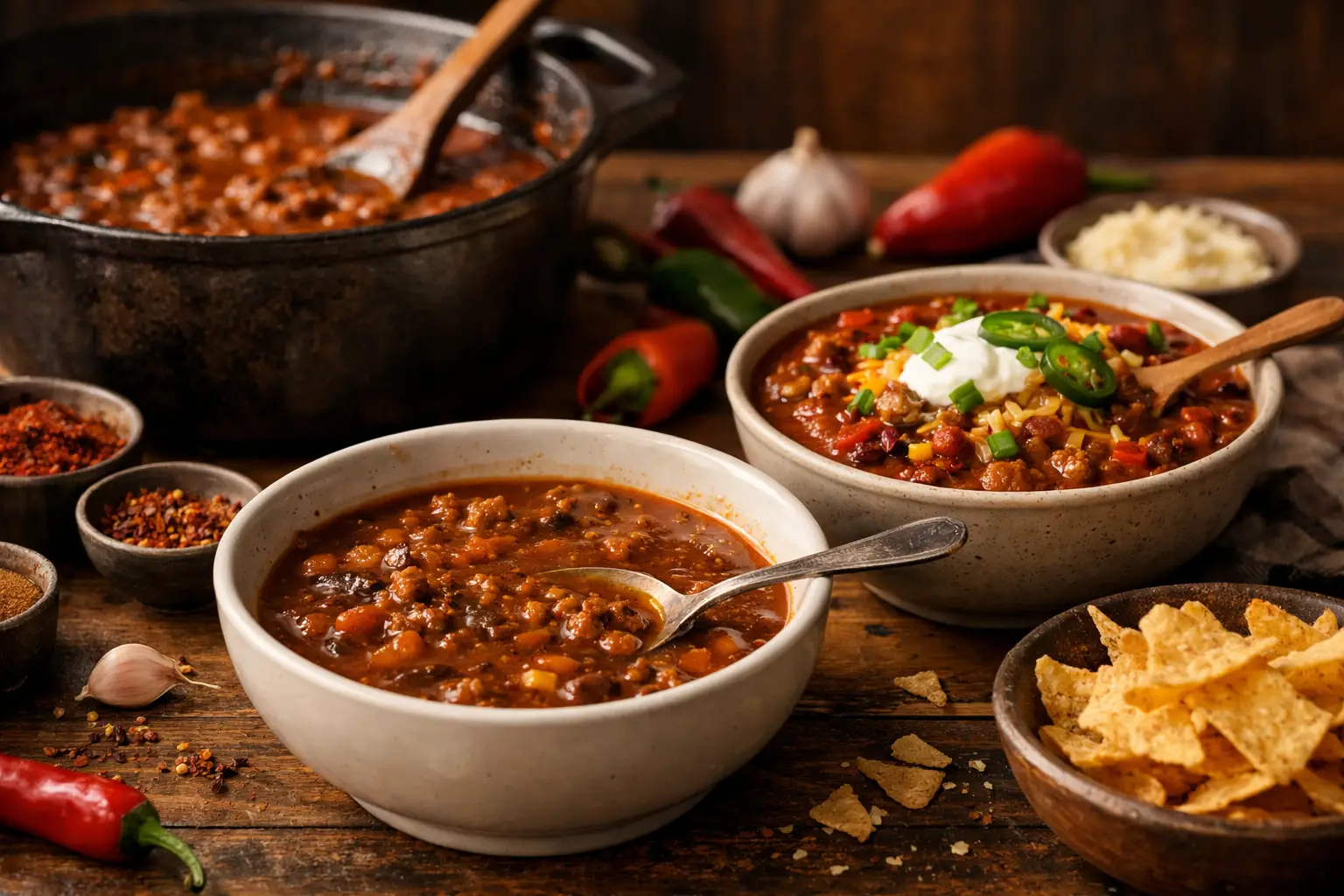
A pot can be thick, hot, loaded with beef and beans, and still somehow taste like nothing happened. If you are asking, why does chili taste bland, the answer is rarely just “add more chili powder.” Bland chili usually needs layers: enough salt to reveal flavor, enough acidity to sharpen it, enough fat to carry it, and enough time for the whole pot to become one big, savory thing.
Chili is comfort food, but it is not a dump-and-simmer recipe category. Texas Red, bean-forward weeknight chili, Colorado green chili, and Cincinnati-style chili all build flavor differently. Every bowl tells a story, and a flat-tasting bowl usually has a missing chapter.
Why Does Chili Taste Bland Even With Lots of Ingredients?
A long ingredient list does not guarantee a deeply flavored chili. In fact, adding several vegetables, beans, canned tomatoes, and spices all at once can blur the flavors instead of building them. Chili needs contrast: rich meat against bright chile, earthy cumin against sweet tomato, smoky notes against a clean hit of acid.
The most common issue is that ingredients went into the pot without enough browning or blooming. Ground beef that steams instead of browns brings less savory depth. Onions that only soften taste mild rather than sweet. Dry spices stirred into liquid never get the brief contact with fat that wakes up their aroma.
Another culprit is dilution. A chili can start bold, then become bland after an extra can of tomatoes, too much broth, or beans that absorb the seasoning as they cook. This is especially common in big-batch chili. The pot may look generous and hearty, but the flavor concentration has quietly disappeared.
Start With Salt, But Taste Before You Panic
Salt is not the whole solution, but it is often the first one. Proper seasoning makes tomato taste brighter, meat taste meatier, and dried chiles taste more defined. Without enough salt, even excellent ingredients can register as muted.
Add salt in small increments, stir well, and wait a minute before tasting again. Chili is thick, so salt can take a moment to distribute. Use kosher salt if possible because its larger grains are easier to control by hand.
There is a trade-off here. If your chili includes salty stock, canned beans, bacon, sausage, or store-bought seasoning packets, adding a big pinch at the end can take it from bland to overdone fast. Taste the broth and a solid bite of meat or beans, not just a spoonful from the surface.
Build a Better Base Before the Simmer
The best fix for future pots happens early. Brown your meat in batches rather than crowding the pan. Crowded meat releases water and turns gray; browned meat develops those dark, savory bits on the bottom of the pot that give chili its backbone.
After removing the meat, cook onions in the rendered fat until they are soft and starting to pick up color. Add garlic near the end so it stays fragrant rather than bitter. Then stir in your dry spices for 30 to 60 seconds before adding tomatoes, stock, or beans. This quick step, often called blooming, makes cumin, oregano, paprika, and chile powders smell fuller and taste more alive.
If the bottom of the pot has browned bits, splash in a little stock, beer, coffee, or water and scrape them up. That is not kitchen debris. That is concentrated flavor waiting to rejoin the party.
Use Fresh, Purposeful Spices
A dusty bottle of generic chili powder can be the reason a recipe tastes merely reddish. Chile powders lose their high notes over time, especially if they live above a hot stove. If yours has no aroma when you open it, it will not suddenly become exciting in a pot of beans.
Think beyond one all-purpose blend. Ancho brings raisiny sweetness, chipotle adds smoke, guajillo has a tangy red-fruit character, and New Mexico chile offers clean, earthy warmth. You do not need a cabinet full of peppers, but using two distinct chiles can create more dimension than doubling a single powder.
Cumin, Mexican oregano, coriander, black pepper, and smoked paprika all have a place depending on the style. The key is restraint. A chili overloaded with every spice in the drawer can taste muddy rather than complex.
Add Acid to Wake Up a Flat Pot
Chili is rich, dense, and often tomato-heavy. That makes acidity one of the fastest ways to bring it back into focus. A squeeze of lime, a small splash of apple cider vinegar, red wine vinegar, or hot sauce can make the entire bowl taste more seasoned without adding much more salt.
Add acid near the end, a teaspoon at a time. You are not trying to make chili sour. You are trying to create the little spark that makes beef taste deeper and chiles taste clearer.
The right acid depends on your pot. Lime is excellent in green chili or a chicken-based bowl. Apple cider vinegar works beautifully with smoky beef chili and sweeter tomato bases. A few drops of distilled vinegar can cut through a heavy, bean-and-cheese loaded game-day pot. For Cincinnati-style chili, a touch of vinegar may work, but its signature sweet-spiced profile calls for a lighter hand.
Check for Missing Fat, Sweetness, or Umami
Sometimes a chili is properly salted and still feels thin. That is when it helps to identify what kind of depth is missing.
If the flavor feels sharp but not satisfying, it may need fat. Stirring in a little rendered bacon fat, a spoonful of beef tallow, or even finishing each bowl with shredded cheese, sour cream, or avocado can round out a lean turkey or chicken chili. This is not an automatic move for every recipe, but fat carries chile flavor and softens harsh edges.
If the tomatoes are aggressively tart, a small amount of sweetness can restore balance. Try a pinch of brown sugar, a little maple syrup, or finely grated carrot. Keep it subtle. Chili should not taste like dessert, and many canned tomatoes are already sweet enough.
If the chili tastes hollow, add umami. Tomato paste cooked until it darkens, Worcestershire sauce, soy sauce, fish sauce, miso, a parmesan rind, or a small square of dark chocolate can help. Choose one, not all of them. Worcestershire and beef are a classic match; soy sauce is especially useful in vegetarian chili; dark chocolate belongs in a deep, dark red chili where its bitterness can disappear into the background.
Let the Chili Reduce, Then Rest
More simmering is not always the answer. If your chili is watery and bland, simmer uncovered so excess liquid can evaporate and the flavor can concentrate. Stir occasionally, especially with bean-heavy recipes, to prevent scorching on the bottom.
But if the pot is already thick and still bland, another hour may only make the beans softer. Correct the seasoning and balance first. Then give it a 10- to 20-minute rest off the heat. Chili changes as it settles: fat redistributes, spice heat mellows, and the flavors stop tasting like separate ingredients.
Like many braises and stews, chili often tastes even better the next day. That is not a myth. Time lets dried chiles hydrate fully and gives meat, beans, tomato, and aromatics a chance to merge. Reheat gently, then taste again. Leftover chili often needs a tiny final adjustment of salt or acid after reheating.
Avoid the Heat Trap
A bland chili does not necessarily need more heat. Adding cayenne or hot sauce can make a flat pot painful without making it flavorful. Heat is a sensation; flavor is the whole picture.
If your chili needs more chile presence, choose a pepper that contributes character as well as burn. Chipotle adds smoke, serrano brings bright green heat, and crushed red pepper offers a direct, simple kick. Add hot sauce at the table when people have different heat limits. That keeps the main pot welcoming while allowing the heat chasers to build their own fire.
A Quick Rescue Plan for Bland Chili
When dinner is nearly ready and the pot tastes sleepy, work in this order: add a small pinch of salt, then a teaspoon of acid, then decide whether it needs a deeper savory note from tomato paste, Worcestershire, or soy sauce. If it is thin, reduce it uncovered. If it is harsh, soften it with a touch of fat or a restrained hint of sweetness.
Taste after each change. The goal is not to identify every ingredient. The goal is that next spoonful makes you want another one.
A great chili should taste like it has been somewhere: smoky, bright, meaty, earthy, spicy, or slow-cooked into submission. Give your pot contrast, let it rest, and trust the final tasting spoon. That is where a merely acceptable batch becomes the chili people ask you to bring again.