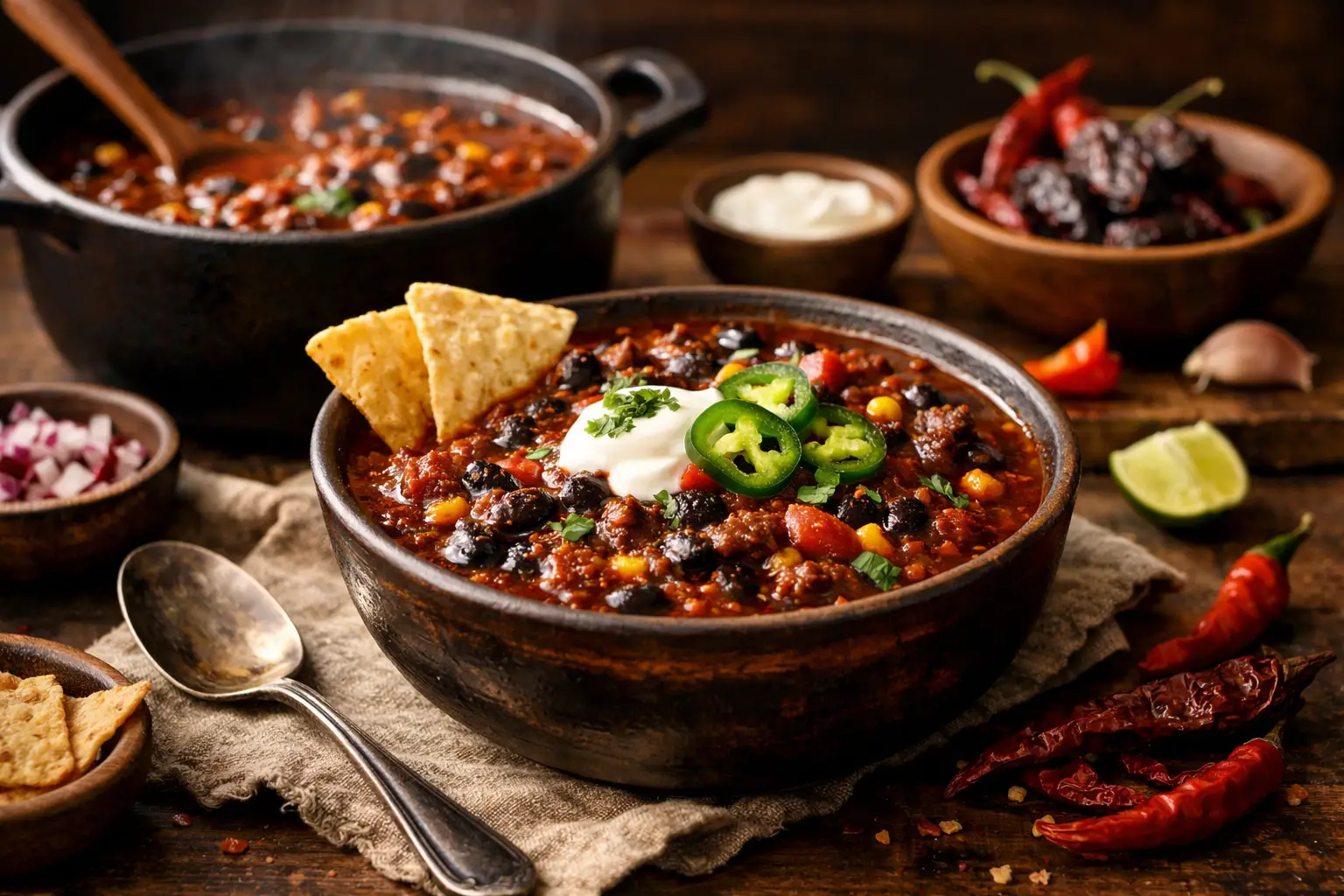
Some chilis lean on beef. Some lean on fire. Chipotle black bean chili wins because it does both big jobs vegetarians actually need from a pot of chili - deep flavor and real heft - without asking for a long ingredient list or an all-day simmer.
That balance is what makes it such a smart category pick. You get the smoky depth of chipotle peppers, the creamy structure of black beans, and enough flexibility to push the bowl cozy, bright, meaty, brothy, thick, mild, or genuinely hot depending on your mood. For home cooks who want a dependable meatless chili that still feels bold, this is one of the strongest weeknight formulas in the game.
Why chipotle black bean chili works so well
Black beans do something special in chili. They hold their shape better than pinto beans, but they also break down just enough to thicken the pot if you simmer them hard or mash a scoop into the base. That gives the chili body without needing flour, masa, or a long reduction.
Chipotle peppers bring a different kind of heat than fresh chiles. Because they are smoked and dried jalapenos packed in adobo, they offer spice with bass notes - earthy, slightly sweet, a little tangy, and unmistakably smoky. In a black bean chili, that profile lands naturally. The beans are mellow and earthy, so the chipotle does not sit on top of the dish. It folds in.
This is also a forgiving style. If your pantry is light, you can still build a good pot with onions, garlic, canned tomatoes, black beans, broth, and chipotles. If you want more complexity, roasted peppers, cocoa powder, coffee, oregano, cumin, or a splash of beer all fit without making the flavor muddy. Every bowl tells a story, but this one is especially good at handling improvisation.
The core flavor build for chipotle black bean chili
The best versions start with onion and garlic cooked until softened, not rushed. That first layer matters because black beans are mild and chipotle is powerful. If the aromatic base is thin, the whole pot can taste like smoke and tomato without much middle.
From there, spices usually do the quiet support work. Cumin is the obvious anchor, but chili powder, Mexican oregano, coriander, and a small pinch of cocoa can round out the profile. Cocoa is one of those it depends ingredients. Used lightly, it deepens the chili. Used heavily, it starts pulling the pot toward novelty.
Tomatoes are another major fork in the road. Crushed tomatoes create a fuller, saucier bowl. Diced tomatoes keep things chunkier and brighter. Tomato paste adds a concentrated backbone, especially helpful if you are using canned beans and vegetable broth, which can sometimes produce a flatter finish. If you like your chili thick enough to sit high on a spoon, tomato paste plus a partially mashed bean base is usually the move.
Then comes the chipotle decision. One pepper in adobo gives many pots a gentle smoky warmth. Two to three peppers creates a more assertive bowl with a stronger adobo presence. More than that can be great, but only if the rest of the pot is scaled up too. Otherwise the smoke can overtake the bean flavor and make every bite feel a little one-note.
Texture is where great black bean chili separates itself
A lot of mediocre bean chili misses on texture. The flavor is fine, but the pot feels watery or the beans seem disconnected from the broth. Good chipotle black bean chili should feel integrated.
There are a few ways cooks get there. One is mashing part of the beans directly into the simmering chili. Another is blending a cup of beans with broth and stirring that puree back in. A third is simply letting the pot reduce uncovered for the last stretch of cooking. None of these is the single right answer. If you want a rustic, pantry-style chili, mashing is perfect. If you want a smoother, more cohesive restaurant-style texture, blending a portion works better.
Vegetables can shift the body too. Bell peppers add sweetness and bulk, but they also push the chili slightly lighter and more vegetable-forward. Sweet potato makes the bowl denser and sweeter, which some cooks love and others find distracting next to chipotle’s smoke. Corn brings pop and color, though it moves the pot away from deep and brooding toward friendlier and brighter. That is not a flaw. It is just a style choice.
How to tune the heat without losing the smoke
This is where chipotle black bean chili gets interesting. Heat and smoke are related here, but they are not identical. If you want more smoke without much more heat, add a little extra adobo sauce rather than another whole pepper. If you want sharper heat, a fresh jalapeno or serrano can do the job without turning the whole chili darker and smokier.
Acid matters too. A squeeze of lime or a small splash of vinegar near the end can wake up a pot that tastes too heavy. This is especially useful if you went hard on adobo, tomato paste, or long simmering. Rich chili needs lift.
Salt is another common correction point. Beans absorb seasoning aggressively, and vegetarian chilis often need more salt than cooks expect. If your pot tastes dull, smoky, and vaguely flat, the problem may not be missing spice. It may simply need more salt to sharpen the edges.
Toppings that actually make sense here
Toppings should support the bowl, not crowd it. Sour cream or Greek yogurt is an easy win because it cools the chipotle heat and adds tang. Avocado softens the smoke and makes the chili feel richer without more cooking. Chopped cilantro adds freshness if you like its punch.
Cheddar works, but a crumbly cotija or salty feta can be more interesting with black beans and chipotle. Crushed tortilla chips or cornbread on the side make the meal heartier and add contrast. Raw onion is great if you want bite. Pickled red onions are even better if your chili came out especially dense or sweet.
If you are serving a crowd, rice is a practical base, but it changes the personality of the bowl. Over rice, the chili feels broader and more meal-prep friendly. On its own, it feels more concentrated and chili-first. Both have a place.
Weeknight-friendly, freezer-friendly, crowd-friendly
One reason this style keeps earning repeat status is how well it fits real life. It is easy to make from pantry ingredients, usually better the next day, and friendly to batch cooking. That matters for anyone building a weeknight rotation instead of chasing one dramatic Sunday dinner.
It also adapts well to different eaters. Want it vegan? Skip dairy toppings. Want extra protein? Add quinoa, lentils, or a plant-based crumble, but do it carefully because black beans already bring plenty of body. Want it kid-friendlier? Use less chipotle and let smoky paprika carry some of the flavor. Want a game-day version? Make it thicker and serve it with chips, cheese, and scallions.
This flexibility is exactly why chili fans keep returning to styles like this on ChiliStation. It hits that sweet spot between classic comfort and modern pantry cooking. It is not trying to imitate Texas Red, and it is not pretending all bean chilis are interchangeable. It knows its lane - smoky, hearty, meatless, deeply satisfying - and it stays there with confidence.
Common mistakes that flatten the pot
The biggest miss is overdoing the chipotle too early, then trying to fix the imbalance with more tomato or broth. That usually just creates a larger quantity of muddy chili. Start smaller than you think, simmer, taste, then build.
Another common issue is undercooking the base. If the onions are still sharp and the spices never bloom in the oil, the finished pot tastes scattered. Chili needs some glue. That glue is often just a few extra minutes at the beginning.
Finally, do not expect black bean chili to behave exactly like a beef chili. It will not produce the same rendered richness or the same fatty mouthfeel unless you force it with lots of oil, cheese, or cream. The better move is to let it be what it is: dense, earthy, smoky, and lively. Play to those strengths and the bowl gets better fast.
Chipotle black bean chili is one of those rare recipes that rewards instinct as much as precision. Taste as you go, decide whether your pot needs more smoke, more salt, or more brightness, and let the final bowl reflect how you actually like chili to eat.