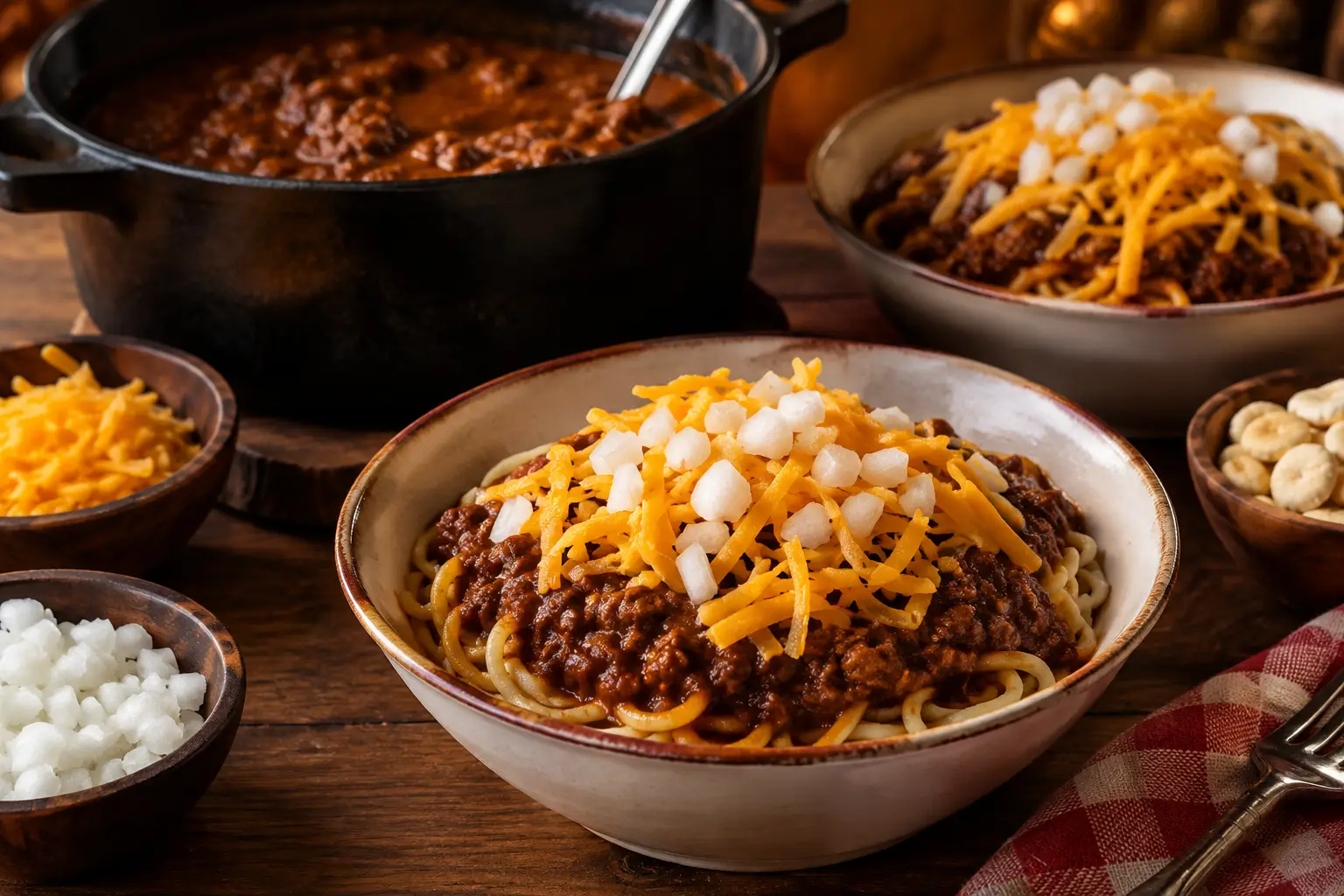
A Cincinnati chili order is a tiny language of its own: 3-way means spaghetti, chili, and a snowdrift of cheddar; 4-way adds onions or beans; 5-way goes all in. The best cincinnati chili recipe examples understand that the bowl is only half the experience. This is finely textured, warmly spiced meat sauce built to cascade over noodles and disappear under toppings - not a thick, bean-heavy pot of standard chili.
That distinction is the fun. Cinnamon, allspice, clove, cocoa, and Worcestershire might sound like a crowded spice cabinet, but in the right proportions they create the unmistakable sweet-savory, slightly mysterious profile that makes Cincinnati chili a regional icon. Every bowl tells a story, and this one starts with Greek and Macedonian immigrant influences, then ends with a forkful of cheddar.
What Makes Cincinnati Chili Its Own Style
Cincinnati chili is usually made with ground beef simmered in a loose tomato-based sauce. The beef is often added raw to water or broth and broken up as it cooks, a technique that produces the signature fine, almost silky texture. Tomato sauce, spices, garlic, onion, vinegar, Worcestershire, and sometimes a touch of chocolate round out the base.
It is not supposed to be fiery by default. The heat is typically low to moderate, while the spice profile is aromatic and layered. Think cinnamon and clove in the background, not dessert chili. Cocoa should bring bitterness and depth, not make the sauce taste like hot chocolate.
Then comes the essential serving rule: Cincinnati chili is a topping. Ladle it onto spaghetti, pile on finely shredded mild cheddar, and add beans, chopped onion, or both if the mood calls for it. Oyster crackers on the side are a classic move.
Cincinnati Chili Recipe Examples Worth Making
These four approaches give you a useful range, from a faithful all-day classic to a practical weeknight version. Pick based on time, toppings, and how traditional you want the final plate to feel.
The Classic Slow-Simmered 5-Way
For the purist, start with ground beef, water, tomato sauce, grated onion, garlic, chili powder, cumin, cinnamon, allspice, cloves, cocoa powder, Worcestershire, cider vinegar, salt, and a small pinch of sugar. Add the beef to cool liquid first, then mash and whisk it aggressively as it heats so no large crumbles survive. That texture is nonnegotiable for a classic result.
Simmer the sauce gently for two to three hours, stirring now and then. The finished chili should be loose enough to pour, with a glossy brick-red color and no hard edges from the spices. Serve it as a 5-way: spaghetti first, chili second, kidney beans and chopped white onion next, then a generous mound of finely shredded cheddar.
This is the recipe for a game-day spread, a family chili night, or anyone determined to understand why people get very specific about their preferred parlor order. The trade-off is time. Long simmering softens the spice blend and gives the sauce its signature unity, so rushing it will show.
The Weeknight 3-Way
A 3-way is the gateway plate: spaghetti, chili, cheddar. For a version that lands in under an hour, use lean ground beef, tomato sauce, beef broth, grated onion, garlic, chili powder, cinnamon, cumin, allspice, Worcestershire, and a small square of unsweetened chocolate. Skip the whole spices and use measured ground spices for speed and consistency.
Brown the beef lightly if you prefer a more familiar texture, then break it apart with a potato masher while it simmers. It will not be quite as smooth as the raw-beef-in-liquid method, but it is a fair exchange when dinner needs to happen before the next episode starts. Let the sauce reduce until it coats a spoon without turning thick like Texas-style chili.
Cook spaghetti just past al dente, plate it while hot, and top it immediately. The cheddar matters more than people think: use mild or medium orange cheddar shredded from a block into fine, fluffy strands. Bagged shreds are convenient, but their coating can make the topping feel dry instead of melt-ready.
The Bean-Forward Vegetarian 4-Way
Vegetarian Cincinnati chili works best when it chases the style's spice architecture rather than trying to imitate ground beef perfectly. Use finely chopped mushrooms, walnuts, lentils, or a plant-based crumble for body. Mushrooms bring savory depth; lentils offer the tender, small-piece texture that fits the sauce particularly well.
Build the pot with tomato sauce, vegetable broth, grated onion, garlic, chili powder, cumin, cinnamon, allspice, cloves, cocoa, vinegar, and Worcestershire-style vegan seasoning. Simmer until the lentils are tender and the mushrooms have almost melted into the sauce. If it gets too thick, loosen it with broth. Cincinnati chili should drape over spaghetti, not sit in a mound.
Make this a 4-way with beans and cheese, or onions and cheese. Beans are technically a topping rather than a required ingredient in the sauce, so you can keep the base flexible for different eaters. A sharp vegetarian cheddar can work, but mild cheddar keeps the flavor closer to the classic roadside-parlor feel.
The Spicy Modern 5-Way
Traditional Cincinnati chili is aromatic more than hot, but a modern spicy version can be excellent if the heat supports the spices instead of bulldozing them. Keep the base classic, then add chipotle in adobo, cayenne, or a roasted poblano. Chipotle brings smoke and can make the sauce taste more Southwestern, so use it with restraint.
For this version, serve a 5-way with beans, onions, and cheddar, then offer hot sauce at the table. That preserves the original flavor profile for anyone who wants it while letting heat seekers build their own level. It is also the smart choice for a group dinner, because spice tolerance is deeply personal and nobody should have to negotiate with a five-alarm sauce.
The Spice Balance That Separates Great From Strange
Cincinnati chili asks for a confident hand, but not a reckless one. Cinnamon and allspice should be noticeable only after the savory flavors arrive. Clove is even more powerful. Start with a pinch, then taste after the sauce has simmered. Freshly added spices can seem loud; given time, they settle into the tomato and beef.
Cocoa is another common trouble spot. Unsweetened cocoa powder gives bitterness and dark color, while a little dark chocolate can make the sauce rounder. Either is valid. Too much turns the whole pot muddy and sweet. If your chili tastes flat, add salt, vinegar, Worcestershire, or a little more chili powder before adding more chocolate.
Sweetness is optional and depends on the tomato product you use. Some cooks add sugar to soften acidity, while others let onions and tomato sauce do the job. Taste the finished sauce over spaghetti, not only from a spoon. Pasta, cheese, onion, and beans change the balance dramatically.
Build Your Way Without Overthinking It
The numbered “ways” are useful, not sacred. A 3-way is spaghetti, chili, and cheddar. A 4-way includes either beans or onions. A 5-way includes both. Keep the layers in that order so the cheese stays high and fluffy rather than vanishing into the sauce.
Portioning matters, too. Cincinnati chili is rich but relatively loose, which makes it easy to over-ladle. Start with enough sauce to coat the spaghetti and leave a little visible at the edges. Then add more if needed. The cheddar should look almost excessive - that is the point.
If you are comparing regional styles, this is exactly why chili deserves its own map. Texas red brings chile-forward intensity, Colorado green chili leans roasted and porky, and Cincinnati chili turns spice, pasta, and toppings into its own comfort-food category. At ChiliStation, that kind of contrast is part of the appetite.
Make the slow-simmered version when you want the full ritual, the weeknight 3-way when comfort cannot wait, or the vegetarian pot when the table needs options. Just save enough cheddar for the final snowfall.