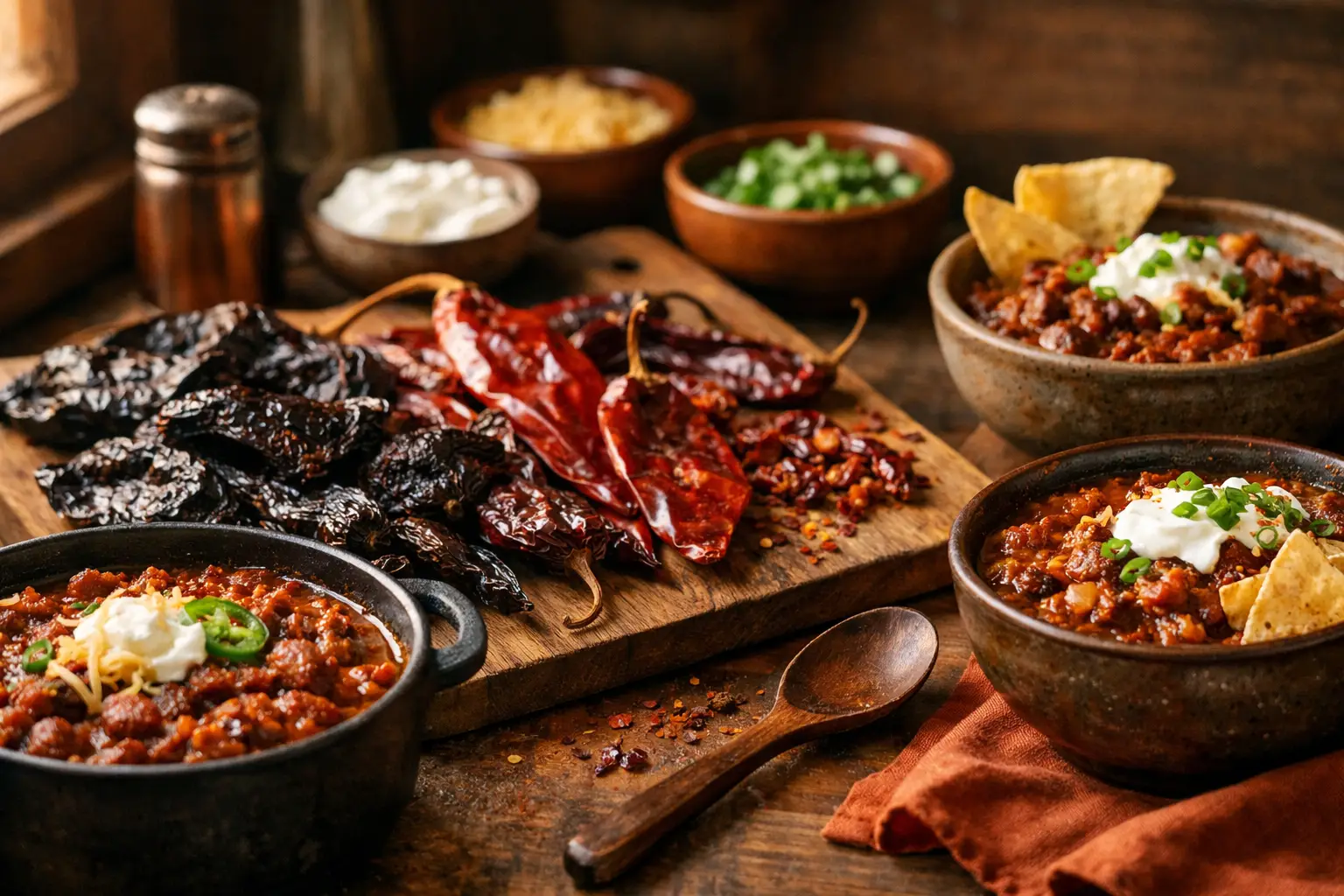
A great pot of chili can start with ground beef, beans, tomatillos, or a Dutch oven full of brisket. But if the flavor is flat, the missing move is often hanging in the dried-chile aisle. This dried chiles for chili review looks past generic bags labeled “chile pods” and gets specific about what each pepper brings to the bowl.
Dried chiles are not just a heat setting. They are the bass line, the smoke, the fruit, the bitter edge, and sometimes the whole regional identity of a recipe. The right combination makes a Texas Red taste deep and beefy rather than merely spicy. It gives Colorado-style green chili its roasted complexity. It can also turn a weeknight turkey chili from respectable to something people ask you to make again.
Dried Chiles for Chili Review: The Short Verdict
For the broadest range of red chili recipes, guajillo is the essential starting point. It brings clean red-chile flavor, mild-to-medium heat, and a bright, lightly fruity finish that works with beef, pork, beans, and chicken. If you only keep one dried chile in the pantry, make it guajillo.
Ancho is the richest supporting player. It adds dark raisin, dried plum, cocoa, and a gentle earthy sweetness. Use it when a beef-forward chili needs depth without more burn. Pasilla negro is moodier and more savory, with berry-like, herbaceous notes that make it especially good in pork or mushroom chili.
Chipotle morita delivers smoke and a little tang, but it is not a substitute for every dried red chile. Treat it like a loud guitar amp: thrilling in the right amount, capable of taking over the whole room if you keep turning it up. Chile de árbol is the heat tool. It adds a sharp, direct sting with relatively little body, so pair it with fuller chiles instead of building a sauce from it alone.
The best blend depends on your pot. A classic beef chili might lean on guajillo and ancho, with pasilla for shadow and a small árbol chaser. A brighter chicken chili can use guajillo with New Mexico chile. A smoky black-bean pot may want ancho plus one chipotle, but probably not three.
What Makes a Dried Chile Worth Buying?
The best dried chiles feel flexible and leathery, not brittle enough to shatter into confetti. Their skins should have some sheen and their aroma should be immediate: fruity, tea-like, smoky, or pleasantly earthy. A dusty smell, gray patches, visible mold, or a package full of broken fragments is a pass.
Freshness matters more than many home cooks realize. Dried chiles do not spoil the moment they become dry, but they do lose their aromatic oils over time. An old guajillo can still tint your sauce red, yet it may taste papery and thin. That is how a recipe with good ingredients somehow lands bland.
Whole pods usually beat pre-ground chile powder for flavor and control. You can remove seeds, adjust individual varieties, toast lightly, and blend a sauce that fits your exact heat tolerance. Powder is still useful for fast weeknight chili, especially when you need a final correction, but it rarely gives you the layered character of a freshly blended chile base.
The prep that changes everything
Remove stems and shake out most of the seeds before cooking. Seeds are not where the chile’s heat lives - that is mostly concentrated in the pale inner ribs - but they can add bitterness and a gritty texture. Then toast the flattened pods briefly in a dry skillet over medium heat, about 10 to 20 seconds per side. You are waking up the oils, not trying to blacken them.
Cover the toasted chiles with hot water or broth and let them soften for 15 to 25 minutes. Blend with some soaking liquid, garlic, onion, and whatever your recipe calls for, then simmer that puree with the chili. If the skins seem especially tough, push the sauce through a fine strainer. It is one extra step, but it creates a smoother, restaurant-level texture.
The Core Chile Lineup, Rated for Chili Pots
Guajillo: best all-around chile
Guajillo earns the top spot because it does nearly everything well. Its flavor reads as tart red fruit, cranberry skin, tomato, and clean earth. The heat is approachable, generally mild to medium, making it friendly for family-sized pots where diners have different spice limits.
Use guajillo as the foundation for Texas-inspired red chili, pork chili, chicken chili, and bean-forward recipes. It makes a sauce that is beautifully red and never overly heavy. Its one limitation is that guajillo alone can feel a little lean, so pair it with ancho for richness or New Mexico chile for a rounder roasted flavor.
Ancho: best for dark, slow-cooked depth
Ancho is the dried form of poblano, and it brings the kind of flavor that makes a long-simmered beef chili taste like it has been working all day. Think dried fruit, mild coffee, tobacco, and cocoa without turning the pot into dessert. Heat stays low, so ancho is ideal when flavor matters more than fire.
It shines beside chuck roast, short rib, bison, and black beans. The trade-off: too much ancho can make a chili murky and sweet. Let guajillo or New Mexico chile provide lift, particularly if your recipe already includes dark beer, chocolate, or molasses.
Pasilla negro: best for savory complexity
Pasilla negro is often confused with poblano in American grocery stores, but the true dried pasilla is its own thing. Long, dark, and wrinkled, it tastes earthy, a little berry-like, and almost herbal. It is less sunny than guajillo and less plush than ancho.
This is the chile to reach for when your bowl needs intrigue. It works beautifully in pork chili, mushroom chili, and recipes with cumin, oregano, or roasted garlic. Use it as part of a blend, not necessarily the entire base, because its dark character can dominate a lighter chicken or white-bean recipe.
New Mexico and California chiles: best for classic red-chile flavor
New Mexico chiles deliver a straightforward roasted red-chile taste with soft fruitiness and mild heat. California chiles are generally similar but often milder. Both are excellent for cooks who want a familiar, rounded flavor without the raisiny depth of ancho or the sharper edge of guajillo.
They are natural fits for Southwestern red chili, enchilada-style sauces, and hybrid pots that sit somewhere between chili con carne and stew. Quality varies widely by producer, so smell the pods if you can. A fragrant bag is far more valuable than a specific label.
Chipotle morita: best for controlled smoke
Chipotle morita is a smoked, dried jalapeño with a deep burgundy color and a lively, fruity smoke. It gives chili that campfire note many cooks chase with bacon, liquid smoke, or smoked paprika. One or two pods can be magic.
Still, chipotle is a specialist. Add too much and every ingredient begins to taste like smoke. If you are making a chili with smoked brisket, smoked sausage, or bacon, you may need only half a pod or none at all. Let the actual meat do some of the talking.
Chile de árbol: best for turning up the heat
Small, red, and unapologetic, árbol brings a clean, immediate heat that arrives faster than the broader warmth of guajillo or New Mexico chile. It is useful when a pot tastes right but needs more kick. Start with one or two pods, blend, taste, and continue carefully.
Árbol has limited body, so it is not your main sauce chile. Think of it as a finishing adjustment with personality. If your crowd includes heat seekers and cautious eaters, keep the base moderate and offer árbol salsa or chile oil at the table.
Build a Blend Instead of Chasing One Perfect Pod
The best chili blends balance a few jobs: a base chile for color and volume, a dark chile for depth, and an optional hot or smoky chile for edge. For a medium-heat, beefy red chili, try four guajillos, two anchos, one pasilla, and one árbol. For pork chili, swap one ancho for a New Mexico chile to keep the sauce brighter. For a vegetarian black-bean chili, use guajillo and ancho, then add a modest amount of chipotle only if the beans need smoke.
Pod size varies, and so does heat. That is why recipes built around a strict number of chiles can be misleading. Taste the blended sauce before it goes into the full pot. If it is too bitter, add a pinch of salt and give it time to simmer before reaching for sugar. If it is too thick or intense, loosen it with broth. If it tastes dull, the answer may be acidity from tomato, vinegar, or lime rather than another pepper.
A chili recipe is a map, not a handcuff. Keep guajillo, ancho, and one heat-forward chile in your pantry, buy them from a source with good turnover, and let your next bowl tell you which direction to go.