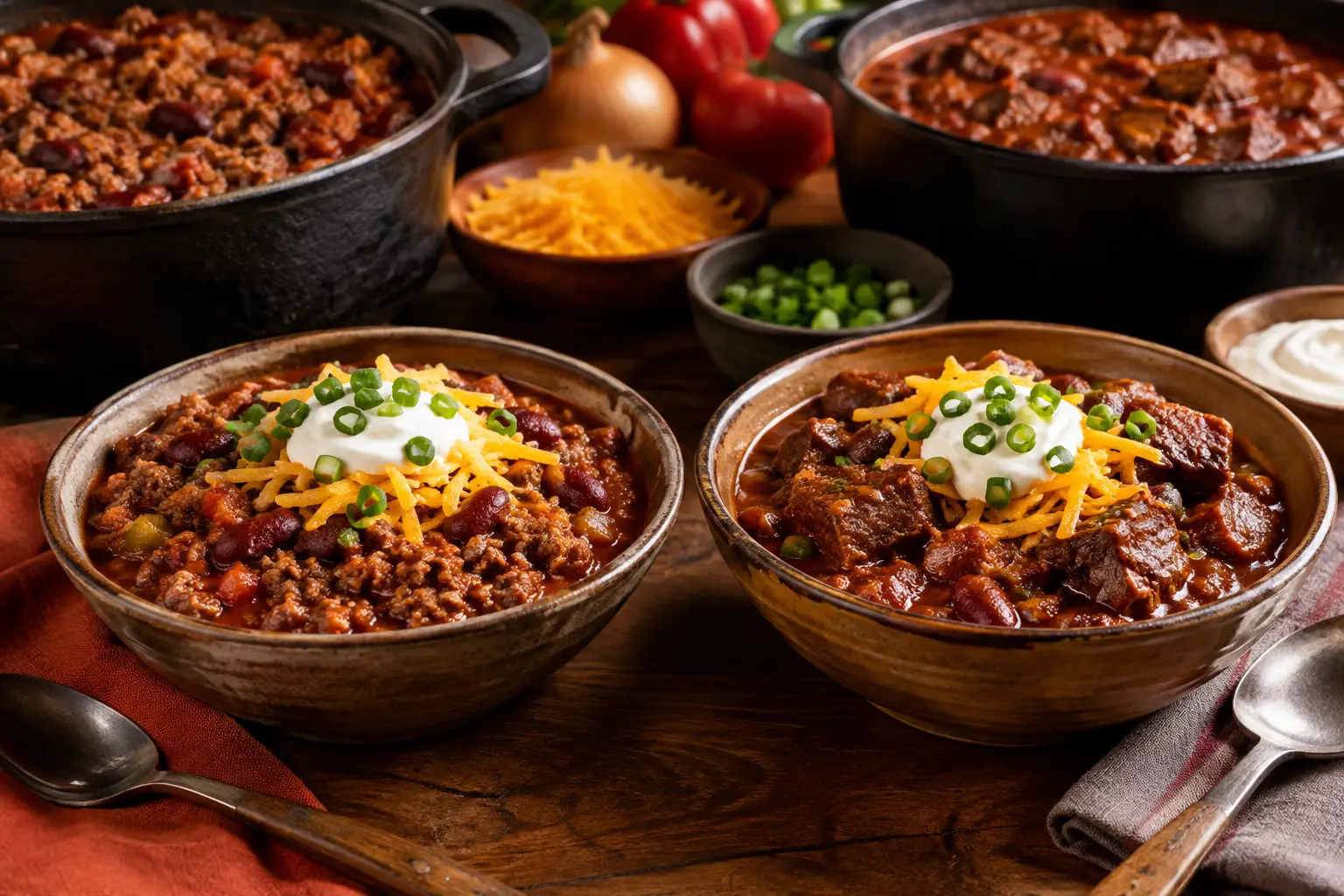
At 5:45 on a Tuesday, ground beef vs brisket chili is not an abstract barbecue debate. It is the difference between a deeply satisfying pot on the table in an hour and a slow-simmered project that perfumes the house all afternoon. Both can make a great bowl, but they create very different chili experiences - from the way the meat carries spice to the way each spoonful feels.
Ground beef gives you speed, familiar comfort, and a sauce-forward bowl. Brisket brings beefy depth, tender chunks, and serious cookoff energy. The better choice depends on the style you want, how much time you have, and whether your ideal chili is a thick, cohesive spoonful or a red-stained braise built around substantial pieces of meat.
Ground Beef vs Brisket Chili at a Glance
Ground beef is the practical all-rounder. It browns quickly, distributes through the pot, and absorbs chile, cumin, garlic, onion, and tomato flavor fast. A pot can be ready in 45 to 90 minutes, making it a natural fit for weeknight chili, game-day spreads, and big-batch meal prep. It is also generally easier on the grocery budget, especially when you are feeding a crowd.
Brisket is the slow-burn contender. The cut is packed with connective tissue that turns silky after a long, gentle cook, creating tender beef with a rich, almost luxurious chew. It asks for more planning and usually more money, but its payoff is unmistakable: meat that remains the star rather than disappearing into the sauce.
There is one useful distinction to make before choosing sides. “Brisket chili” usually means chili made with cubed or chopped brisket, not brisket that has been ground. Ground brisket does exist, and it can be excellent, but it behaves more like ground chuck than like the big, braised chunks people expect from a classic brisket chili.
Choose Ground Beef for Fast, Saucy Chili
Ground beef is built for cooks who want a dependable chili without an all-day commitment. Browning the meat creates savory, toasted notes before the liquid goes in. From there, the crumbles mingle with the base, helping every bite taste seasoned. This is why ground beef excels in bean chili, tomato-forward chili, and heavily topped bowls loaded with cheese, onions, sour cream, cornbread, or crushed crackers.
For the best result, skip ultra-lean ground beef. An 80/20 or 85/15 blend has enough fat to stay tender and carry flavor, though you may want to drain excess rendered fat after browning. Leaner meat can work, but it is less forgiving during a long simmer and can leave the chili feeling dry or oddly crumbly.
Texture is ground beef’s defining trait. The meat becomes part of the chili rather than a separate element within it. That can be exactly right for a Cincinnati-style meat sauce, a family pot with kidney beans, or a chili dog topping where a chunky stew would be awkward. It also makes ground beef a smart choice when you want the chile paste, tomato, and spices to lead the conversation.
The trade-off is depth. Ground beef delivers plenty of beef flavor, but it will not develop the gelatin-rich body or distinct, tender chunks that a braised cut can provide. You can narrow the gap by using a richer stock, adding a small amount of beer or coffee, and letting the chili rest after cooking. Still, ground beef chili is fundamentally a quicker, more unified style of bowl.
The ground beef move that matters most
Brown it in batches if your pot is crowded. Piling cold meat into a small Dutch oven makes it steam in its own moisture, which dulls flavor and creates gray, soft crumbles. Give the beef room, let it take on real color, then build the aromatics and chile base in those browned bits left on the bottom of the pot.
Choose Brisket for a Long-Simmered Statement Bowl
Brisket chili is what you make when the cooking itself is part of the occasion. Cubes of brisket spend hours in a chile-rich broth, gradually relaxing into tender, flavorful pieces while collagen melts into the sauce. The result can be dark, glossy, and intensely beef-forward - the kind of bowl that needs little more than diced onion and a stack of warm tortillas.
This is especially at home in Texas Red territory, where chiles and beef take center stage and beans are often left out. That does not mean beans are forbidden in brisket chili. It simply means that brisket has enough character to carry a bean-free pot without feeling empty. If you do add beans, use them with intention and keep enough sauce in the pot to unify everything.
Brisket also handles bold chile profiles beautifully. Dried ancho brings raisiny depth, guajillo adds bright red-fruit character, and chipotle adds smoke without needing a smoker in the backyard. Because the meat is substantial, it can stand up to a more assertive spice blend than delicate ground beef sometimes can.
The caution: brisket is not a shortcut cut. A brisket flat can dry out if cooked too hot or pulled before it is tender, while a fattier point may need trimming if you prefer a cleaner finish. Cut the meat into even pieces, keep the simmer gentle, and give it time. Depending on cube size and the cut, expect roughly two-and-a-half to four hours until it yields easily to a spoon.
Smoked brisket changes the equation
Leftover smoked brisket makes exceptional chili, but it needs a different approach. The meat is already cooked, so adding it at the beginning of a three-hour simmer can leave it dry and stringy. Build the chili base first, then fold in chopped smoked brisket during the last 30 to 45 minutes. You get the smoke, bark, and beefiness without sacrificing texture.
Flavor, Cost, and Occasion: The Real Tie-Breakers
If your budget is tight, ground beef wins cleanly. Brisket is often priced as a premium cut, and it loses some weight to trimming. Ground beef also stretches more easily with beans, vegetables, and toppings, which matters when a pot needs to feed eight hungry people.
If flavor concentration is the goal, brisket has the edge. Its connective tissue enriches the sauce naturally, and the larger pieces retain a clear identity after simmering. But a well-built ground beef chili can still be spectacular. Freshly toasted spices, a thoughtful chile blend, proper browning, and a little resting time matter more than simply buying the most expensive meat.
For a tailgate, casual weeknight, or chili mac situation, choose ground beef. For a cold Sunday, a neighborhood cookoff, or a bowl meant to make people pause after the first bite, choose brisket. Every bowl tells a story, and these two proteins tell different ones.
Can You Combine Ground Beef and Brisket?
Absolutely. A half-and-half pot gives you ground beef’s cohesive body and brisket’s signature chunks. Brown the ground beef first, then braise the brisket in the finished chile base until tender. It is a particularly good approach for a large group: the ground beef makes the chili feel full and generous, while the brisket supplies those prized, slow-cooked bites.
Just avoid treating both meats the same. Ground beef needs an early browning step but does not need hours of hard cooking. Brisket needs the long simmer. Add the ground beef after browning, let it simmer with the base, and trust that its role is to enrich the sauce while the brisket earns its tenderness.
When choosing your next recipe, start with the bowl you want to serve. Pick ground beef when speed, sauciness, and crowd-friendly comfort are calling. Pick brisket when you have time to let chile, beef, and patience turn into something worth lingering over.