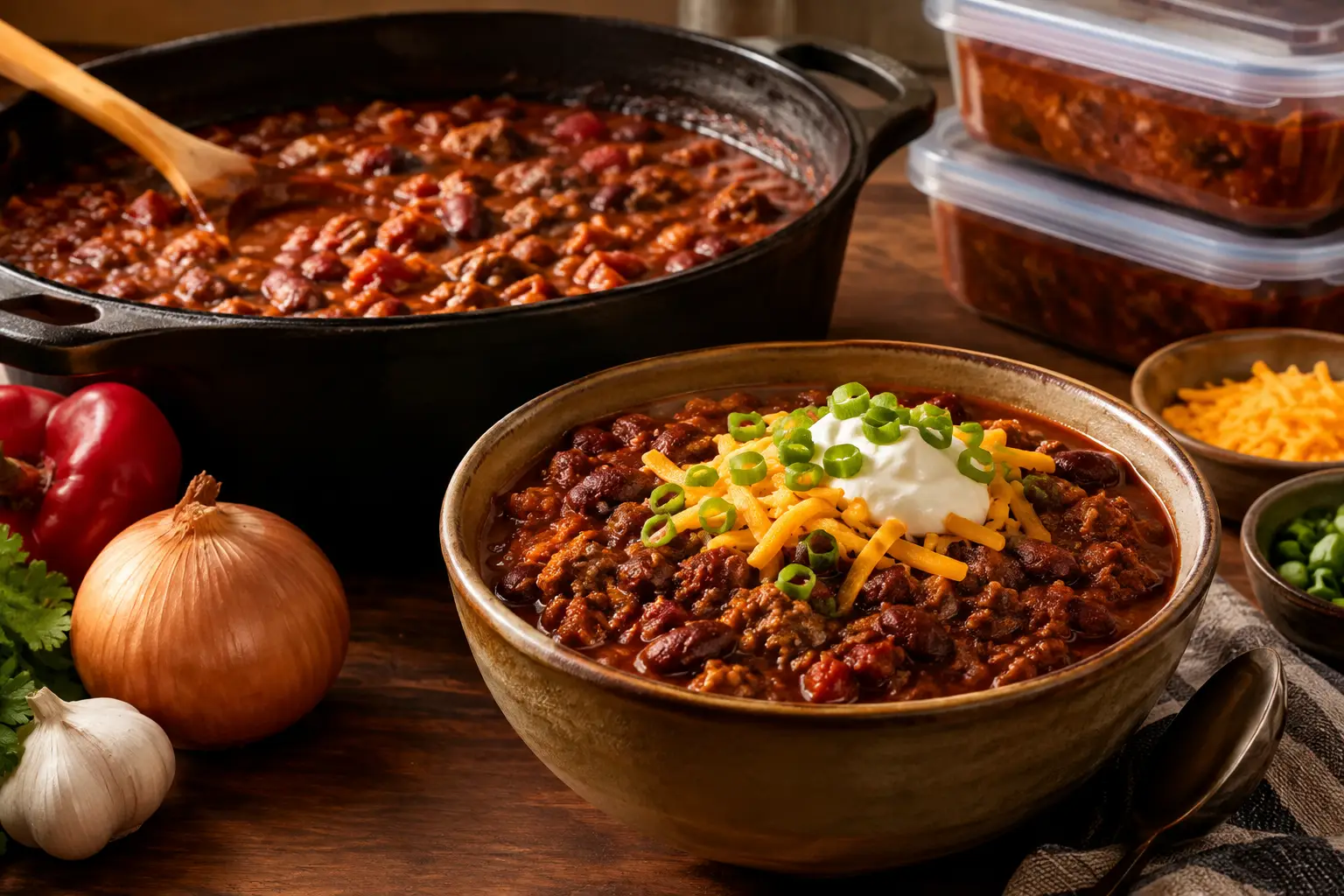
A freezer full of chili is not just meal prep. It is a future weeknight rescue, a game-day shortcut, and proof that you had excellent foresight when everyone else is staring into the fridge. This guide to freezer friendly chili is built around one goal: pulling out a bowl weeks later that still tastes like real, slow-simmered chili, not a sad compromise.
The good news is that most chili freezes beautifully. The catch is that a few choices at the stove and during storage determine whether it comes back rich, balanced, and spoon-worthy. Every bowl tells a story, even the one reheated after a long Tuesday.
Why Chili Is a Freezer MVP
Chili has the structural advantage of being sauce-forward. Its spices have time to mingle, its beans and meat are protected by a thick base, and its flavor often improves after a rest. Freezing pauses that mellowing process without asking much of you beyond a little planning.
Classic beef-and-bean chili, Texas red, turkey chili, chicken chili verde, and smoky vegetarian chili all work. The best candidate depends less on the regional style than on its texture. A brothy chili can freeze, but it may feel thinner after reheating. A very chunky chili may need a splash of stock to settle back into its original rhythm.
Chili also earns its freezer reputation because it is easy to portion. Freeze a couple of family-size containers for busy nights, then make room for individual servings that can become lunches, quick dinners, or a late-night bowl topped with cheese and crushed crackers.
Your Guide to Freezer Friendly Chili Starts in the Pot
A flavorful chili is always the priority. Still, a few ingredient decisions make its frozen future much better.
Build a thick, cohesive base
Aim for chili that is slightly thicker than how you want to serve it. During freezing and reheating, beans release a little moisture and the sauce can loosen. Let the chili simmer uncovered near the end until the tomato, stock, chile paste, or gravy clings to the ingredients rather than pooling around them.
This does not mean cooking it into cement. Chili should remain spoonable. If you can drag a spoon across the bottom of the pot and see a brief trail before the sauce flows back, you are in a strong zone.
Be strategic with vegetables and beans
Beans are generally freezer-friendly, especially kidney, pinto, black, and cannellini beans. Cooked-from-dry beans tend to hold their shape a little better than softer canned beans, but canned beans are still perfectly practical for a freezer batch. Do not overcook either one before freezing.
Firm vegetables such as onions, bell peppers, corn, and roasted poblano peppers fare well. Sweet potatoes and winter squash can work too, though they soften further after thawing. If texture is the headline of your chili, consider adding delicate vegetables later. Zucchini, fresh herbs, and tender greens are better stirred in while reheating rather than frozen in the original pot.
Treat dairy as a finishing move
Creamy white chili is absolutely freezer-worthy, but it needs a little finesse. Sour cream, cream cheese, half-and-half, and heavy cream can separate or turn grainy after freezing. For the cleanest result, freeze the chili before adding dairy, then stir it in gently once the chili is hot again.
The same thinking applies to toppings. Freeze the chili itself, not the shredded cheese, avocado, cilantro, tortilla chips, scallions, or lime. Those are the fresh sparks that make a reheated bowl feel newly made.
Give the seasoning a little room
Salt and acid read differently after freezing. A chili that tastes exactly right on cooking day may need a pinch of salt, a squeeze of lime, or a tiny splash of vinegar when reheated. Hold back just a touch on these final adjustments, then tune the bowl when it returns to the stove.
Heat is personal, and frozen chili can seem a bit less fiery at first. Rather than making the full pot aggressively hot, freeze a balanced base and let each bowl choose its own adventure with hot sauce, pickled jalapeños, chile flakes, or fresh serranos.
Cool It Fast Without Cutting Corners
Do not put a roaring-hot Dutch oven straight into the freezer. It warms the freezer, creates excess condensation, and can leave the center cooling too slowly. Food safety and flavor both improve when you cool chili promptly.
Let the pot stand briefly, then divide the chili into shallow containers or smaller portions. This exposes more surface area and brings the temperature down faster. You can also set the pot in an ice-water bath and stir occasionally if you are handling a big batch.
Once the steam has settled and the chili is no longer piping hot, get it into the refrigerator to finish cooling. Refrigerate within two hours of cooking, or within one hour if the room is especially hot. Then freeze once fully chilled. This extra step protects the texture of the chili and keeps condensation from becoming a sheet of freezer ice.
Choose Portions That Match Real Life
The best storage container is the one that fits how you actually eat chili. A big container sounds efficient until you thaw six servings to feed one person. Think in future moments: lunch for one, dinner for two, or a full crew coming over to watch football.
For individual servings, freezer-safe pint containers or flat freezer bags are hard to beat. Flat bags freeze and thaw quickly, stack like edible files, and save serious space. Press out as much air as possible before sealing, but leave a little headspace in rigid containers because chili expands as it freezes.
For family portions, use a larger freezer-safe container and leave about half an inch of room at the top. A wide, shallow container is better than a deep one because it cools and reheats more evenly.
Label every container with the chili style and date. “Red beef chili” is helpful. “Red beef chili, medium heat, October 8” is better. If you are building a personal chili archive, add a note like “great with cornbread” or “needs lime.” That is the kind of kitchen intelligence no recipe card can guess for you.
How Long Freezer Friendly Chili Keeps Its Flavor
Frozen chili remains safe for a long time when held consistently at 0°F, but peak quality has a window. For the best texture and flavor, plan to eat it within three to four months. It will usually still be usable later, but freezer burn, faded spice, and softer beans become more likely.
The enemy is air. Use containers designed for freezing, seal them tightly, and avoid repeatedly moving them between fridge and freezer. If you see ice crystals, do not panic. They are often a texture issue, not an automatic reason to toss the chili. Reheat it gently, stir well, and refresh it with a bright finishing ingredient.
Reheat Without Flattening the Flavor
The safest thawing method is overnight in the refrigerator. For a faster route, reheat directly from frozen in a saucepan over low heat, covered at first, with a few tablespoons of water or stock if needed. As the block softens, break it apart with a spoon and stir regularly.
Microwaving works for single portions. Use medium power, stop to stir every couple of minutes, and cover loosely to prevent splatter. High heat can make the edges scorch while the center stays cold, especially with thick chili.
Bring reheated chili to a full, gentle simmer and heat it until steaming throughout. Then taste before serving. This is the moment for salt, pepper, hot sauce, cumin, chile powder, lime, vinegar, or a pinch of sugar if a tomato-heavy batch tastes sharp. A cold-stored chili rarely needs a full rebuild. It usually needs one small, smart adjustment.
The Chili Styles That Freeze Best
Hearty red chilis are freezer all-stars. Texas-style chile con carne, beef-and-bean classics, and smoky pork chili retain their deep flavor and benefit from a careful reheat. Turkey chili is another dependable choice, particularly when it has enough beans, tomato, or roasted peppers to keep the lean meat feeling moist.
Vegetarian chili can be spectacular from the freezer, but avoid reducing every vegetable to the same softness. Keep some beans intact, use sturdy vegetables, and finish with fresh crunch. White chicken chili is a strong candidate too when you freeze it before the creamy additions.
For inspiration, ChiliStation makes it easy to compare styles by protein, heat level, and regional personality. The practical rule remains the same across every category: freeze the sturdy base, then bring the fresh contrast at serving time.
A good freezer chili should not feel like a backup plan. Pull out a labeled container, warm it patiently, add one bright finishing touch, and let that bowl do what chili does best: make an ordinary night feel claimed by comfort.