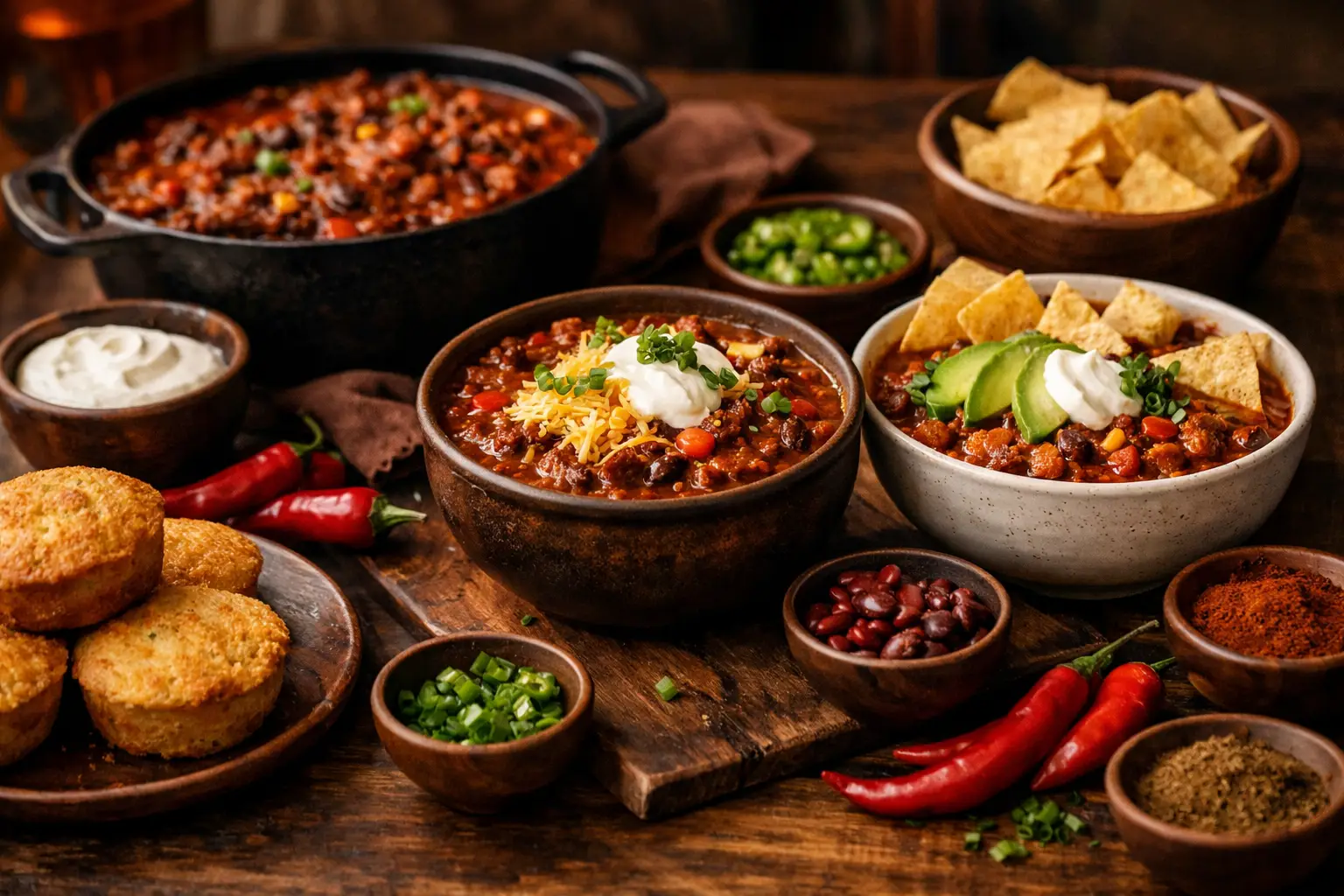
Your first pot of chili does not need to be impressive. It needs to be forgiving. The easiest chili recipes for beginners are the ones that still taste like chili when the onions go a shade too dark, when you add an extra splash of stock, or when you realize halfway through that you grabbed pinto beans instead of kidney.
That is a different bar than “best chili ever.” Foolproof chili teaches you how a pot actually comes together: how aromatics sweeten, how spices bloom in fat, and how a simmer turns separate ingredients into one bowl. These seven styles are picked for margin of error, not championship swagger.
What makes the best chili recipes for beginners?
Beginner-friendly chili has a few traits in common. It uses easy-to-find ingredients, leaves room for small mistakes, and does not demand perfect knife skills or advanced timing. It should also teach you something useful. A good first recipe shows you whether you like a thick, meaty pot, a brothy bowl, a bean-heavy version, or a brighter green chili with less tomato weight.
The other big factor is margin for error. Chili is forgiving, but not every style is equally forgiving. A long-simmered Texas red can be incredible, yet it asks more from your spice game and meat handling. A turkey chili with beans, on the other hand, can absorb an extra splash of stock or an extra ten minutes on the stove without falling apart.
1. Classic ground beef chili
If you want the safest, most satisfying starting point, this is it. Classic ground beef chili is the friendly front door of the category. It usually leans on onion, garlic, chili powder, cumin, canned tomatoes, beans, and ground beef, which means the ingredient list feels familiar before you even light the burner.
This style teaches the fundamentals fast. You brown the meat, soften the aromatics, toast the spices briefly, then let everything simmer until the texture tightens up. You learn what underseasoned chili tastes like, what a balanced chili tastes like, and how a pot changes after twenty extra minutes.
It is also highly adjustable. Want it thicker? Simmer it longer. Want it milder? Reduce the chili powder and skip fresh peppers. Want more body? Add a little tomato paste. For beginners, flexibility is a feature, not a compromise.
2. Easy turkey chili
Turkey chili is one of the smartest weeknight picks for new cooks because it is lighter in feel but still classic in structure. You get the same chili-building rhythm as beef chili, but with a protein that pairs well with beans, tomatoes, and warm spices without becoming too rich.
There is one trade-off. Ground turkey is leaner, so it can taste flat if you do not season it aggressively enough. That is easy to fix. Salt in layers, give the onions time to soften, and let the spices bloom in a little oil before liquid goes in. If you rush those steps, turkey chili can feel thin. If you do them well, it tastes clean, hearty, and weeknight-ready.
For anyone meal prepping, this style earns bonus points. It reheats well and tends to hold onto its texture in the fridge without getting greasy.
3. White chicken chili
White chicken chili is beginner-friendly for a different reason - it does not ask you to chase the deep red, steakhouse-style flavor some people expect from traditional chili. Instead, it leans creamy, savory, and slightly brighter, often built with chicken, white beans, green chiles, broth, cumin, and sometimes a little cream cheese, sour cream, or Monterey Jack.
This is a great pick if tomato-heavy chili has never been your thing. It is also a confidence booster because the flavor curve is easier to control. If it tastes too mild, add green chiles, cumin, or pepper. If it is too thick, add broth. If it feels flat, lime and salt usually bring it back to life.
The biggest mistake beginners make here is overcomplicating it. White chicken chili does not need ten toppings and six kinds of dairy to work. Keep it focused and let the green chile-chicken combo do the heavy lifting.
4. Mild bean chili
Not every beginner wants to start with meat, and a mild bean chili is far more than a backup option. Done well, it is cozy, budget-friendly, and ideal for learning how texture works in a pot of chili. Different beans bring different personalities: kidney beans are sturdy, black beans are softer and earthier, and pinto beans land somewhere in the middle.
A bean-forward chili also makes seasoning easier to study. Without meat taking center stage, you can taste what cumin, oregano, paprika, and chili powder actually contribute. That is useful if you are trying to figure out your own chili style instead of blindly following a recipe forever.
This style depends heavily on structure. You need enough aromatics and enough simmer time to avoid a pot that tastes like warm beans and tomatoes. A little tomato paste or a small spoonful of cocoa can add depth, but only if the base is already solid.
5. Slow cooker chili
Some of the best chili recipes for beginners are less about style and more about method, and slow cooker chili absolutely belongs on the list. It is a practical win for anyone who wants maximum comfort with minimum active cooking.
The catch is that slow cookers do not magically create flavor. The strongest versions still start with browned meat, softened onions, and bloomed spices before everything goes into the pot. If you skip that setup, the final bowl can taste dull and slightly one-note.
Still, as a training-wheel method, it is excellent. You get a long, gentle cook that smooths rough edges and gives flavors time to come together. It is especially good for beginners cooking for a crowd because it holds well and rarely punishes you for timing dinner a little late.
6. Cincinnati-style chili for the curious beginner
This is the wildcard pick, but it deserves a spot because it introduces beginners to the idea that chili is not one fixed thing. Cincinnati-style chili is thinner, more spiced, and famously served over spaghetti or hot dogs. For cooks who grew up thinking chili only means a thick red bowl with shredded cheddar, this style can feel like a plot twist.
Why is it beginner-worthy? The texture is forgiving, and the flavor profile is memorable. You are not chasing smoke and char as much as layered warmth and a distinct sweet-savory edge. That said, it is not the best first recipe if you want a classic game-day chili. It is best for curious cooks who like regional specialties and want to understand how wide the chili map really is.
Approach it as its own category, not as a variation on Texas chili, and it makes much more sense.
7. Green chili with pork or chicken
If red chili feels too heavy and white chicken chili feels too creamy, green chili is a brilliant middle ground. Built around green chiles, broth, and pork or chicken, it delivers warmth and depth with a fresher, sharper profile.
For beginners, green chili is useful because it teaches a different flavor logic. You are relying less on tomato and chili powder, more on peppers, stock, onion, and the natural richness of the protein. The result can be deeply comforting without feeling dense.
It does come with one variable: heat level. Green chiles can range from mellow to serious depending on the variety. If you are new, start mild and build upward. It is much easier to add heat than to rescue a pot that went too far.
How to choose your first bowl
If you want the most classic experience, start with ground beef chili. If you cook often on weeknights and want something lighter, turkey chili is the better fit. If you dislike heavy tomato flavor, white chicken chili or green chili will probably be more your speed.
If budget matters most, bean chili is the clear winner. If convenience matters most, go slow cooker. And if you are the kind of cook who loves regional food rabbit holes, Cincinnati-style chili is a fun first detour.
That is the real trick with beginner chili: pick a recipe that matches how you actually eat. The best starting point is not the most famous bowl. It is the one you will want to make again next week.
A few beginner moves that change everything
No matter which recipe you choose, a few habits make a huge difference. Brown meat until it actually develops color. Let onions soften fully instead of rushing them. Toast spices briefly in fat so they taste fuller, not dusty. Taste before the final simmer and then again at the end, because chili changes a lot as it cooks.
Also, do not judge the pot too early. Chili often tastes disjointed halfway through. Give it time. The last fifteen to twenty minutes are where many beginner chilis finally become real chili.
And keep toppings simple at first. Cheese, sour cream, scallions, crackers, cornbread, avocado - all good. But if your base needs a mountain of toppings to feel complete, the recipe may need more salt, more simmer time, or a better balance of acid and spice.
If you are building your chili confidence, think like a curator, not a perfectionist. Try one style, notice what you loved, and let that guide the next pot. The category is bigger than one recipe, and that is exactly what makes it fun.