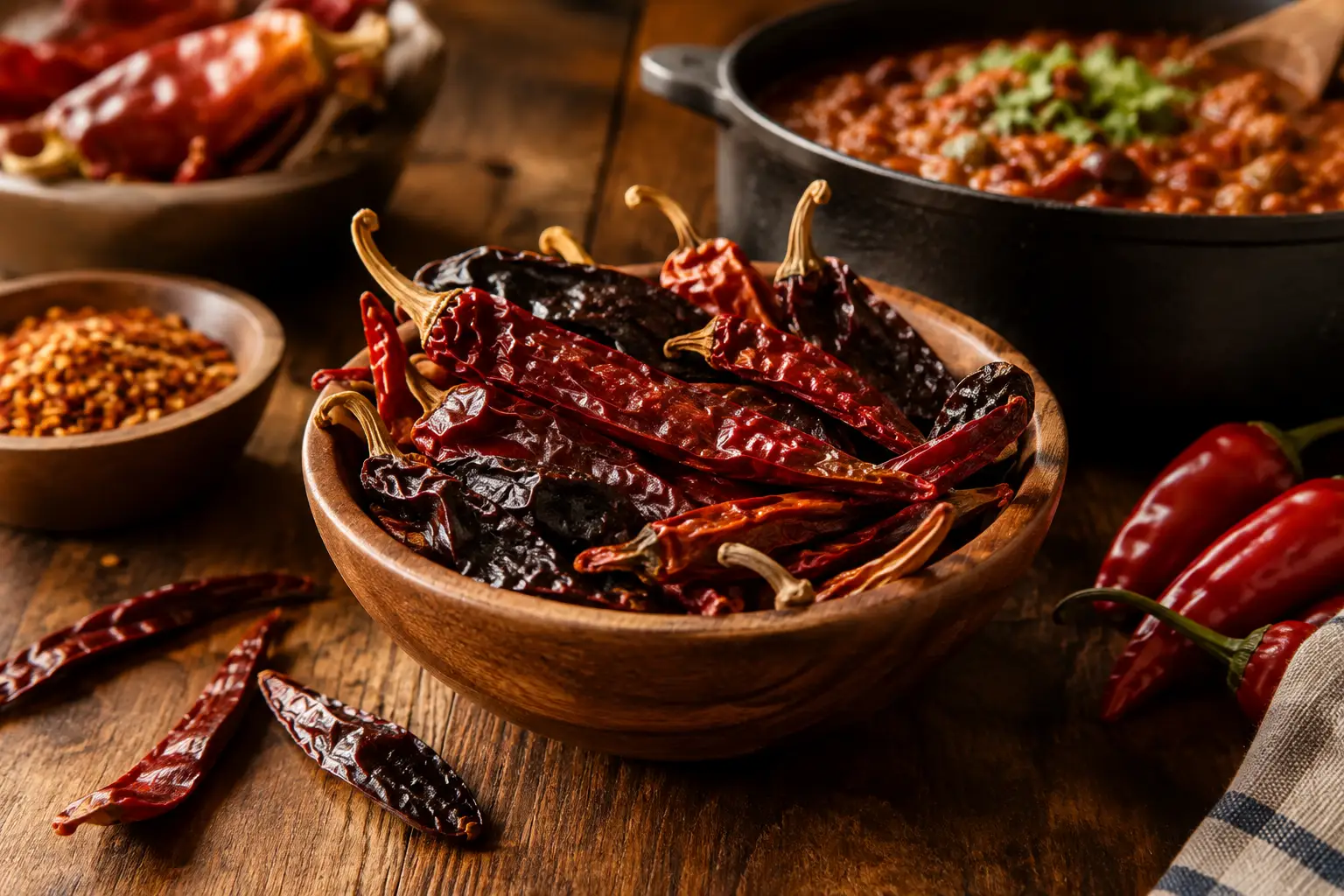
A great pot of red chili does not get its personality from a random shake of chile powder. It gets there when dried peppers hit hot broth, fat, and time - turning smoky, fruity, earthy, or sharp depending on the pod. This dried chile guide is your shortcut to building a bowl with real depth, whether you are chasing Texas Red, New Mexico-style chile, or your own full-send weeknight version.
Dried chiles can look intimidating in the spice aisle: wrinkled, dark, and labeled with names that do not always reveal much. The good news is that you do not need a dozen varieties to cook boldly. Learn a handful of flavor families, know how to prep them, and your chili game changes fast.
What Dried Chiles Bring to a Pot of Chili
Fresh peppers provide snap and bright green heat. Dried chiles bring concentration. As a pepper dries, its fruitiness, sweetness, bitterness, smoke, and heat become more pronounced. Rehydrate and blend those pods into a sauce, and you get a chile base that tastes layered rather than merely spicy.
That distinction matters in chili. Ground chile powder is convenient and often useful, especially for a quick ground-beef pot. But a powder blend can taste flat or overly cumin-forward, and its age is hard to judge. Whole dried chiles let you control the flavor architecture. One can supply raisiny sweetness, another earthy red-pepper flavor, and a smaller, hotter one can keep the finish lively.
Think of dried chiles as the red sauce behind the bowl, not just the heat setting. Every bowl tells a story, and these peppers decide whether that story reads dark and roasty, bright and brick-red, smoky and rugged, or quietly sweet.
Dried Chile Guide: The Peppers Worth Knowing
Ancho: the mellow, raisiny foundation
Anchos are dried poblanos, and they are a workhorse for deep red chili. Their flavor is mild, broad, and slightly sweet, with notes that can read like dried fruit, cocoa, and tobacco. They are ideal when you want body without turning the pot into a heat challenge.
Use ancho as a base chile in beef chili, bean chili, or a slow-cooked pork pot. It plays especially well with cumin, oregano, garlic, browned meat, and a splash of something acidic at the end. If a recipe calls for a dark, velvety red sauce, ancho is usually a smart place to start.
Guajillo: the bright red backbone
Guajillos are one of the most versatile dried chiles in the kitchen. They have a clean, berry-like flavor with gentle tang, moderate warmth, and the kind of brick-red color that makes a chili look like it means business.
A guajillo-heavy sauce feels more lifted than an ancho-heavy one. Use it when you want a red chili that tastes vibrant rather than heavy, or pair it with ancho for balance. That ancho-guajillo combination is a reliable starting point for cooks building their first custom chile blend.
New Mexico and California chiles: classic red-chile territory
New Mexico chiles, sometimes sold as Hatch chiles when grown in that famed region, are earthy, mildly sweet, and unmistakably red-pepper-forward. California chiles are often a similar mild dried option, though exact flavor and heat vary by producer.
These are the chiles to reach for when the goal is straightforward red chile flavor - warm, savory, familiar, and built for generous spoonfuls. They shine in beef chili, pork chile, enchilada-style sauces, and any pot where you want the pepper itself to stay front and center.
Pasilla: dark, complex, and occasionally confusing
The true Mexican pasilla is long, dark, and richly flavored, with notes that can feel earthy, bitter, and almost prune-like. It can add a shadowy complexity to a red sauce, but it is best used as part of a blend rather than the whole show.
There is a naming wrinkle: in some US markets, poblano peppers are called pasillas. They are not the same thing. If you are buying dried pods, look for the long, nearly black chile often labeled pasilla negro. If the package leaves you guessing, choose ancho or guajillo instead. Better a clear flavor decision than a mystery bag.
Chipotle morita: smoke with a purpose
Chipotle moritas are smoked, dried jalapeños. They bring medium heat and a deep, woodsy smoke that can make a pot taste like it spent all afternoon near a fire pit. A little goes a long way.
Use morita when smoke belongs in the picture: brisket chili, black bean chili, turkey chili, or a pot with roasted tomatoes. Too much can bury the other chiles, so treat it like a supporting player. One or two pods can be plenty for a family-size batch.
Chile de árbol: the heat lever
Small, thin, and bright red, chile de árbol is here to raise the volume. Its heat is sharp and direct, with less fruity depth than larger dried chiles. It is rarely the base of a chili sauce, but it is excellent for adjusting a blend without adding much extra bulk.
Start conservatively. One árbol may offer a warm tickle; several can steer a pot toward serious heat. Your tolerance, the age of the chiles, and the size of the batch all matter, so taste before committing to more.
How to Prep Dried Chiles Without Losing the Plot
Most dried chiles benefit from a quick toast, then a soak. First, wipe off any dust and remove stems. Split larger pods open and shake out most of the seeds. Seeds are not the main source of heat, despite the common kitchen myth, but removing them helps prevent a gritty sauce and lets the pepper flesh do the talking.
Toast the chiles in a dry skillet over medium-low heat for a few seconds per side, just until they become fragrant and pliable. This wakes up their oils. Do not walk away. Burned chiles taste bitter, and there is no clever fix once that harsh flavor gets into the sauce.
Cover the toasted pods with very hot water or warm broth and let them soften for 15 to 25 minutes. Blend them with garlic, onion, spices, and enough soaking liquid or stock to make a smooth puree. If your blender is not especially powerful, push the sauce through a fine strainer. That extra step delivers the plush, restaurant-style texture that makes a chili sauce feel polished.
You can also skip soaking for smaller, more delicate chiles and blend them directly into a long-simmered pot, but rehydrating is the more dependable route. It gives you a chance to taste and adjust the sauce before it meets the meat and beans.
Build a Chile Blend, Not a One-Pepper Monologue
The best dried-chile chili usually relies on contrast. For a medium-heat red chili with rounded flavor, use mostly ancho and guajillo, then add a New Mexico chile for a familiar red-pepper note. Want more smoke? Add a morita. Want the finish hotter? Add an árbol.
A useful starting ratio for a large pot is two parts mild, sweet chiles to one part brighter red chiles, with hot or smoked chiles added in smaller amounts. That is a framework, not a law. Anchos vary. Guajillos vary. A pepper bought from a high-turnover market will often taste more alive than one that has sat in a cabinet for years.
When shopping, choose pods that are flexible rather than brittle, fragrant rather than dusty, and reasonably glossy rather than faded. Store them airtight in a cool, dark place. If they smell like cardboard, they will cook like cardboard.
Smart Substitutions When the Shelf Is Picked Over
You do not have to abandon a chili plan because one chile is missing. If you cannot find ancho, use mulato for a similarly dark, sweet profile, though mulato can be more chocolatey. If guajillo is unavailable, New Mexico or California chiles can provide red color and mild warmth, even if they are less tangy.
For chipotle morita, a small amount of canned chipotle in adobo can stand in, but reduce other salt and add it gradually. For árbol, cayenne can supply heat, though it will not bring the same clean dried-pepper flavor. The goal is not a perfect clone. It is a balanced pot that tastes intentional.
The next time your chili feels one-dimensional, do not immediately reach for more salt or more heat. Reach for a dried chile with a job to do. A brighter guajillo, a grounding ancho, or one smoky morita can turn a decent bowl into the recipe everyone asks you to make again.