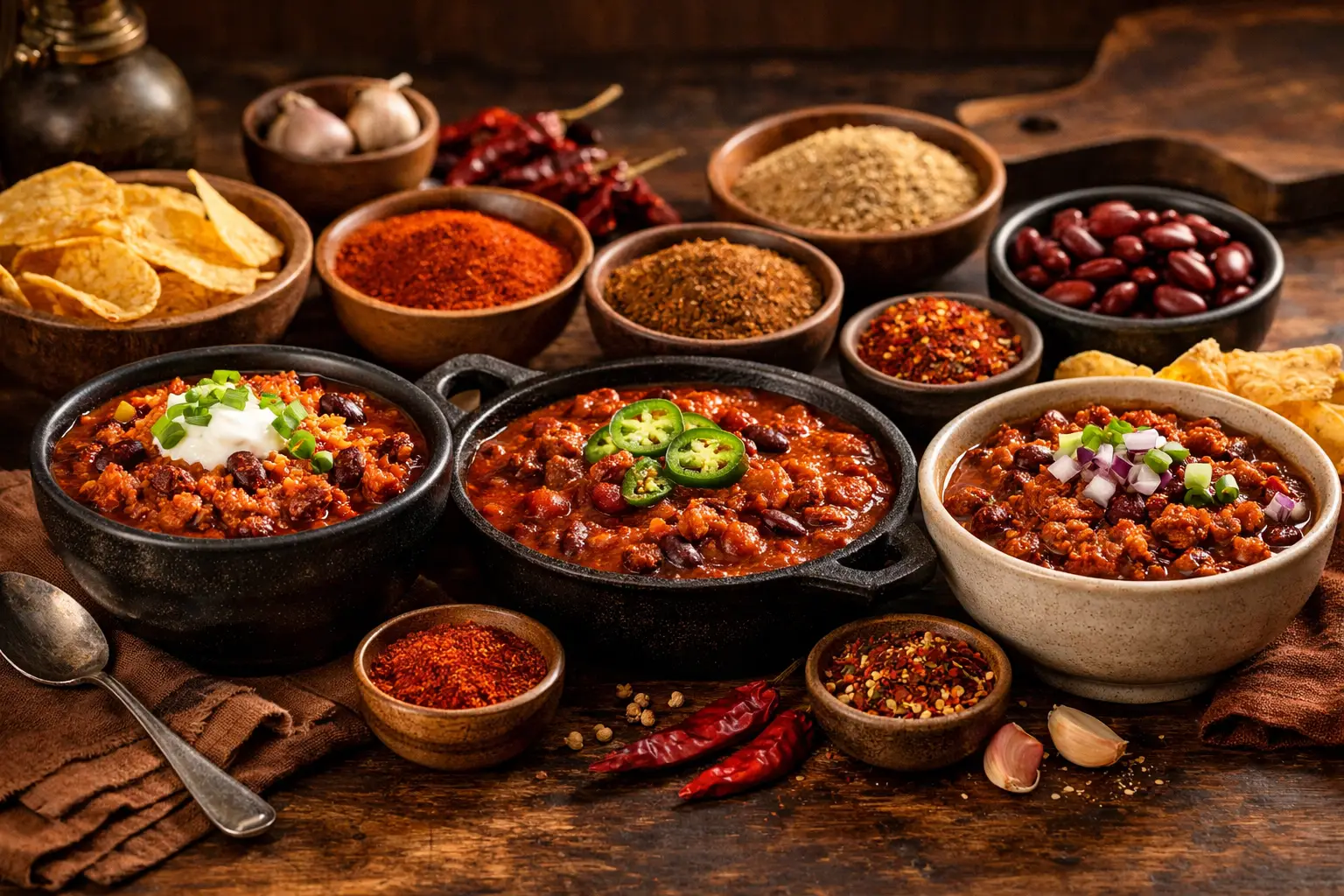
A chili can have great beef, tender beans, and a long, lazy simmer - then still taste strangely flat because the seasoning missed the mark. That is why a useful chili seasoning comparison starts beyond the label's heat claim. The real question is whether a blend gives your pot the flavor identity you want: smoky Texas Red, bright Colorado green chili, sweet-spiced Cincinnati, or a weeknight bowl that simply hits the comfort-food spot.
Seasoning is not a finishing detail. It determines the direction of the whole pot, from the first onion in the skillet to the last spoonful scraped up with cornbread. Packets, bottled blends, and homemade mixes all earn a place in a chili cook's pantry. They just solve different problems.
Chili Seasoning Comparison: What Actually Changes
Most chili seasonings begin with familiar ground: chili pepper, cumin, garlic, onion, oregano, paprika, and salt. But the ratios change everything. A blend heavy on cumin reads warm and earthy. One built around paprika can lean sweet, red, and smoky. Garlic and onion make a chili taste fuller fast, while cayenne delivers direct heat with little extra personality.
The first thing to compare is the chile base. Generic "chili powder" is usually a blend itself, often mild and paprika-forward. It makes a dependable all-American red chili, but it rarely has the focused character of single-origin dried chiles. Ancho brings raisiny depth. Guajillo offers a cleaner, slightly tangy red-fruit note. Chipotle brings smoke. New Mexico red chile can feel earthy and sunny, while árbol and cayenne put heat at the front of the line.
Then comes salt. Many packet mixes are designed to season a pound or two of meat plus tomatoes, beans, and liquid in one move. Convenient? Absolutely. Flexible? Less so. If you are using salty broth, canned beans, bacon, cheese, or a big scoop of boxed stock concentrate, a salty blend can push the whole pot over the edge before it has had time to simmer.
Finally, watch for sweetness and thickeners. Some blends include sugar, which can soften tomato acidity and appeal in a family-style chili. Others include flour, cornstarch, or maltodextrin to create a fuller texture. Neither is automatically bad. They are simply a mismatch for cooks who want a loose, brothy bowl or total control over each ingredient.
Packet Mixes: The Fast, Familiar Choice
Packet seasoning is built for speed and consistency. Brown the meat, add the packet and a few pantry staples, and dinner is moving. For a beginner, that reliability is valuable. You know the flavor will be recognizable, and you do not need six spice jars open on the counter after work.
The trade-off is that packet mixes often aim for broad appeal. They tend to be mild to medium, moderately salty, and tomato-friendly, with enough cumin and onion to signal chili without taking a hard regional stance. Think classic ground-beef-and-bean chili, game-day potluck chili, or the dependable meal that needs to please both a spice enthusiast and a kid with a glass of milk nearby.
Packets also vary more than their similar-looking labels suggest. Some lead with cumin and taste dusty if used too heavily. Others lean on onion powder and salt, creating an instant savory boost but not much chile depth. A few have a distinctly smoky profile that works beautifully with turkey or black beans but can crowd out delicate chicken.
Use a packet when convenience is the priority, but do not feel obligated to use the entire thing. Start with two-thirds, especially if your pot is smaller than the package suggests. You can always add more. You cannot pull excess salt back out of a bubbling Dutch oven.
Bottled Blends: More Personality, More Range
A bottled chili blend is often the sweet spot for cooks who make chili regularly. It keeps the convenience of a prebuilt formula while offering a more distinct point of view: smoke-heavy, no-salt, hot, Southwest-style, barbecue-leaning, or chile-forward.
No-salt blends are especially useful for cooks who like to build flavor in layers. You can season beef with salt as it browns, choose a low-sodium broth, and make final adjustments after the chili reduces. That control matters in long-simmered recipes, where liquid evaporates and seasoning concentrates.
Bottled blends can also help match seasoning to protein. Beef handles bolder, darker flavors: ancho, chipotle, cumin, cocoa, coffee, and black pepper. Turkey works well with smoky paprika, roasted garlic, and a medium chile blend that adds body without making the meat taste heavier than it is. Chicken often benefits from greener, brighter seasoning - cumin, coriander, poblano, jalapeño, tomatillo, and oregano rather than a thick cloud of red chile powder.
The caution here is intensity. Specialty blends can be fantastic, but a tablespoon is not always a tablespoon. If a jar smells aggressively smoky or hot when opened, treat it like a concentrated ingredient. Bloom a small amount in the fat after sautéing your aromatics, then taste the chili later before adding more.
Homemade Mixes: Best for Cooks Who Know Their Bowl
A homemade mix wins on flexibility. It is the best choice when you have a clear destination in mind, whether that means no beans, extra smoke, low sodium, serious heat, or a Cincinnati-style profile with warming spices.
For a foundational red chili blend, combine a mild red chile powder with cumin, garlic powder, onion powder, Mexican oregano, black pepper, and a modest pinch of cayenne. That gives you a versatile base rather than a rigid formula. From there, you can steer smoky with chipotle, dark with ancho, fruity with guajillo, or hot with árbol.
The biggest homemade advantage is freshness. Ground spices lose their bright edges over time, particularly paprika and cumin. If your spice jar has been sitting behind the cinnamon since the last election, no recipe can fully rescue it. Freshly opened spices and dried chiles give a pot more aroma before you even start simmering.
Homemade blends do require restraint. Adding every spice that sounds interesting can turn chili muddy. Cinnamon, cloves, cocoa, coffee, coriander, allspice, and brown sugar each have a place, but they should have a job. A tiny pinch can add dimension. A heavy hand can make the bowl taste confused.
When to Add Chili Seasoning
Timing changes the flavor as much as the ingredients do. Add part of your seasoning to the browned meat and aromatics, where the spices can toast briefly in the fat. This wakes up cumin, paprika, and chile powders. Do not let them scorch, though. Burned spices taste bitter and cannot be disguised with more tomatoes.
Reserve the rest for the simmer. The long cook melds flavors, but it can also mute top notes. Adding a final small dose of seasoning 15 to 20 minutes before serving restores aroma and lets you correct the balance. Taste after the chili has reduced, not just when it first goes into the pot.
Match the Blend to the Chili Style
Texas Red deserves a chile-first blend. Skip the sweet, heavily onion-powdered packet profile and reach for ancho, guajillo, New Mexico red chile, cumin, garlic, and beefy depth. Beans are not the point here. The chile flavor is.
Colorado green chili calls for a different playbook. Roasted green chiles, cumin, garlic, and oregano matter more than red chili powder. A smoky red seasoning can make the pot taste like it cannot decide what it wants to be. Keep the profile bright enough for pork or chicken, then let roasted chile carry the heat.
Cincinnati chili is its own lane. Its spice profile can include cinnamon, allspice, cloves, and sometimes cocoa, creating a fragrant meat sauce rather than a bowl built around smoky chile. A standard chili packet will not get you there, and that is fine. Every bowl tells a story, and this one starts somewhere other than the Southwest.
For vegetarian chili, seasoning needs to do extra structural work. Beans, lentils, mushrooms, and squash absorb flavor, so build layers with chile powder, cumin, smoked paprika, and enough salt to keep the pot lively. A spoonful of masa harina near the end can add body, while a bright finish like lime or vinegar keeps the bowl from tasting too dense.
A Better Way to Taste-Test Seasoning
Instead of committing an entire pot to an unfamiliar blend, make a quick seasoning test. Sauté a small amount of ground meat, mushrooms, or beans with a teaspoon of the blend, then add a splash of tomato sauce or broth. Taste it after a few minutes. You will quickly learn whether it is salty, smoky, sweet, hot, or mostly cumin.
This is also the smart move for a chili cook-off, a freezer-meal batch, or any recipe you plan to share. The blend that tastes exciting on a dry spoon may become overpowering once tomatoes, stock, and a two-hour simmer enter the picture.
Keep a few seasoning paths in your pantry rather than hunting for one mythical best blend: a quick weeknight packet, a no-salt chile-forward jar, and the building blocks for a homemade batch. Then choose based on the bowl you want to serve. The right seasoning does not just make chili hotter or saltier. It gives the pot a point of view.