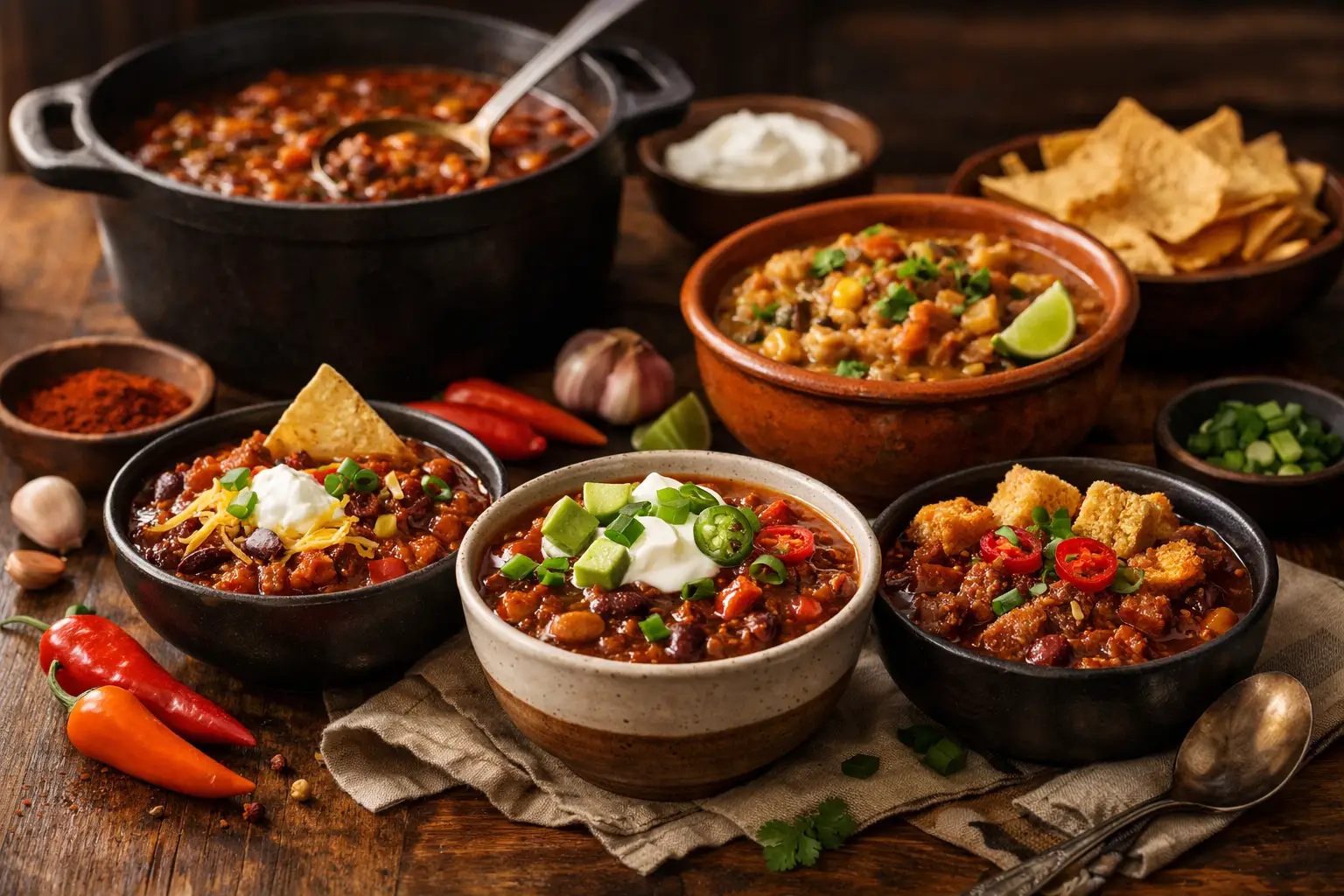
A chili recipe can have thousands of glowing comments and still be the wrong bowl for your night. The best top rated chili recipes do more than bring heat and beefy flavor. They deliver a clear point of view: a slow-simmered Texas red with a dark chile backbone, a bright green chile loaded with pork, or a cozy turkey chili that actually works on a Tuesday.
That is the beauty of cooking in one big, wildly varied category. Chili is not one recipe with a few optional toppings. It is a full map of regional traditions, pantry strategies, weeknight shortcuts, and fiercely held opinions about beans. Every bowl tells a story, and the right one starts with knowing what kind of story you want to eat.
What Makes Top Rated Chili Recipes Stand Out?
The recipes people return to usually get the fundamentals right before they add any flashy twists. They build a savory base, use heat with purpose, and give the pot enough time for its flavors to settle into each other. A top-rated bowl should taste layered, not merely spicy or salty.
Balance is the quiet hero. Rich ground beef needs acid from tomato, vinegar, or beer. Sweet vegetables can soften the edges of chipotle or cayenne. Beans need enough salt and chile depth to avoid tasting like an afterthought. Even a thick, spoon-standing chili benefits from a little broth or coffee if it needs more body without becoming heavy.
The best recipes also know what to leave out. A Texas red does not need beans to prove its worth. Cincinnati chili should not be forced into a smoky Southwest flavor profile. White chicken chili can be creamy and comforting without turning into queso soup. Ratings matter, but context matters more: a five-star tailgate chili and a five-star quick dinner may solve completely different problems.
Choose Your Bowl by Chili Style
Texas Red for Deep, Serious Chile Flavor
Texas red is the move when you want a pot that feels elemental: beef, dried chiles, aromatics, spices, and patience. Instead of relying on tomato sweetness, this style gets its character from a chile paste made with varieties such as ancho, guajillo, pasilla, and chile de arbol. The result is earthy, brick-red, and deeply savory, with heat that can range from friendly to full rodeo.
Look for a recipe that toasts and rehydrates dried chiles rather than leaning entirely on generic chili powder. That extra step creates the kind of flavor that hangs around after the first bite. Beef chuck is especially rewarding here because long cooking turns its marbled richness into a luxurious broth. The trade-off is time. This is not your 30-minute rescue dinner, and it should not be.
Classic Beef and Bean Chili for Crowd Appeal
For game day, casual gatherings, and the kind of meal where everyone wants a second scoop, classic beef and bean chili earns its permanent place. Ground beef, tomatoes, onions, beans, and a familiar spice blend make it flexible enough for almost any table.
The best version has contrast. Use a combination of beans if you like texture, but do not crowd the pot with so many that the meat disappears. Brown the beef well before adding liquids. Let tomato paste darken in the pot for a minute or two. Finish with a small acidic note, such as cider vinegar or lime, to keep the bowl from tasting flat.
This is also the style that welcomes personalization. Add corn for sweetness, use fire-roasted tomatoes for char, or bring in chipotle for a little smoke. Just give your add-ins a job. Random extras are how a promising chili becomes a refrigerator-cleanout situation.
White Chicken Chili for a Lighter Kind of Comfort
White chicken chili has its own lane: creamy, chile-forward, and built around tender chicken, white beans, broth, and green chiles. It is lighter in color, not necessarily lighter in personality. A great pot balances tangy tomatillos or salsa verde with the mellow richness of beans and dairy.
Shredded chicken thighs give the most forgiving result, though rotisserie chicken is a smart shortcut when dinner needs to happen now. For creaminess, blend a portion of the beans into the broth instead of relying only on cream cheese. You will get body without losing the clean, green flavor that makes this style special.
Top it with cilantro, avocado, crushed tortilla chips, and lime. Those fresh finishing notes are not decorative. They keep a creamy chili bright from first spoonful to last.
Green Chile Pork for New Mexico Energy
Green chile pork chili is for cooks who want a bowl with snap, tang, and unmistakable roasted-pepper character. Hatch chiles, when available, bring a singular mix of grassy sweetness and heat, but poblano, Anaheim, and jalapeno can make an excellent blend when Hatch season is not in play.
Pork shoulder is the classic long-cook choice. It becomes tender enough to pull apart while absorbing the sharp, vegetal flavor of the chiles. Some recipes add potatoes for a heartier stew-like bowl, while others keep the focus on pork and chile. Neither approach is more correct. It depends on whether you want dinner in a bowl or a spoonable topping for burritos, eggs, and smothered fries.
Cincinnati Chili for a Different Kind of Craving
Cincinnati chili is not trying to be Texas red, and judging it by Texas rules misses the point. This finely textured meat sauce is warmly spiced with ingredients that may include cinnamon, allspice, clove, and cocoa. It is designed for hot dogs, spaghetti, shredded cheese, onions, and beans in its signature "way" combinations.
A good Cincinnati-style recipe should be fragrant, gently sweet-spiced, and loose enough to coat pasta. The biggest mistake is expecting a thick, smoky bowl of chili con carne. Think of it as its own beloved regional tradition, best enjoyed with an open mind and an unapologetically huge pile of finely shredded cheddar.
Match Heat Level to the People Eating It
Heat is not a contest. It is a flavor setting. Mild chili can still be bold when it uses roasted peppers, cumin, garlic, and toasted chile powders. Medium heat is often the crowd-pleasing sweet spot, especially for a pot that will sit on a buffet beside chips, cheese, and sour cream.
For hotter chili, build gradually. Dried chiles bring flavor and warmth, fresh jalapenos give a greener bite, serranos add a sharper kick, and habaneros demand respect. Remove seeds and membranes when you want more pepper flavor with less burn, but remember that a chile's heat lives beyond the seeds alone.
If you are feeding mixed heat tolerances, keep the main pot at medium and set out hot sauce, sliced fresh chiles, pickled jalapenos, and crushed red pepper. Everyone gets the bowl they want, and nobody has to pretend they are enjoying a five-alarm surprise.
Small Moves That Make a Big Pot Better
A few practical habits separate an okay chili from a recipe you save, share, and make again. Brown meat in batches so it sears instead of steaming. Bloom ground spices in oil before adding broth. If you use dried chiles, strain the soaking liquid only if it tastes bitter or gritty, because it can carry valuable flavor.
Then let the pot rest. Chili often tastes better after 20 to 30 minutes off the heat, when the fat, spice, and acidity settle down. It is even better the next day, which makes it a champion for meal prep. Reheat gently, add a splash of broth if it has thickened too much, and taste again before serving. Salt and acid can shift overnight.
Toppings deserve the same attention as the simmer. Sharp cheddar adds salt, diced onion adds crunch, crema softens heat, and cornbread turns a bowl into a full comfort-food event. For a Texas red, keep it spare with onion, cheese, and crackers. For white chicken chili, go brighter with lime and cilantro. Let the style lead.
ChiliStation exists for this exact choose-your-own-bowl energy: finding a recipe by region, protein, heat level, and the mood of the meal rather than scrolling through a pile of lookalikes. Start with the chili that fits tonight, cook it with confidence, and save the next regional contender for your next pot.